
Caring for wool and alpaca projects
The most useful care tool is often the yarn label you nearly threw away. It tells you how that particular yarn should be washed and dried, including treatments or blends that a general fibre name cannot explain. Keep it with your pattern, and photograph it if you prefer a digital project record.
Good care starts before the first wash. Make a swatch, wash it as instructed and see how it behaves once fully dry. You learn about colour, texture and measurements on a small sample, rather than discovering an unwelcome change in a finished jumper.
Begin with the exact instructions
“Wool” does not automatically mean hand wash, and “superwash” does not mean any machine programme or tumble-dryer setting is suitable. Woolmark explains that some wool garments can be machine-washed when their care label permits it. Check the specified programme, temperature and drying method rather than using the routine for your other laundry. Woolmark's washing guidance is a useful starting reference.
Alpaca also needs product-specific care. As one manufacturer's example, DROPS lists its pure alpaca yarn as hand-wash at a maximum of 30°C and dry flat; that does not establish the instructions for every alpaca blend. Look up the exact yarn, especially if you no longer have the ball band. DROPS yarn-care information distinguishes untreated fibres from its machine-washable ranges.
For a project made with several yarns, consider whether their instructions are compatible before combining them. Decorative trims, lining and fastenings can add their own constraints.
Decide whether a full wash is needed
A garment that simply needs freshening may benefit from airing. Lay it somewhere clean with airflow, away from direct heat, and check again before deciding to wash it. A stain, spill or heavily soiled item needs a different response; do not treat airing as a way to remove actual dirt.
Keep a record of what works for the particular piece. How often it needs washing depends on use and condition, so a rigid calendar is less useful than checking the fabric. Woolmark's general care guidance includes airing and preparing clean wool garments for storage.
Set up before hand washing
When hand washing is permitted, clear a clean basin and prepare a dry, absorbent towel and a flat drying space first. You do not want to carry a heavy, dripping project around while deciding where it can go. Check the water temperature against the yarn instructions and use the recommended quantity of a suitable detergent.
For wool, Woolmark recommends a mild, neutral product and advises against bleach and enzyme-containing biological detergents. More detergent is not better: follow the product's dosing instructions. See its detergent guide for the distinction.
Handle the project gently and support its weight when lifting it. Avoid vigorous rubbing or wringing. Follow the yarn maker's instructions for soaking and rinsing: recommendations can differ, so do not assume every wool or alpaca yarn benefits from a long soak. If colour releases, keep the wet item away from other fabrics and seek the manufacturer's advice before another wash.
Dry with the shape supported
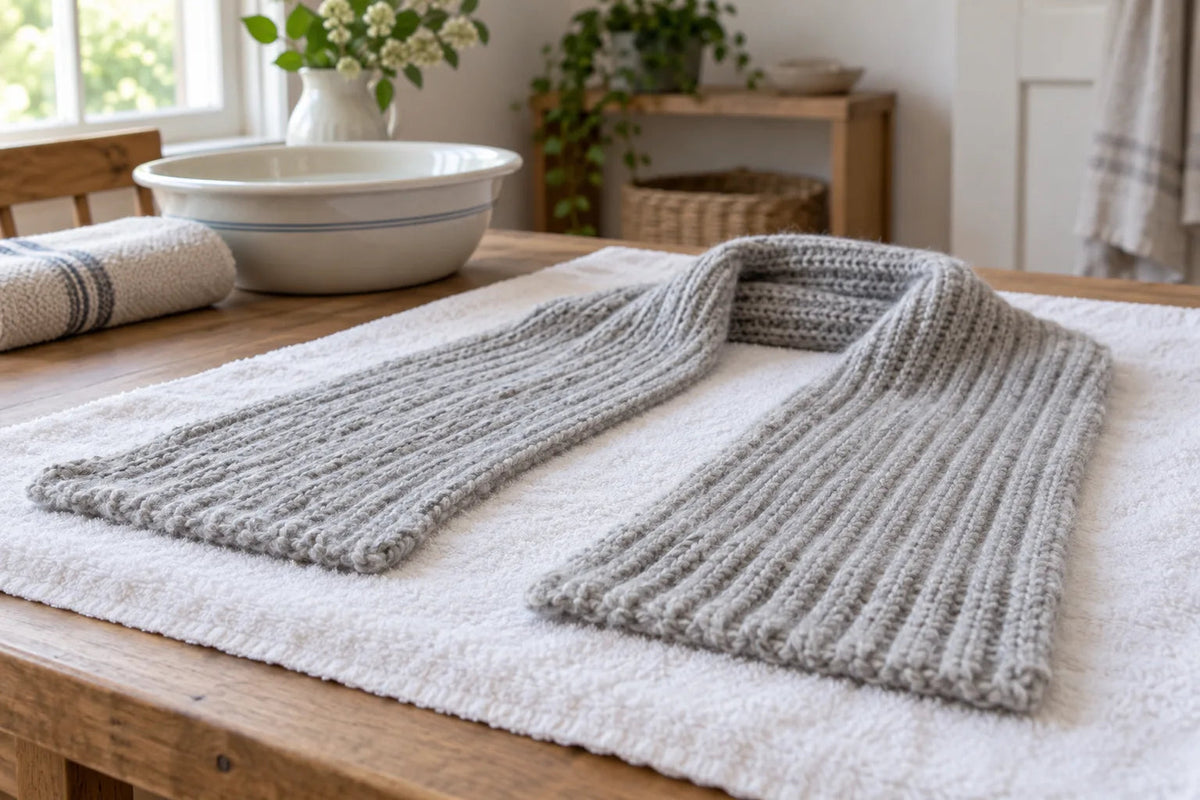
For a yarn labelled dry flat, gently arrange the piece to its intended dimensions on a suitable surface. Check sleeves, hems and edges rather than stretching one area while another is bunched underneath. Keep your original project measurements nearby; they are especially useful after washing a fitted garment.
Woolmark advises against hanging wet knitwear because the water's weight can stretch it. It also recommends avoiding direct sunlight and radiators when drying wool. A towel or appropriate mesh drying surface supports the fabric while it dries. Its drying guide explains the method and exceptions for labelled tumble-dry garments.
Allow the whole piece to dry before folding or putting it away. Thick seams and doubled edges can remain damp after the surface feels dry. Choose a space with airflow and keep the project where it will not be disturbed by pets or everyday use.
Store the project with its next use in mind
Before seasonal storage, make sure the piece is clean and completely dry. Fold it so its weight is supported, and choose a clean storage container suitable for the space. Check stored items periodically rather than assuming a closed box needs no further attention.
Keep leftover yarn and the care record together. A small labelled remnant can be useful for a later repair, while the ball band helps you identify the shade and fibre. Give the care information to the recipient if the project is a gift; do not expect them to recognise the yarn by touch.
Build a simple care record
Write down the yarn name and composition, your washing method, drying arrangement and the finished measurements. Add any observations from the swatch or first wash. If the results differ from the instructions, pause and ask the manufacturer or an experienced textile-care professional before repeating the process.
This record turns care into something repeatable. You can enjoy using what you have made, knowing how to look after it without having to reconstruct the details every time.