
Choosing merino yarn in the UK without costly mistakes
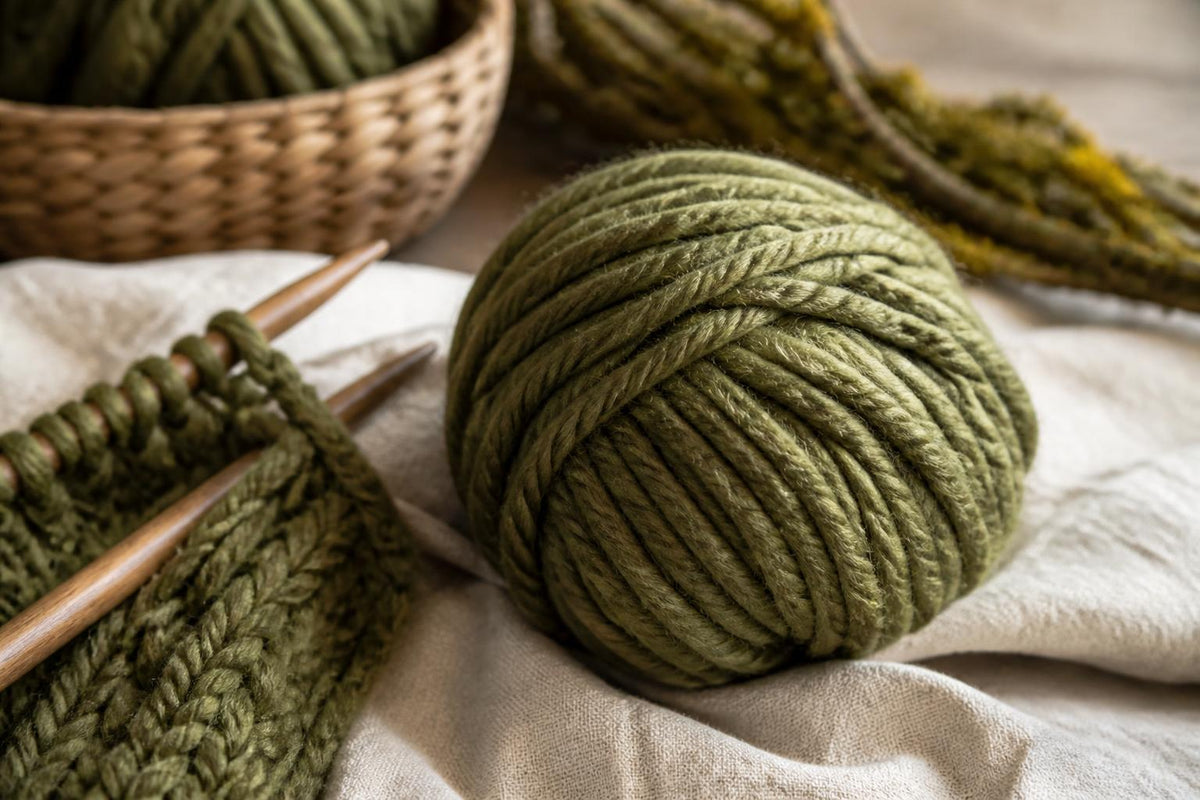
Choosing merino yarn well comes down to a few practical checks. In the UK, the safest approach is to match the fibre and yarn construction to the project first, then confirm weight, quantity, colour continuity and care requirements before you buy. That helps you avoid the most common mistakes, such as choosing a yarn that pills too quickly for the intended use, under-ordering for a larger piece, or discovering too late that a second batch does not match the first.
For anyone comparing merino yarn in the UK, it is also worth remembering that soft does not automatically mean suitable for every project. A beautifully soft skein may be perfect for a cowl, baby blanket or quick hat, but less suitable for a hard-wearing bag or a sharply defined crochet motif. When we choose carefully at the start, the finished piece is easier to make, easier to care for and more likely to be used for years.
What to look for when buying merino yarn in the UK
Start with feel, but do not stop there. Merino is loved for its softness, warmth and spring, yet two merino yarns can behave very differently. Some feel airy and lofty, some feel denser and smoother, and some are lightly spun for softness rather than abrasion resistance. If you are buying online, read the product details as closely as you would inspect a ball in person. Fibre content, yarn weight, recommended needle or hook range, and construction all matter.
Construction is especially important. A tightly spun yarn generally gives better stitch definition and stands up better to repeated handling. A looser, more roving-like yarn can feel wonderfully plush, but it may fuzz or pill more readily, particularly on cuffs, underarms, bag straps or frequently sat-on cushions. For knitting and crochet that will be worn often, we usually suggest thinking about where friction will happen in real life, not just how the yarn looks fresh from the parcel.
Weight should follow the project. If you want drape for garments, finer weights such as DK yarn or aran may be easier to shape and layer than a very bulky strand. If you want speed, warmth and visual texture, a thicker yarn may be exactly right. Even if you are currently shopping in the super chunky category, it helps to compare it mentally with lighter options such as DK yarn or mid-weight aran yarn, because the same pattern idea can feel entirely different once the yarn weight changes.
Think about the intended project in practical terms. Ask yourself:
- Will this item be worn next to skin?
- Will it need drape or structure?
- Will it be washed often?
- Is stitch definition important?
- Do I want a fast finish, or a lighter fabric with more detail?
These questions matter just as much for crochet as for knitting. If you crochet, remember that fabric often comes out denser than knitting in the same yarn, especially with shorter stitches. That can make a very thick yarn feel substantial quite quickly. If you follow patterns written in UK crochet terms, check that you are not accidentally reading a US pattern as though it were written for the UK, because stitch names differ and that changes both fabric and yarn usage.
Then do the practical buying checks. Confirm the meterage per ball or skein, not just the weight. Two 100g yarns are not automatically interchangeable if one is loftier and gives fewer metres. Check whether the product is hand-dyed or mill-dyed, because colour variation is handled differently. Look for care instructions on the product page and compare them with your project plans. A nursery blanket, a decorative throw and a winter snood do not all need the same level of wash convenience.
At Native Yarns, our verified retail range includes super chunky merino yarn in multiple colourways, so we often see shoppers make the best decisions when they begin with use rather than impulse. A beautiful colour is important, but the right yarn for the job matters more.
When super chunky merino is the right choice
Super chunky merino is the right choice when you want warmth, speed and softness in one project. It is particularly good for beginner-friendly makes because the stitches are easy to see, progress is fast and the finished piece feels rewarding almost immediately. Hats, cowls, simple scarves, quick blankets, oversized accessories and straightforward cushions are all natural fits.
It also suits people who are learning to hold yarn and read their stitches. With a thicker strand, knit and purl stitches are usually easier to identify, and in crochet the working loops are more visible. That can take some of the strain out of learning tension. If your main goal is to finish a first project rather than perfect fine detail, super chunky can be a very sensible starting point.
This is where World of Wool Chubbs fits especially well. Chubbs is a super chunky merino yarn with the kind of immediate impact that helps new knitters and crocheters stay motivated. For simple hats, neckwear and cosy home projects, it gives quick results without asking you to manage a very long making time before you see the shape emerge. For many people, that is the difference between finishing a project and abandoning one.
That said, super chunky is not ideal for everything. It can create a heavy fabric in larger garments, especially in crochet. It can also feel too warm indoors if used for oversized clothing that is meant to be layered under coats or worn through changing temperatures. If a project needs crisp stitch patterns, delicate lace, or a lot of shaping, a finer yarn may give a better result. Likewise, if you want a hard-wearing everyday bag or a seat cushion that takes constant abrasion, a very soft merino may not be the most durable choice.
There is also the question of scale. Super chunky stitches look bold and modern, but they can visually overwhelm small or intricate motifs. If you have fallen in love with a pattern because of its cables, lace panels or colourwork detail, check whether it was designed for a lighter yarn. Simply upsizing the yarn does not always preserve the look.
When you are deciding between categories, it can help to compare our wider super chunky yarn options with the specific qualities of merino. Not every super chunky yarn behaves like merino, and not every merino gives the same level of bounce or softness. The point is not to choose the softest yarn in isolation, but the one that suits the item you actually want to make.
How much yarn you are likely to need
The most reliable starting point is always the pattern. A good pattern should tell you the yarn weight, the total meterage or number of balls required, the recommended needle or hook size, and the finished dimensions. If you are making the pattern exactly as written, with a yarn of similar weight and meterage, that estimate is usually your best guide.
If you are substituting yarn, do not compare by grams alone. Compare by metres. A pattern calling for 600 metres of one yarn still needs about 600 metres of another yarn that gives the same sort of fabric, even if the ball weights differ. This is one of the most common buying mistakes, especially when people assume that a heavier ball automatically goes further.
Before starting a larger project, make a tension square. That matters for knitting and crochet alike. Your tension square shows whether your fabric matches the pattern gauge and whether you like the feel of the fabric at that size. If your stitches are tighter than the pattern expects, you may use more yarn and end up with a smaller item. If they are looser, you may use less yarn but produce a larger, slacker fabric than intended.
For crochet, stitch choice can change yarn usage dramatically. A double crochet fabric in UK crochet terms will use yarn differently from treble crochet, and textured stitches such as post stitches, bobbles or dense ribbing usually need more yarn than a plain fabric. In knitting, cables, brioche and heavily textured stitch patterns also use more than straightforward stocking stitch or garter stitch.
Project size matters in obvious and less obvious ways. A hat may need only a small amount of yarn, but adding a deep folded brim, pom-pom or matching cowl changes the quantity. A blanket can grow quickly in yarn terms if you increase width and length even modestly. Garments need extra care because bust size, body length, sleeve length and ease all affect total usage.
Our practical advice is simple:
- Follow the pattern quantity if you are using the specified yarn.
- If substituting, match meterage and make a tension square.
- Add a margin if your project includes texture, colour changes or modifications.
- Buy enough for the whole project in one go if you can.
If you are choosing yarn without a pattern, estimate from a similar finished item and then be conservative. Running short can be more expensive than buying one extra ball, especially if the original dye lot sells out. For larger makes, yarn multipacks can be a practical way to order enough from the same batch while keeping the planning simple.
Why dye lot and colour choice matter
A dye lot is the batch reference for yarn coloured together under the same production conditions. Even when the colour name is identical, different batches can vary slightly. That variation may be subtle in a single skein, but once several are worked side by side it can show as striping, pooling or a visible shift across the fabric.
This matters especially with larger projects such as blankets, long cardigans and oversized scarves, where you are likely to use multiple balls. It also matters with neutrals and semi-solid shades, because tonal shifts can be surprisingly visible on broad surfaces. In the UK, as elsewhere, this is a normal part of yarn production rather than a fault. Natural fibres and dyes do not always repeat with machine-like uniformity.
The simplest way to avoid trouble is to buy enough at once. Before placing the order, calculate the full quantity you need, then add any sensible allowance for swatching, edging or a matching accessory. If you split the purchase across different dates, there is no guarantee that the same dye lot will still be available.
Colour choice deserves the same level of thought. A shade can be beautiful on the hank and still wrong for the project. Very pale colours can hide texture. Very dark shades can make stitches harder to see while you work, particularly in winter light. Strongly variegated colours can obscure cables or lace but look excellent in simple stitch patterns. If the project is all about texture, choose a colour that lets the texture show. If the stitch pattern is plain, colour can do more of the visual work.
If a matching dye lot is not available, there are still workable options. For a striped project, you may be able to introduce the new batch as a deliberate section. For a large plain project, alternating rows or rounds between old and new balls can help blend the transition. In crochet, alternating every round or every two rounds often softens the line between batches. For garments, using the second batch on sleeves, borders or a collar can sometimes make the difference look intentional rather than accidental.
If you are still deciding on shades, it helps to browse colour palette inspiration for yarn projects before committing. Choosing colour with the finished object in mind, rather than the skein alone, reduces regret later.
How to care for merino so handmade items last
Merino rewards gentle handling. Even when a yarn feels robust in the hand, it is still a fine natural fibre, and the best care starts with the project label and the yarn label together. If the pattern designer gives blocking or washing guidance, use that alongside the care instructions supplied with the yarn. If there is any conflict, the yarn care guidance should lead.
For washing, think fibre-first. Hand washing in cool or lukewarm water is the safest default unless the yarn is clearly labelled for machine washing. Use a wool-appropriate detergent, avoid harsh agitation and do not wring the item out. Agitation plus temperature shock is what causes many wool fibres to felt or lose their original finish. In practical terms, that means no hot water, no vigorous rubbing and no twisting to force out moisture.
If machine washing is permitted on the label, use the wool setting or a similarly gentle programme, and place the item in a mesh laundry bag if appropriate. In the UK, machine settings vary more than people expect, so it is worth checking the actual temperature and spin behaviour of your own machine rather than relying on the programme name alone. If in doubt, hand wash.
Drying matters just as much. Do not hang wet merino, because the weight of the water can stretch the fabric out of shape. Instead, press out excess moisture in a towel and dry flat on a clean surface, reshaping the item to its intended dimensions. Keep it away from direct heat such as radiators, heated airers on high heat, or strong sun through glass. Slow, even drying is kinder to the fibre.
Storage should protect against both distortion and pests. Fold heavier knits rather than hanging them. Make sure items are fully dry before putting them away. Breathable storage is usually better than sealing wool in plastic for long periods, especially if there is any residual moisture. For ongoing organisation between projects, proper yarn bags and storage can help keep yarn clean, dry and out of direct light.
A few habits make a noticeable difference over time:
- Remove pilling gently rather than pulling it off by hand.
- Rotate frequently worn accessories so the same item is not taking all the friction every day.
- Store clean items only, because moths are attracted to soiling as well as fibre.
- Repair loose ends or small holes early, before they spread.
If you also make summer items or household pieces in plant fibres, our journal piece on choosing cotton yarn for crochet in the UK is a useful contrast, because cotton and merino ask for different expectations in drape, elasticity and care.
At Native Yarns, operated by Fleeta Limited, we think the best results come from matching the yarn to the project, buying with enough foresight to cover quantity and dye lot, and caring for the finished piece as thoughtfully as you made it. That is the straightforward way to choose merino well in the UK, and to avoid the costly mistakes that usually come from rushing the decision.
Is merino yarn good for beginners?
Yes, especially for simple scarves, cowls and blankets. It is soft and pleasant to handle, but beginners should still make a tension square because merino can behave differently depending on yarn weight and stitch pattern.
What does super chunky mean in UK yarn terms?
super chunky refers to a very thick yarn weight used for quick projects and bold texture. In UK patterns, always check the stated tension and recommended needle or hook size rather than relying on the label alone.
Do I need all my yarn to be from one dye lot?
For one project, ideally yes. A dye lot helps keep colour consistent. If you must mix batches, alternate balls or skeins across rows or rounds to soften visible changes.
Can I use knitting quantities for crochet?
Not safely. Crochet often uses more yarn than knitting for the same size because the fabric is denser. Use the pattern estimate if you have one, then add a margin if your stitch pattern is especially textured.
How do I know whether merino will hold its shape?
Check the yarn construction, project type and your tension square. Lofty, soft merino can drape beautifully, but heavily used items may need a firmer fabric than a very loose gauge would give.