
How to choose aran yarn for reliable project results
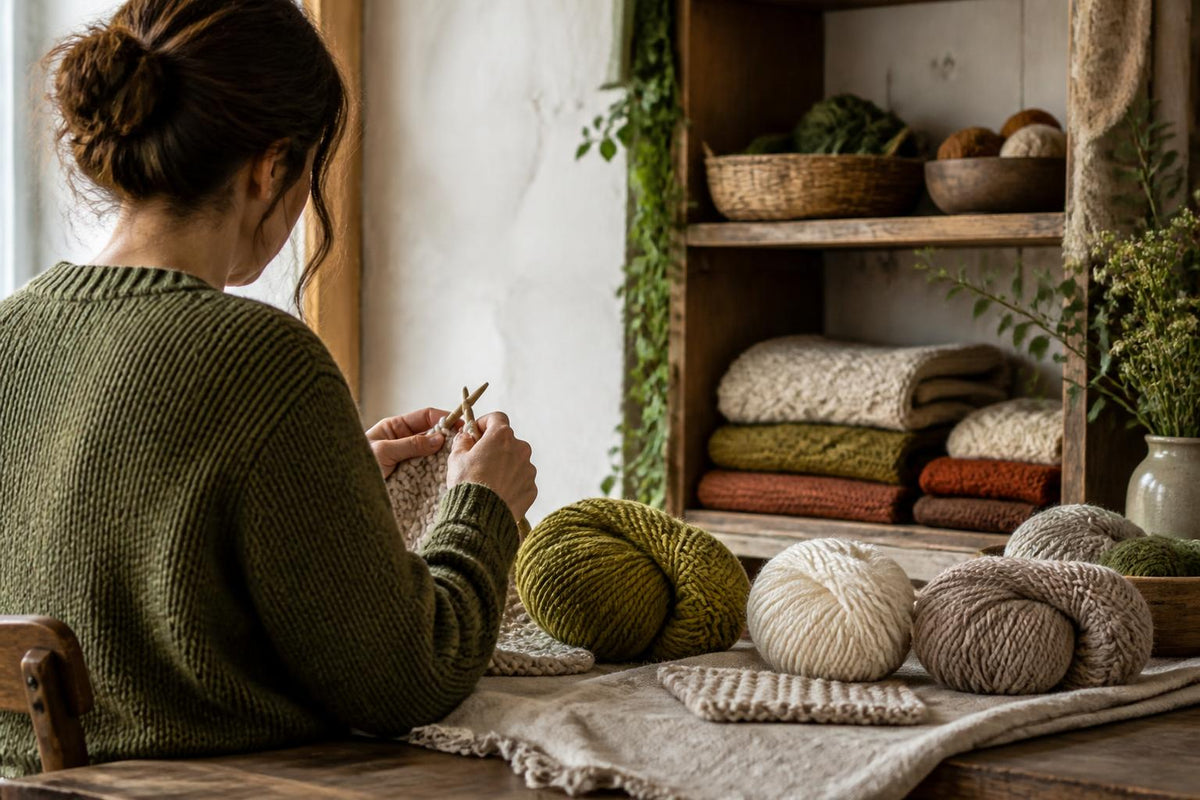
Choosing the right aran yarn is mostly about matching three things properly: the pattern’s gauge, the fibre’s behaviour, and the use the finished item needs to stand up to. In UK projects, aran sits in a very useful middle ground. It works up faster than DK, gives more structure and warmth, and still has enough flexibility for garments, accessories and homewares.
If you want reliable results, do not choose on ball count, colour or softness alone. Read the pattern closely, compare metreage, check the fibre content, and make a proper tension square before you buy in full quantity or cast on. That approach saves time, avoids awkward substitutions, and gives you a finished project that behaves as expected after wear and washing.
What aran yarn means in UK projects
In UK knitting and crochet, aran usually refers to a medium weight yarn that is thicker than DK and lighter than chunky or super chunky. It is commonly used with knitting needles around 4.5 mm to 5.5 mm, and crochet hooks in a similar range, although the exact tool size depends on the yarn structure and the fabric the pattern wants you to achieve.
If you are comparing weights in practical terms, DK often gives a lighter, more flexible fabric and suits layering garments, baby items, and projects with finer detail. Aran builds fabric more quickly and adds warmth without becoming bulky too fast. Super chunky creates volume and speed, but it changes the scale of the project significantly and is not a substitute unless the pattern has been written for it.
That is why aran is so popular for UK projects such as:
- jumpers and cardigans for everyday wear
- hats, scarves and cowls
- textured blankets
- cushion covers
- crochet bags and baskets
- cabling, ribbing and other stitch patterns that benefit from definition
When people search for aran yarn UK options, they are often looking for that balance between speed and usability. Aran is substantial enough to feel satisfying in the hand, but not so thick that every project becomes heavy or oversized.
It is also worth remembering that yarn weight names are conventions, not legal standards. One brand’s aran may feel lofty and light, another may feel dense and firm. The ball band gives the best starting point. Check the metreage per 50 g or 100 g, suggested needle or hook size, and gauge guidance before assuming two aran yarns will behave the same way.
How to tell whether an aran yarn is right for your pattern
Start with the pattern requirements, not the yarn shelf. A well-written pattern usually tells you:
- the yarn weight
- the total metreage needed for each size
- the recommended needle or hook size
- the gauge, sometimes called tension
- the fibre content or a close example yarn
The most common mistake is matching only by number of balls. Ball size varies. One aran yarn may come in 50 g balls, another in 100 g skeins, and the metreage can differ a great deal even at the same weight. Always compare total metres.
For example, if a jumper pattern asks for 1,200 metres of aran, it does not matter whether that comes from 12 x 100 m balls or 8 x 150 m balls. The key figure is the total length, then a little extra for swatching and any modifications.
Next, check whether the pattern depends on the yarn’s structure. This matters more than many knitters and crocheters expect. A smooth plied wool aran will show cables and twisted stitches clearly. A blown yarn, haloed yarn, or chainette construction may soften those details. Likewise, a dense cotton aran can produce a very different drape from a springy wool aran, even if both are labelled the same weight.
When deciding whether substitution is realistic, ask these questions:
- Does the pattern rely on stretch?
Wool and wool-rich yarns usually recover better than plant fibres.
- Does the pattern rely on drape?
A cardigan, shawl-collar garment or relaxed crochet top may hang very differently in cotton or linen.
- Does the stitch pattern need crisp definition?
Cables, moss stitch and crochet post stitches often look best in smoother yarns.
- Will the finished size change if the yarn blooms after washing?
Some fibres relax, others full slightly, and some soften dramatically.
If you are browsing our aran yarn collection, use the product details as a checklist rather than choosing by colour first. The right shade matters, but a beautiful yarn that does not suit the pattern is rarely the best buy.
Also pay attention to the dye lot. If you need multiple balls for one project, buy enough from the same dye lot where possible. Even small tonal shifts can show across a garment or blanket, especially in solid shades and simple stitch patterns. If the yarn arrives in more than one dye lot, alternating balls every few rows or rounds can help blend the transition.
Why fibre matters as much as yarn weight
Yarn weight tells you roughly how thick the yarn is. Fibre tells you how it will behave. For reliable project results, fibre matters just as much as whether the label says aran.
Wool is often the easiest all-round choice for aran projects. It offers warmth, elasticity, and good stitch memory. That makes it particularly useful for garments, ribbed hats, socks worked at a firmer gauge, and textured knitting. Wool also tends to block well, which helps shape finished pieces neatly.
Merino is a type of wool known for softness and comfort against the skin. In aran weight, merino can be excellent for hats, cowls and jumpers where softness is a priority. It usually gives clear stitch definition and a comfortable fabric, but some merino yarns are softer and less robust than more rustic wool. For hard-wearing items, especially bags or frequently used homewares, a firmer wool or blend may be more practical.
Blends can solve specific problems well. Wool-acrylic blends often reduce cost, add durability, and make care easier. Wool-nylon blends can improve resilience. Alpaca blends add warmth and softness, but may reduce spring. Cotton-wool blends can suit transitional garments where you want less heat and more weight in the fabric.
Plant fibres such as cotton, linen and bamboo behave very differently. They have less natural elasticity than wool, so they can feel heavier and less forgiving in aran weight. That is not a fault, it just means they suit different jobs. Cotton aran can work well for structured crochet, dishcloth-style home projects, market bags, and garments where you want crisp edges and less bounce. Linen blends can create beautiful drape, but they often soften with washing rather than feeling supple straight away.
Care also matters. If the project is for a baby, a gift recipient, or everyday household use, be honest about laundering. A hand wash only yarn may be perfect for a special shawl, but less suitable for a child’s cardigan or sofa blanket. In the UK, the practical question is usually simple: will the owner actually care for this item properly? If not, choose accordingly.
For colour planning as well as fibre planning, it can help to look at colour palette inspiration for handmade projects before settling on a yarn. Texture and fibre affect how colour reads, especially in cables, crochet texture and larger garments.
How to check tension before you commit
If you skip gauge, you are guessing. Sometimes you get away with it. Often you do not.
A proper tension square tells you whether your fabric matches the pattern before you invest hours in the full project. For knitting, make a square larger than the stated gauge area, usually at least 15 cm x 15 cm. If the pattern gives tension over 10 cm, measuring a larger swatch is more accurate than counting stitches right at the edge.
Cast on enough stitches to exceed the measurement comfortably. Work in the stitch pattern named in the pattern, not automatically in stocking stitch. If the garment is mainly cable, rib or lace, the gauge in that pattern matters more than a plain swatch. Wash and dry the swatch as you will treat the finished item. Wool may bloom, cotton may relax, and both can change size after laundering.
Then measure the centre 10 cm with a ruler or gauge tool. Count stitches across and rows down.
- Too many stitches in 10 cm means your fabric is too tight. Go up a needle size or hook size.
- Too few stitches in 10 cm means your fabric is too loose. Go down a size.
For crochet, the same principle applies, but pay close attention to terminology. UK crochet terms and US terms are not interchangeable. A UK treble is not the same stitch as a US treble. Before you even make the swatch, confirm which terminology the pattern uses. Misreading that point can throw off gauge completely.
For crochet gauge, make the tension square in the stated stitch pattern, wash if appropriate, then measure the centre. If stitch count matches but row count is slightly different, that may or may not matter depending on the project. For fitted garments, row gauge can affect armhole depth, body length and sleeve shaping. For scarves or blankets, stitch gauge is usually more critical.
If your gauge is still off after changing tools, consider whether the yarn itself is the issue. A dense cotton aran may never mimic the spring of a wool aran. In that case, changing patterns, changing yarn, or accepting a different finished size may be more sensible than forcing the substitution.
How much aran yarn do you need?
The honest answer is always, it depends on metreage, project size, stitch pattern and fibre. Still, rough planning is possible if you treat these as estimates rather than promises.
For smaller accessories in aran weight, many projects can be completed from a modest quantity:
- a simple hat often takes around 80 to 150 metres
- a cowl may use 150 to 300 metres
- mittens or fingerless gloves often need 100 to 200 metres
- a scarf can range from 250 metres for a shorter plain version to much more for a long textured one
For larger projects:
- a baby blanket may need a few hundred metres or more, depending on dimensions and stitch density
- an adult jumper often needs somewhere from roughly 800 metres upward
- a cardigan usually requires more than a jumper of the same size because of front bands, shaping and extra length
- a throw or large blanket can quickly run into several thousand metres
The stitch pattern changes everything. Cables, bobbles and heavily textured crochet use more yarn than plain stocking stitch or straightforward double crochet. Likewise, a long-line cardigan uses more than a cropped one, and a generous shawl collar uses more than a simple crew neck.
Fibre can alter quantity planning too. A lofty woollen spun aran may cover more area for its weight than a dense cotton aran. This is why metreage is more reliable than grams alone.
When ordering, add a margin for safety. One extra ball is usually cheaper than trying to source a matching dye lot later. This is especially important for garments, blankets and any project where colour consistency matters across a wide area.
If you are making several accessories or planning gift knitting, yarn multipacks for larger makes can make quantity planning easier. They also reduce the risk of ending up one ball short halfway through a project.
When aran is the wrong choice
Aran is versatile, but it is not automatically the best answer.
Choose DK instead when you want lighter fabric, finer shaping, or more layering comfort. DK is often better for baby clothes, lightweight jumpers, socks at standard garment gauge, and projects where bulk would get in the way. It can also be the better option for complex colourwork, where too much yarn thickness can make the fabric stiff. If a pattern was written with drape and lightness in mind, moving up to aran may spoil the fit rather than improve it. In those cases, a lighter DK yarn option is usually the more practical route.
At the other end, there are times when super chunky makes more sense than aran. If the project is about speed, bold texture, or immediate warmth, super chunky can be the better choice. It suits oversized scarves, quick hats, dramatic cushions and beginner-friendly projects where seeing stitch structure clearly helps.
That said, super chunky is not just aran made thicker. It changes the scale, weight and drape of the finished item. A pattern written for aran cannot simply be worked in super chunky and expected to fit. Stitch counts, shaping and yarn consumption all change.
This is where a careful comparison helps. Our verified range includes World of Wool Chubbs, a super chunky merino yarn in multiple colourways. It is excellent when a pattern genuinely calls for super chunky, or when you want a soft, substantial fabric for fast-moving projects. If that is the effect you are after, browse our super chunky merino yarn range. But if your pattern has been written for aran, especially for a fitted garment or detailed stitch pattern, using Chubbs instead would usually mean choosing a different pattern altogether, not making a like-for-like substitution.
There are also practical cases where aran is simply too much yarn:
- garments for warmer indoor wear
- fine baby layers
- projects needing fluid drape
- detailed lace
- items where weight would cause stretching over time
And there are projects where aran is not enough:
- very fast gift makes on a deadline
- large statement accessories needing dramatic loft
- chunky home décor where structure comes from thickness itself
At Native Yarns, operated by Fleeta Limited, we find that good project results come from matching the yarn honestly to the job. Aran is one of the most useful weights in UK knitting and crochet, but it performs best when the pattern, fibre and gauge all agree. If you compare metreage carefully, check the dye lot, make a proper tension square, and think about how the finished item will be worn and washed, you are far more likely to end up with something that looks right, fits properly, and lasts well.
Is aran the same as worsted?
Not exactly. They are often treated as close substitutes, but labels, metreage and gauge can differ. Check the pattern tension and the yarn's metres per ball before swapping.
What size needles are used for aran yarn?
Many aran patterns use around 4.5mm to 5.5mm needles, but there is no single rule. The pattern gauge matters more than the number printed on a ball band.
What hook size works for aran yarn?
For crochet, aran often works somewhere around 5mm to 6mm, depending on the stitch and the fabric you want. Make a tension square before starting the full project.
Can I swap aran for super chunky?
Usually not without major changes. super chunky is much thicker, so size, drape and yarn quantity will all change. It is better to choose a pattern written for that weight.
Why does dye lot matter?
Different dye lot batches can vary slightly in shade, even within the same colourway. For larger projects, buy enough at the start and check all balls match before you begin.