
How to choose jumbo knitting yarn for cosy projects
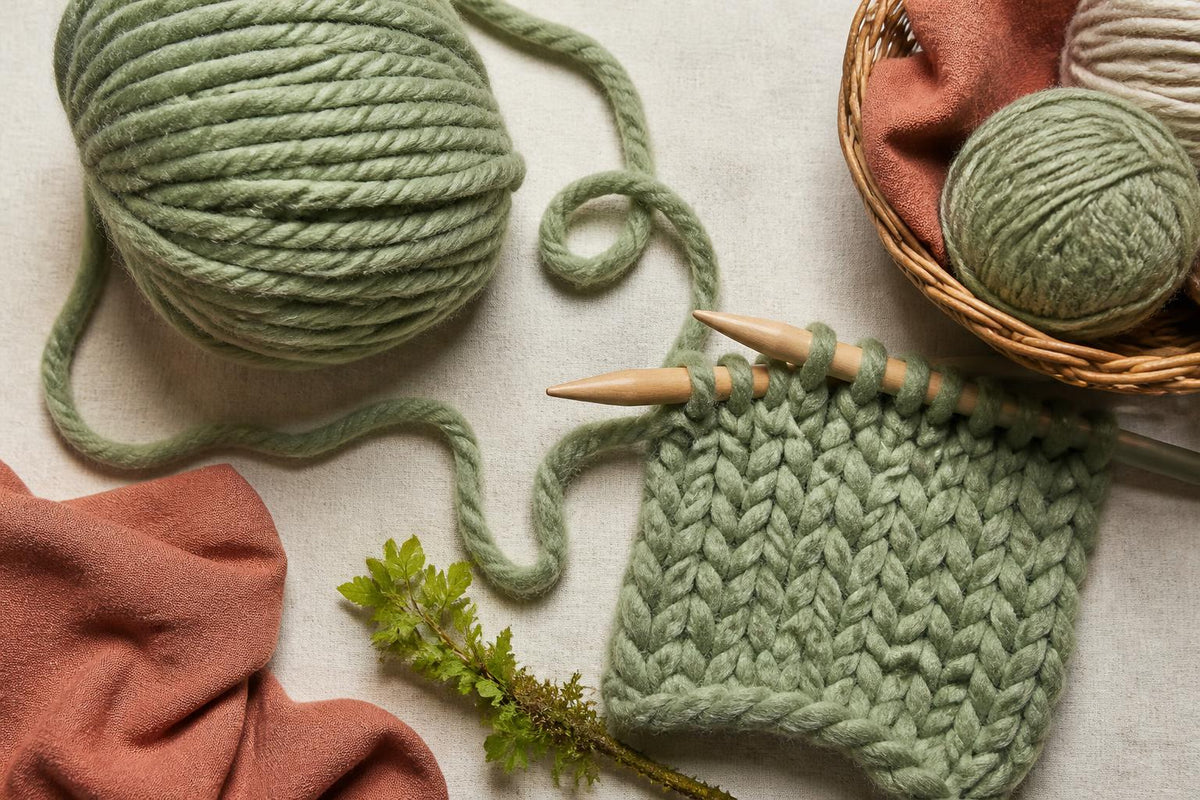
Choosing jumbo knitting yarn starts with three practical checks. Look at the yarn weight on the ball band, look at the recommended needle or hook size, and think about what you want the finished piece to do. For cosy blankets, cushions and quick accessories, very thick yarn can be a pleasure to work with, but only if the fibre, structure and care requirements suit the project.
For most UK makers, the best results come from treating “jumbo” as a description, not a guarantee. Marketing names vary widely between brands. What matters is whether the yarn behaves like the fabric you want to make. In our shop at Native Yarns, part of Fleeta Limited, our verified extra-thick option is World of Wool Chubbs super chunky merino yarn in a range of colourways. That gives us a useful real example of how to assess very bulky yarns sensibly before you buy.
What counts as jumbo knitting yarn in UK projects
In UK projects, people often use “jumbo” to mean yarn that is thicker than standard chunky or even thicker than many super chunky options. The difficulty is that there is no single UK legal definition of jumbo knitting yarn on a retail label. One brand’s jumbo may sit close to another brand’s super chunky. That is why the ball band matters more than the headline name.
Start with the stated yarn weight. In UK shops, “super chunky” is the term you will see far more often than “jumbo”. If a yarn is sold as super chunky, check the recommended needle or hook size and the gauge guidance. A very bulky super chunky yarn may be what you are looking for even if the word jumbo never appears on the label.
The next check is construction. A tightly spun thick yarn behaves differently from an unspun roving-style yarn of similar diameter. Tightly spun yarn usually gives clearer stitch definition and better durability. Looser, airier yarns can look beautifully soft and lofty, but they may pill, flatten or shed more readily with heavy use. That matters a great deal if you are making a floor cushion or a blanket that will be dragged from sofa to sofa.
Gauge is the best reality check. If the label suggests very few stitches over 10 cm, and requires large needles or hooks, you are in oversized territory. For knitting, you may be looking at needle sizes around 10 mm and upward. For crochet, similarly large hooks are common, though the exact size depends on whether you want a drapey or firm fabric. If you use UK crochet terms in patterns, double-check whether the pattern writer uses UK crochet terms or US terms before matching hook size and stitch count.
Intended use matters just as much as thickness. A yarn that feels gloriously oversized in a cowl may be too heavy for a garment. A yarn that makes a dramatic bed throw may be too delicate for a pet blanket. So when you assess jumbo knitting yarn, do not ask only, “Is this thick enough?” Ask, “Will this thickness, in this fibre and structure, produce the right fabric for this job?”
If you are comparing weights more broadly, it can help to look at how much finer categories behave as well. Our guide to how to choose wool for hand knitting with confidence gives a wider framework for matching yarn to project, rather than relying on category names alone.
How to choose the right fibre and texture
Once you know the yarn is thick enough, fibre becomes the deciding factor. With oversized yarns, fibre has an outsized effect on softness, warmth, weight, stitch definition and care.
Merino is often the first fibre people consider for cosy projects, and for good reason. Good merino is soft against the skin, warm without feeling harsh, and naturally springy. In a very thick yarn, that spring can help stitches look full and plush. It also contributes to loft, which is the airy structure that traps warmth without making the yarn feel as dense as a similarly thick cotton or acrylic blend.
Our verified bulky option is World of Wool Chubbs, a super chunky merino yarn. In practical terms, that means softness and warmth are strong points. It is well suited to scarves, throws, cushions and statement accessories where touch matters. Merino also tends to produce a rounded stitch, which can look especially attractive in simple textures such as garter stitch, stocking stitch, rib, moss stitch, and basic crochet stitches.
There are trade-offs. Merino can be more delicate than harder-wearing wools, especially in very soft, loosely structured yarns. If your project will take a lot of abrasion, such as a frequently sat-on floor cushion or a heavily used pet bed, you may prefer a firmer-spun wool or a blend designed for durability. Softness is lovely, but it is not the only measure of success.
Other common fibres behave differently:
Wool blends often improve resilience and reduce cost, while still keeping some warmth and bounce. Depending on the blend, they may hold shape better or resist wear more effectively than very soft pure merino.
Acrylic and acrylic blends can be lighter on care in some cases and may suit projects where washability is the top priority. The feel, breathability and stitch definition vary enormously, so it is worth checking whether the yarn looks crisp or fluffy when worked up.
Cotton is generally cooler, denser and less elastic. In thick yarns, it can become heavy quickly. That can work for baskets or structured homewares, but less well for a soft throw you want to drape around your shoulders. If you are weighing up fibre behaviour more generally, our article on choosing cotton wool for knitting without costly mistakes is useful for understanding where cotton shines and where it does not.
Alpaca and alpaca blends can be warm and soft, often with a gentle halo, but they may have less memory than wool. In thick yarns that can mean beautiful drape, but sometimes less crisp structure.
Texture matters almost as much as fibre. Smooth yarn shows stitch patterns clearly. A fuzzy or haloed yarn softens the edges of each stitch, which can be lovely in simple pieces but can hide cables or intricate textures. For beginners, smoother thick yarn is often easier to read and correct because you can see where each stitch begins and ends.
If your project is meant to be cosy, practical and long-lasting, choose fibre and texture together. For a blanket, loft and softness may matter most. For a cushion cover, you may want more structure. For a beginner scarf, easy stitch visibility can be more helpful than a dramatic fuzzy finish.
How much yarn will you need?
Very thick yarn can make a project grow quickly, but it also uses up metreage fast. That is where many people get caught out. A ball may look enormous and still contain less length than expected. Always buy by metreage or yardage, not by ball count alone.
The safest starting point is the pattern requirement. If you are following a pattern written for the same yarn, or for a yarn with similar weight, fibre and gauge, use that as your base. Then compare the stated metreage per ball to the yarn you plan to buy. Two super chunky yarns can differ substantially in length even if the balls look similar.
If you are not using a pattern, work from finished measurements. For a blanket, decide the actual size in centimetres first. Cot blanket, lap blanket, sofa throw and bed throw are all very different commitments in oversized yarn. A jumbo-style blanket can become surprisingly heavy and yarn-hungry once you increase the dimensions. For cushions, the insert size gives you your target. For scarves, decide whether you want a short neck warmer, a standard scarf, or an extra-long wrap.
Then make a swatch. With thick yarn, a tension square still matters. It tells you not only whether the fabric looks right, but how much yarn your chosen stitch pattern consumes. A loose garter fabric and a dense basketweave can use the same yarn very differently. We recommend making a decent-sized swatch, measuring the usable centre section, and if you want a more exact estimate, weighing the swatch and scaling up from there.
For example, if your swatch covers a measured area and uses a known amount of yarn, you can estimate the total based on the area of the finished project. You do not need elaborate maths, just a sensible comparison. This is especially useful for blankets and cushion fronts where the shape is straightforward.
For beginner pieces, keep some contingency. Thick yarn is forgiving in one sense because progress is quick, but mistakes can cost more yarn to fix. Cast-ons, borders, joining, tassels and matching a pair all add up. We usually suggest buying an extra ball if your estimate is close, especially when colour continuity matters.
That matters even more when stock can vary by colourway. If you are making a blanket in one shade, running short near the end is frustrating. If you are making a striped project, make sure each stripe plan is realistic in metreage terms before you start.
If you need help matching yarn quantity to design choice, our guide to how to choose knitting patterns that suit your yarn can help you avoid patterns that look lovely on paper but are impractical in the yarn you actually want to use.
Tools, tension and technique for oversized yarn
Very thick yarn needs the right tools. The label will usually suggest a needle or hook range, and that is the best place to begin. For knitting, oversized yarns often call for large straight needles or circular needles with a long cable, even for flat pieces, simply because a heavy blanket or wide scarf sits more comfortably on a cable. For crochet, choose a hook that lets the yarn move without splitting or dragging.
Do not assume larger is always better. If the tool is too large, the fabric can become slack, unstable and full of gaps. If it is too small, the yarn can feel hard to manipulate and the finished piece may become stiff and heavy. The right size depends on the look you want. A blanket may benefit from a softer hand. A basket or cushion panel may need more firmness.
A tension square is still essential. People often skip it with oversized yarn because they think the project is simple or because the stitches are easy to count. But thick yarn magnifies small differences. Being one stitch out over 10 cm can change a finished blanket by a noticeable amount. It can also change yarn usage enough to leave you short.
Make your tension square in the actual stitch pattern, using the actual tools, and treat it as a fabric test. Ask these questions:
Does it feel soft enough? Does it hold its shape? Can you live with the gaps between stitches? Does the fabric look balanced after resting?
If the answer to any of those is no, change tool size before you begin the project proper.
Handling technique also matters more than many people expect. Very thick yarn can strain hands, wrists and shoulders if you grip too tightly. Work with the yarn supported on a table or beside you, rather than letting a heavy ball dangle. Keep your movements small and relaxed. If you usually knit tightly, consciously loosen your hold. If you crochet, avoid over-tightening loops on the hook, which can make the next row awkward and uneven.
With oversized yarn, simpler stitches often look best. The yarn itself provides drama and texture. Complex stitch patterns can become bulky and hard to read. For beginners, this is good news. Basic knit and purl combinations, or straightforward crochet stitches, can produce a polished result quickly.
Colour, dye lot and care before you buy
Colour deserves more planning with thick yarn than people sometimes give it. Because the stitches are large, colour shifts show clearly. That can be beautiful, but it also means that a shade which looks subtle in the skein may dominate the whole room once worked into a large throw or cushion.
If you are choosing for interiors, think about scale. A pale neutral can look calm and soft in a chunky texture. A saturated jewel tone can look rich and dramatic. Speckled or heavily variegated yarns create movement, but in very thick stitches they can interrupt stitch definition. If your pattern already has strong texture, a plainer colourway often lets the fabric speak for itself. If you want help narrowing the mood of a project, our yarn colour palette inspiration page is a good place to compare combinations and visual direction.
Always check the dye lot when buying more than one ball of the same shade. A dye lot identifies a batch coloured together. Small variation between batches is normal, even in the same named colour. In a fine yarn, the difference may be subtle. In a very thick yarn, it can be obvious. For a single-colour blanket or cushion set, buy enough from the same dye lot at the start if you can.
If you do have to combine different dye lot numbers, alternate balls every couple of rows or rounds rather than working one batch and then the next in a block. That helps blend any slight variation.
Care needs to be considered before purchase, not after the project is finished. Chunky merino projects are often chosen for comfort, but softness comes with responsibilities. Check the care instructions on the label. Many merino yarns prefer gentle hand washing or very careful wool-cycle treatment, and some are best treated as hand wash only. In the UK, those care instructions are the practical standard you should follow. Do not assume that because a yarn is wool, all wool care methods are interchangeable.
Drying matters too. Heavy wet wool can stretch under its own weight. We advise drying flat, reshaping while damp, and keeping the piece fully supported. Avoid hanging a wet blanket or scarf over a line if you want it to keep its proportions.
Storage is straightforward but important. Keep clean, fully dry items in a breathable container, away from direct sunlight and damp. For long-term storage, avoid compressing lofty pieces too aggressively, especially soft merino, as prolonged crushing can flatten the texture. If you rotate seasonal homewares, give them a quick airing before use and a check for any signs of moth activity.
The best jumbo knitting yarn for cosy projects is the one that matches your use, your tools and your willingness to care for the finished piece. If you judge thickness by label and gauge, choose fibre by function, estimate quantity by metreage and swatching, and check colour and dye lot before checkout, you will make better choices and enjoy the making far more.
Is jumbo knitting yarn the same as super chunky?
Not always. Sellers and pattern writers use these terms differently. Check the stated gauge, recommended needle or hook size, and the pattern's finished measurements rather than relying on the name alone.
Is World of Wool Chubbs suitable for beginners?
Very thick yarn can be beginner-friendly because stitches are easy to see. It still helps to make a tension square first, as oversized yarn can change size quickly with small differences in tension.
How important is dye lot for a blanket?
Very important. A large project may use several balls, and colour can vary slightly between batches. Buy enough from one dye lot where possible, especially for plain areas and simple stitch patterns.
Can I use jumbo yarn for crochet as well as knitting?
Yes, if the yarn suits the pattern and you match it to the right hook size. For UK readers, it helps to check whether a pattern uses UK crochet terms or US terms before starting.
Do I still need a tension square with very thick yarn?
Yes. Jumbo yarn grows quickly across a project, so being even one stitch out can noticeably change the finished size, drape and yarn quantity needed.