
How to choose a crochet blanket kit that actually fits
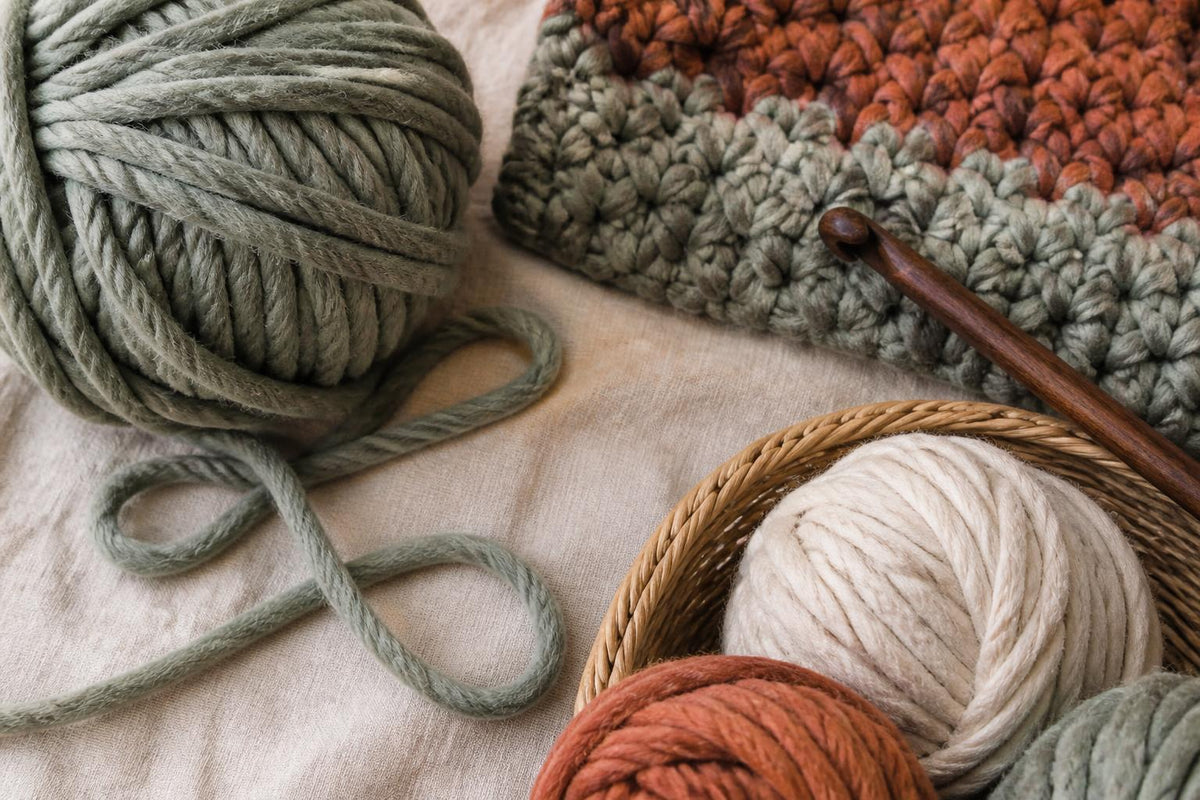
Choosing a blanket kit is mostly about making sure the project in the box matches the blanket you want to live with afterwards. A good kit should tell you exactly what is included, how big the finished blanket is meant to be, what yarn weight and fibre it uses, and whether you will need to buy anything else before you can begin. If any of that is vague, the kit may still be attractive, but it is harder to judge whether it actually fits you.
For most people, the best crochet blanket kits with yarn are the ones that remove uncertainty rather than simply bundling pretty colours together. You want enough yarn for the stated size, a pattern written clearly in UK crochet terms if that is what you use, and realistic guidance on hook size, tension, finishing and care. That matters more than whether the photos are styled beautifully.
What should a crochet blanket kit include?
At minimum, a useful blanket kit should include three things, yarn, a pattern, and clear information about the finished size. If one of those is missing, it is not really a full project kit. It may still be a yarn bundle or a pattern pack, but that is a different purchase.
When we assess a blanket kit, we look for the following:
- The exact yarn name
- Fibre content
- Yarn weight
- Number of balls, skeins or hanks included
- Metres per ball and total metreage
- Finished blanket dimensions
- Hook size required
- Pattern format, such as printed or digital
- Language and terminology used, especially UK crochet terms or US terms
- Whether the kit includes extras such as a hook, wool needle, stitch markers or a storage bag
The most common source of confusion is the phrase “kit includes pattern and yarn”, because it sounds complete, but may still leave out the hook and finishing needle. For an experienced crocheter that is not a problem. For a beginner, it can stop the project before it starts. A true beginner-friendly kit should say plainly whether tools are included or whether you need to add them separately.
It is also worth checking whether the yarn shown in the product photos is the yarn actually supplied. Sometimes a design is photographed in one shade, but the live product page offers a substitute or a different fibre blend. That is not necessarily wrong, but it changes the feel, drape and warmth of the finished blanket.
Pattern clarity matters just as much as the materials. A blanket pattern can be technically simple but still frustrating if the layout is poor, abbreviations are unexplained, or repeats are hard to follow. If you are still building confidence, our guide to crochet for beginners with the right first project helps you judge whether a project is likely to feel manageable from the start.
If you are looking specifically at chunky designs, pay attention to whether the pattern has been written for the exact yarn in the kit or adapted from another base. With large stitches, small changes in yarn loft or twist show up quickly in the final size and structure. That is one reason we are careful when discussing heavier yarns such as World of Wool Chubbs. It is a distinctive super chunky merino yarn, and patterns need to suit that character rather than simply assuming any thick yarn will behave the same way.
How much yarn do you need for a crochet blanket?
There is no single answer, because yarn usage depends on four things at once, blanket size, stitch choice, yarn weight, and your own tension. Two people can follow the same pattern with the same hook and still use different amounts.
Blanket size is the obvious starting point. A pram blanket needs far less yarn than a throw for a double bed. Product pages should state finished dimensions in centimetres, not just “lap blanket” or “large throw”. Those labels are too loose to help you compare kits properly.
Stitch choice changes yarn consumption more than many people expect. Dense stitches such as bobbles, front post textures, waffle stitch and heavily layered motifs can use much more yarn than a simpler treble, granny stripe or mesh-based design. A pattern that looks only slightly more textured in the photo may require several extra balls in practice.
Yarn weight matters because thicker yarn covers ground quickly, but it also creates bulk. A super chunky blanket may grow fast, but it can become heavy if the stitch pattern is dense. A DK or aran blanket can take longer and involve more stitches, but may drape better for everyday use. That is why “quicker” does not always mean “better” when choosing a kit.
Then there is personal tension. Some crocheters naturally work tightly, others more loosely. Tight crocheters often use more yarn over the same measured area because the fabric is denser. Loose crocheters may achieve more drape and slightly larger dimensions from the same quantity. This is why one kit can fit one person beautifully and leave another unexpectedly short on yarn.
A trustworthy kit should either include enough yarn for the pattern as written, based on the stated gauge, or clearly say that the quantity is an estimate. If the design allows for custom sizing, look for guidance such as “add one ball for extra length” or “buy two additional balls for a larger throw”. Without that, you are left guessing.
If you are comparing blanket kits with yarn and trying to work out value, do not just count balls. Compare total metreage. Six balls of one yarn may contain less yarn than four balls of another. Metres tell you far more than the number of balls in the bag.
This is especially important with bulky yarns. Some super chunky yarns are dense and weighty, others are airy and lightly spun. A blanket made in merino can feel very different from one made in a synthetic blend, even when the labels suggest a similar thickness. If you want help thinking through those trade-offs, our piece on choosing chunky crochet yarn that won’t fight your project goes into the practical side.
Which yarn works best for blankets?
The best blanket yarn is the one that suits how the blanket will be used. A sofa throw, baby blanket, decorative bed layer and heavy winter wrap all ask different things from the yarn.
Warmth is usually the first consideration. Wool and wool-rich yarns trap heat well, and merino is often chosen because it adds softness without the scratch some people associate with sturdier wool types. For a cosy throw used in a cool room, that can be exactly right. For a blanket that will be washed frequently or used by someone sensitive to heat, a wool-heavy option may be less practical.
Softness matters, but so does structure. Very soft yarn can feel lovely in the hand and still be the wrong choice if it pills quickly or lacks resilience. Blankets are handled, folded, sat on and washed. They need a fibre that can cope with regular use.
Weight is another balancing point. A super chunky blanket works well when you want speed, visible texture and a substantial feel. It is often a strong choice for simple stitch patterns because the yarn does most of the visual work. But for a very large blanket, super chunky yarn can become physically heavy and less flexible, especially in dense stitches. That is where a lighter weight yarn may make more sense.
Care is where many beautiful projects become inconvenient. Before buying a kit, check whether the finished blanket is hand wash only, machine washable on a wool cycle, or suitable for standard machine washing. In the UK, product care guidance should be clear enough to help you make an informed decision before purchase. If the yarn is wool-based, the care instructions are particularly important because shrinkage and felting are real risks if the blanket is washed incorrectly.
Durability often comes down to fibre blend and construction. A tightly spun yarn tends to stand up to abrasion better than a very loose, roving-style yarn. That does not mean loosely spun yarns are poor choices. It means they suit some projects better than others. A decorative throw used occasionally can carry more delicacy than a blanket used every evening.
This is where World of Wool Chubbs sits in a very specific place. It is a super chunky merino yarn with a distinctive look and feel, and it suits projects where warmth, softness and bold stitch definition are part of the appeal. It is not automatically the right answer for every blanket. For some homes and some users, a lighter or more hard-wearing yarn will be the better fit. The point is to match the yarn to the use, not just to the photo.
Why do tension square and dye lot matter so much?
A tension square tells you whether your crochet fabric matches the pattern writer’s measurements before you commit to the full blanket. It is one of the least glamorous steps and one of the most useful.
For blankets, a tension square helps in two ways. First, it helps you predict finished size. If your stitches are tighter than the pattern expects, your blanket may come out smaller. If they are looser, it may come out larger. Second, it helps you estimate yarn usage. A tighter fabric often consumes more yarn. A looser one may use less, but can also change the warmth and appearance of the blanket.
For a large project, even a small difference in gauge adds up. A square that is only slightly off over 10 cm can become several centimetres out across the width of a full throw. That is why a kit that includes the right amount of yarn for the stated pattern can still fall short if your tension differs significantly.
When making your tension square, use the exact yarn and hook intended for the project. Measure the centre area after the swatch has relaxed, not the curled edges. If the fibre is likely to bloom or settle after washing, it is worth treating the swatch as you plan to treat the finished blanket.
The dye lot matters because large blankets use a lot of yarn, and colour variation between production batches can be visible across a broad surface. On a hat or small cushion, a slight shift may not matter. On a blanket, especially one worked in wide stripes or large blocks of one shade, it can be obvious.
A proper product page should tell you whether all yarn in the kit is supplied from one dye lot where possible. If you are buying extra balls separately, check that too. If matching lots are unavailable, alternating skeins for a few rows can help blend minor variation, but it is far better to buy enough at the outset.
This is one of the reasons we encourage people not to underbuy in the hope of saving money. Our article on how to spend less on crochet yarn without false economy covers that mindset in more detail. With blankets, the cost of running short can be more than the cost of one extra ball.
How do you choose the right kit for your skill level?
The right skill level is not just about whether you can form the stitches. It is about whether you can complete the whole project comfortably, including counting repeats, joining sections, weaving in ends, and correcting mistakes without losing heart.
For beginners, the best blanket kits usually have a repetitive stitch pattern, straightforward shaping, and clear row-by-row instructions. A simple stripe, granny-based design or one-row repeat is often far more enjoyable than an intricate textured pattern that looks impressive in the photograph but demands constant attention.
Improvers can often manage more complex textures, colour changes and modular construction, but should still check how much finishing is involved. A blanket made from many motifs may be easy in small sections and still become tedious when it comes to joining and edging. If you know you dislike sewing up, that matters.
Pattern terminology is another practical checkpoint. If you learned from British books, magazines or classes, you may naturally read UK crochet terms. If a kit uses US terms and does not say so clearly, the result can be complete confusion. Double crochet and treble crochet do not mean the same thing across systems. If you need a refresher, our guide to UK and US crochet terms made simple for beginners is worth keeping nearby.
Also look at the finishing expectations. Does the pattern require blocking? Does it have a wide border that must lie flat? Are there frequent colour changes with many ends to weave in? These are not advanced techniques in themselves, but they do affect whether a project feels achievable.
A realistic kit should not rely on the buyer already knowing what the pattern leaves unsaid. If the product page describes a kit as beginner-friendly, we would expect the instructions to explain abbreviations, repeats and assembly clearly, not assume prior experience.
What to check before you buy online
Before you buy, slow down and read the product page as if you were checking a pattern before casting on. The details matter.
Use this checklist:
- Is the exact yarn named?
- Is the fibre content listed, such as wool, cotton, acrylic, or merino?
- Is the yarn weight stated clearly?
- How many balls or skeins are included?
- What is the total metreage?
- What finished size is the kit designed to make?
- Which hook size is required, and is it included?
- Is the pattern included, and in what format?
- Does the pattern use UK crochet terms or US terms?
- Is a tension square given?
- Are care instructions stated clearly?
- Is the yarn all from one dye lot where possible?
- Are the photos showing the exact kit currently being sold?
- Is the kit currently published and available, rather than shown for inspiration only?
That last point is easy to miss. Some websites keep older project pages live as journal content or gallery references. Those can be useful for ideas, but they are not the same as a current retail listing. Check whether you are on an active product page with an add-to-basket option and current specifications.
At Native Yarns, operated by Fleeta Limited, we are careful to separate educational content from live retail listings. That matters because readers often compare fibres, yarn weights and project types across articles before deciding what suits them. At present, our verified retail range includes World of Wool Chubbs in multiple colourways, and we discuss broader tools, fibres and kit features as part of helping you choose well.
A blanket kit is a good fit when the materials, instructions and finished result all line up with your expectations. If the yarn is right but the care is wrong, it is not the right kit. If the pattern is beautiful but the terminology is unclear, it is not the right kit. If the quantity looks generous but the metreage is low, it may not be the right kit either.
The best choice is usually the one that tells you enough to decide with confidence before you buy. That is what turns a hopeful purchase into a blanket you actually finish, use and enjoy.
Are crochet blanket kits with yarn good for beginners?
They can be, if the pattern uses straightforward stitches, clear UK crochet terms and a manageable blanket size. Check whether the kit includes enough yarn and whether any tools must be bought separately.
Is super chunky yarn a good choice for a blanket?
Often yes, especially if you want a blanket that works up quickly and feels warm and substantial. It is worth checking the finished weight, care needs and whether the pattern is designed for super chunky yarn.
Why might two people need different amounts of yarn?
Crochet tension varies from person to person. Stitch choice, hook size and any size changes also affect yarn use, which is why a tension square is useful before committing to a full blanket.
Do I need all the yarn from one dye lot?
For a blanket, it is usually sensible where possible. Small colour differences between dye lot batches can show across a large surface, especially in plain blocks or simple repeating stitches.
Can I swap the yarn in a blanket kit?
You can, but it may change the size, drape, warmth and yarn quantity needed. Compare fibre, yarn weight and the pattern tension before substituting, rather than assuming one yarn will behave like another.