
How to choose patterns that suit your yarn and skills
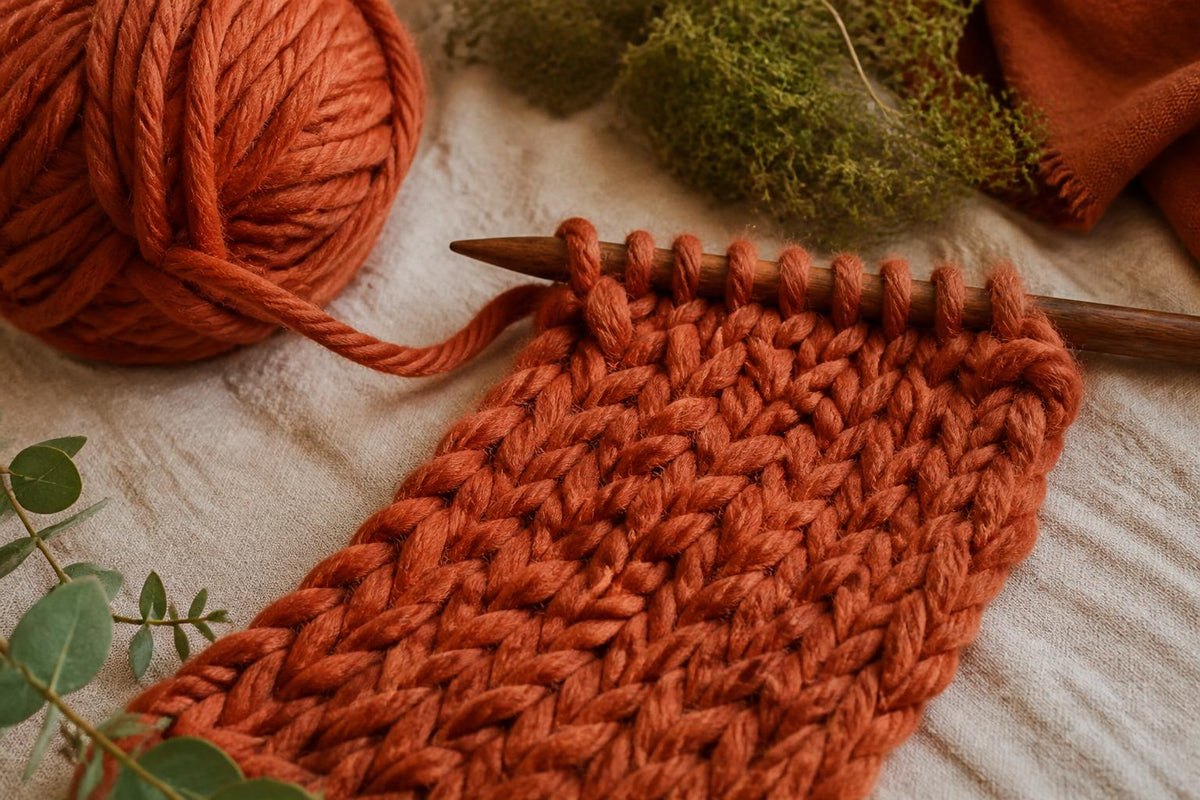
Choosing between knitting and crochet patterns is easier when you check three things before you cast on or make a starting chain. First, is the pattern written clearly enough that you can follow it without guessing? Second, does it suit the yarn you actually want to use, not just the yarn shown in the photograph? Third, does it match your current skills, tools and patience for the techniques involved?
A good pattern does not have to be simple, but it does need to be honest about what it asks of you. If you can read the yarn requirements properly, make a reliable tension square, and match the instructions to the right hooks, needles and terminology, you are far less likely to end up with a project that comes out too small, too stiff, or half finished in a work bag.
What makes a pattern worth choosing in the first place
The first test is clarity. Before buying or downloading a pattern, look for signs that it has been edited properly. A useful pattern usually includes:
- finished measurements
- yarn weight and total meterage
- needle or hook size
- tension or gauge information
- abbreviations and special stitches
- construction notes, such as worked flat, in the round, top down or seamed
- a clear size table if it is a garment
If any of those are missing, you may still be able to make the project, but you are taking on more guesswork. That matters most with garments, fitted hats and anything where drape is part of the design.
Then assess the skill level honestly. “Beginner” can mean very different things from one designer to another. For us, a genuinely beginner-friendly pattern is one that uses a small number of repeated stitches, gives straightforward shaping, and does not assume experience with chart reading, short rows, provisional cast-ons or complex stitch combinations. In crochet, the same applies to projects that avoid intricate stitch placement, advanced increases hidden in texture, or shaping that depends on reading the fabric rather than following line by line instructions.
It also helps to look at the type of finishing required. A scarf worked in one piece is very different from a cardigan with picked-up bands, mattress stitch seams and buttonholes. Many knitters and crocheters can manage the main fabric but lose confidence at assembly. If you want a project you will actually finish, choose one where the finishing matches your comfort level too.
Be realistic about the result you want. Some patterns are chosen because the photo is attractive, but the yarn, stitch pattern and construction may not suit everyday use. A heavily textured stitch in a lofty yarn can look beautiful in a styled image and still be awkward under a coat or too warm indoors. If your aim is a practical hat, baby blanket or quick gift, utility matters as much as appearance.
If you are still building confidence, it is often better to choose smaller projects with one new skill at a time. Our article on easy scarf knitting patterns that beginners can finish is a good example of how manageable construction can help you learn without feeling bogged down.
How to read yarn requirements without getting caught out
The yarn line of a pattern tells you more than the brand name. Read it as a set of specifications.
Start with yarn weight. In UK pattern language you may see terms such as 4 ply, DK, aran, chunky and super chunky. These are useful categories, but they are not exact measurements. One chunky yarn can be denser, loftier or smoother than another, and that affects the finished fabric. That is why meterage and gauge matter alongside the weight label.
Next, check fibre. A pattern written for wool may behave very differently in cotton, alpaca or acrylic. Wool, especially merino, has elasticity and bounce. Cotton has less stretch and often produces a firmer fabric. Alpaca can drape beautifully but may grow with wear. If the design depends on crisp stitch definition, deep ribbing or structured shaping, fibre choice can change the result as much as hook or needle size.
Meterage is where many substitutions go wrong. Do not compare only by number of balls or skeins. Compare the total metres required and the metres per ball of the yarn you plan to use. A pattern calling for six balls of one yarn may need only four of another, or eight, depending on put-up. This is especially important when buying online, where the ball count can look similar while the meterage is not.
Also check whether the pattern quantity is given for the smallest size only or for all sizes in a table. For garments, each size should have its own requirement. For striped or colourwork projects, look for separate amounts per colour.
Substitution works best when you match as many of these factors as possible:
- yarn weight
- fibre behaviour
- total meterage
- recommended gauge range
- intended fabric, such as airy, dense, elastic or draped
If you are unsure how different yarn categories compare, our guide to crochet yarn sizes made simple for better project choices helps break down the practical differences.
One more point for UK makers, particularly when using imported patterns. A US pattern may list yarn weights and quantities in terms that do not align neatly with UK naming. The same applies to crochet terms, which can mean something completely different depending on whether the pattern uses UK or US conventions. Always check the pattern notes before assuming a familiar abbreviation means the same thing.
Why tension matters more than many beginners expect
A tension square is not a formality. It is the quickest way to find out whether your fabric will match the pattern in size, feel and yarn consumption.
In knitting and crochet, gauge tells you how many stitches and rows fit into a stated measurement, usually 10cm. If your stitches are larger than the pattern gauge, your item will come out bigger and may use more yarn. If your stitches are tighter, the item may be smaller, stiffer and still use yarn differently because row count changes as well.
This matters most for garments, hats and fitted accessories, but it also matters for blankets, bags and homeware. Even where exact sizing is less critical, gauge affects drape, warmth and texture. A shawl worked too tightly can feel board-like. A basket worked too loosely may collapse. A cowl made in a yarn with halo can become much denser than expected if your tension is tight.
Make your tension square in the same stitch pattern stated by the designer, not just in plain stocking stitch or rows of double crochet unless that is what the pattern specifies. If the pattern says “18 stitches and 24 rows over 10cm in pattern after blocking”, all of that matters. Stitch pattern and finishing can change the measurements noticeably.
Measure properly. Make a swatch larger than 10cm so you can measure the centre without edge distortion. For knitting, many people cast on enough stitches for at least 12 to 15cm width. For crochet, work enough rows to get a stable square. Then wash or block it the way you will treat the finished item. Wool often relaxes, cotton can shift, and textured crochet can open out.
If your stitch count is off, change needle or hook size. If your row count is off but stitch count is correct, note it and consider whether the pattern relies heavily on row gauge. In some projects, especially scarves, row gauge is less critical. In garments with armhole depth or yoke shaping, it matters much more.
A proper tension square also helps estimate whether your chosen substitute yarn will behave as expected. It is the best insurance against buying too little, restarting repeatedly, or blaming yourself for a pattern that was never going to work with that yarn.
How to match tools, terms and instructions to the pattern
The right yarn still needs the right tools. Start with the needle or hook size suggested in the pattern, but treat it as a starting point, not a guarantee. Your own tension may mean going up or down a size.
For knitting, check whether the project is worked flat or in the round. A hat pattern may require double pointed needles, a short circular, or the magic loop method. A jumper knitted in the round may still need straight needles for sleeves or bands, depending on the construction. Cable patterns may need a cable needle, while lace may be easier with sharp-tipped needles.
For crochet, pay attention to hook material and handle shape if your hands tire easily. A metal hook can move quickly through smooth yarns, while a resin or ergonomic hook may feel steadier with bulkier fibres. The pattern may not mention this, but comfort affects consistency.
Terminology is where avoidable mistakes happen. Always confirm whether a crochet pattern uses UK crochet terms or US terms. In UK crochet terms, a treble is not the same stitch as a US treble. A UK double crochet corresponds to a US single crochet. If you miss that distinction, the entire fabric changes.
Look for a terminology note at the start of the pattern. If there is none, check the abbreviations list. A pattern that uses “sc” and “dc” needs careful interpretation, because those abbreviations point in different directions depending on the convention being used. Reputable designers usually state this clearly. If they do not, treat that as a warning sign.
Charts versus written instructions are another consideration. Some crocheters prefer charts for lace and motifs because stitch placement is easier to see. Some knitters prefer written shaping instructions over charts for cables or lace repeats. Choose what you can read confidently now, not what you hope to decipher under pressure halfway through a sleeve.
If you are just starting out, it is worth choosing projects where the instruction style supports success. Our piece on crochet projects that help beginners finish their first make looks at that from a practical angle.
Which projects suit super chunky merino best
A super chunky merino such as World of Wool Chubbs can be a pleasure to work with because it builds fabric quickly and feels soft in the hand. It suits projects where warmth, softness and visible texture matter more than fine detail.
Good uses include:
- simple scarves and cowls
- quick hats
- cosy cushion covers
- straightforward wraps
- beginner-friendly blankets with uncomplicated stitch patterns
- some arm knitting or oversized statement projects, provided the structure is right
Because Chubbs is a super chunky yarn, it tends to show off broad stitch patterns best. Deep rib, garter stitch, simple cables and uncomplicated crochet textures often work well. Very intricate motifs can disappear at that scale, and dense stitch combinations may create fabric that feels too heavy.
Before choosing a pattern, check the expected gauge carefully. Not every super chunky pattern will suit every super chunky yarn. Some are written for airy, tube-style constructions or tightly spun wool blends, while others assume a loftier merino with more bounce. The difference shows up in drape, width and how much the fabric relaxes after washing.
Construction matters too. A fitted garment in super chunky merino can be lovely, but it needs thought. Bulk at seams, underarms and necklines can affect comfort. Larger stitches also mean less subtle shaping. For many makers, accessories and home projects are the easiest way to enjoy this yarn at its best.
If you are considering oversized knitting or arm knitting, look beyond the photograph. Ask whether the project needs firmness to hold shape, whether the yarn will rub against outerwear, and whether the finished piece will be practical to store and care for. We find that super chunky merino performs best when the pattern respects the scale of the yarn rather than forcing it into details better suited to finer weights.
As a UK online yarn shop operated by Fleeta Limited, we stock World of Wool Chubbs in a range of colourways, and it is the kind of yarn that rewards simple, well-chosen projects. When in doubt, choose a pattern that lets the fibre and colour do the work.
How to plan colour, dye lot and care before you begin
Colour decisions are easier before the first stitch than halfway through the second ball. If your pattern includes stripes, borders, sleeves or repeated motifs, map out where each shade will sit. This is especially useful with bold colours, high contrast pairings and projects worked in pieces. A quick sketch or written sequence can prevent awkward transitions and help you spot if one shade will dominate more than you intended.
Buy enough yarn from one dye lot where colour consistency matters. Even within the same named shade, separate production batches can vary slightly. In a plain scarf, that may be easy to blend. In a large blanket or garment front, it can be obvious. If you need multiple balls, check that the dye lot matches across them when ordering and when the parcel arrives.
If you do end up with more than one dye lot, alternate balls every couple of rows or rounds through the transition area rather than using one batch and then the next. That can soften visible striping between lots, though it is still better to start with matching balls if possible.
Care should also influence pattern choice. A hand wash only fibre may be ideal for a special cowl and less ideal for a baby item used daily. Merino is comfortable and warm, but the pattern should suit the way the finished object will live. Dense floor cushions, hard-wearing bags or items likely to face frequent abrasion may call for more structure or a different fibre choice than a soft accessory worn close to the skin.
Read the yarn band and the pattern notes together. Some projects need blocking to open lace or settle dimensions. Others should be dried flat to avoid stretching. If a project will be gifted, include care instructions with it. That is part of finishing the item properly.
For readers of Native Yarns, this planning stage is where many successful projects are really won. Not in the first evening of knitting or crochet, but in the ten minutes spent checking meterage, terminology, dye lot, tension and care before the yarn ever meets the needle or hook.
Choosing well does not remove all trial and error, but it does mean your effort goes into making, not rescuing avoidable mistakes. The best knitting and crochet patterns are the ones that suit your yarn, your tools, your skills and the life the finished piece is meant to have.
Can I use any yarn if the pattern looks simple?
Not safely. Even simple patterns depend on yarn weight, fibre, meterage and tension. A substitute can change size, drape, warmth and the amount of yarn needed.
What is a tension square and do I really need one?
A tension square is a measured swatch used to compare your stitches with the pattern gauge. It is especially useful when fit, finished size or yarn quantity matters.
How do I know whether a crochet pattern uses UK crochet terms?
Check the pattern notes before you start. UK crochet terms and US terms use different names for the same stitches, so mixing them up can completely change the fabric.
Is super chunky merino a good choice for beginners?
It often can be, because the stitches are easy to see and projects grow quickly. Still check the pattern carefully, as thickness affects gauge, bulk and yarn quantity.
Why does dye lot matter when buying yarn for one project?
Yarn from different dye lot batches can vary slightly in shade. If you want a consistent colour across the whole project, it is best to buy enough at the start.