
How to choose a wool hat pattern that will actually fit
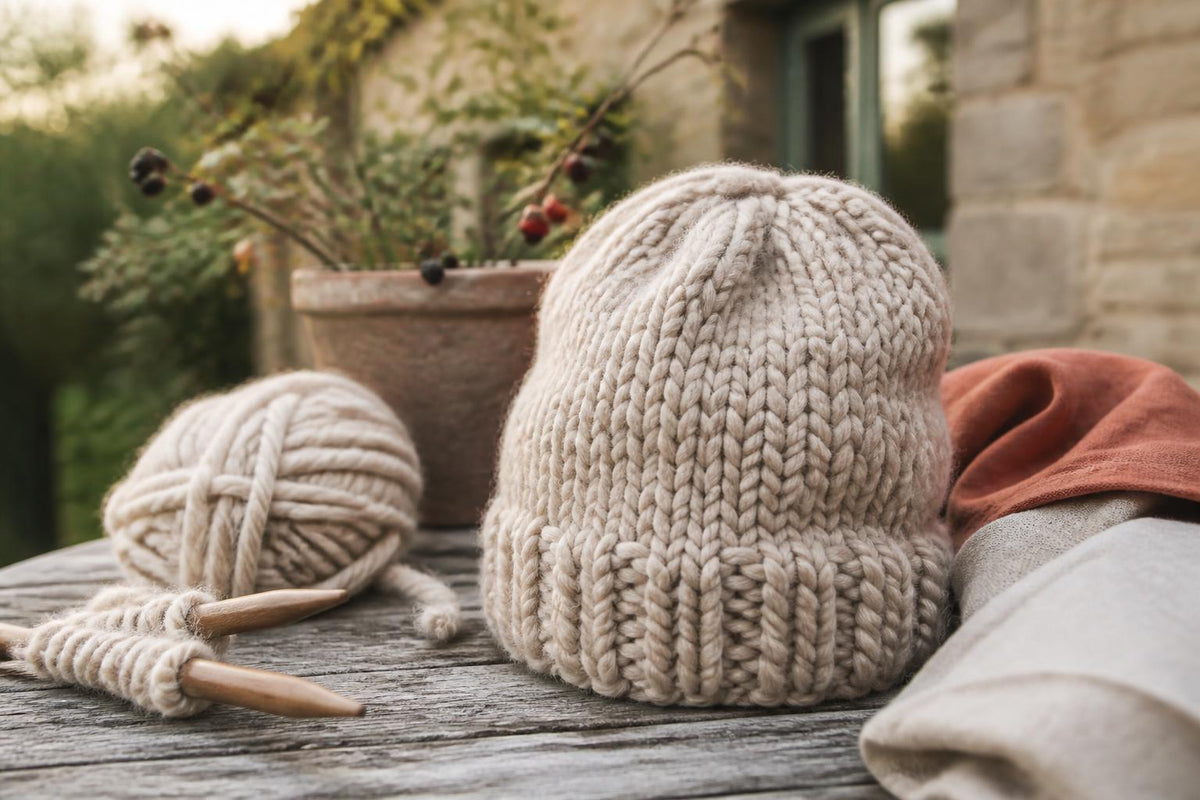
A hat that fits starts with the right pattern, not just the right yarn. When we choose a wool hat knitting pattern, we look first at three things: whether the instructions are complete enough to follow without guesswork, whether the sizing is based on real head measurements and sensible negative ease, and whether the recommended yarn will produce the fabric the designer intended. If any one of those is vague, the finished hat can end up too loose, too tight, too short, or simply not warm enough.
For UK knitters, the most useful hat patterns are the ones that tell us exactly what matters before we cast on. That means a finished circumference, a clear gauge, the yarn weight, the needle sizes, the depth of the hat, and enough detail about the crown shaping to understand how the fit will change at the top. The best choice is not always the prettiest sample photo. It is the pattern that gives us enough information to make a hat that suits the person who will wear it.
What makes a good wool hat pattern for UK knitters
A good hat pattern is clear, complete, and realistic about the knitter it is written for. We want to see the skill level reflected in the actual techniques used, not just a label saying “beginner” or “intermediate”. A genuine beginner hat will usually involve knit and purl stitches, simple ribbing, working in the round or flat with seaming, and straightforward crown decreases. If the pattern includes short rows, stranded colourwork, twisted stitches throughout, or a tubular cast on, it is not really a first project, even if the shaping itself is simple.
Clarity matters just as much as difficulty. Before we start, we check whether the pattern includes:
- finished measurements
- a tension square or gauge, with stitch and row counts
- yarn weight and meterage
- needle sizes
- abbreviations and any special techniques
- shaping instructions for each size
- enough detail to understand the brim, body and crown
A pattern can be beautifully styled and still leave out the numbers that determine fit. If the only information given is “adult size”, we are already guessing. Adult heads vary, and so does the amount of stretch in knitted fabric.
It also helps to think about intended use. A close beanie for winter walks needs different fabric from a slouch hat worn indoors. A hat for a child who dislikes bulk may suit a smoother yarn and simpler brim. A gift for someone who cycles may need a lower profile under a helmet, though knitted hats are not a substitute for safety equipment. If the pattern photo shows a deep fold-up brim, check whether that extra thickness is part of the design you actually want, because it changes both warmth and yarn usage.
When we assess whether a pattern suits us, we use the same practical approach we would use when choosing any project. Our guide on how to choose knitting wool that suits your project pairs well with that process, because fibre and pattern choice are closely linked from the start.
For readers who also crochet, it is worth checking carefully whether a pattern uses knitting terminology only, or whether the designer publishes in both crafts. If you move between knitting and crochet, remember that UK crochet terms differ from US terms, but knitting abbreviations are usually less variable. Confusion tends to happen when a website carries both types of pattern and the labelling is not obvious.
How sizing and ease work in a knitted hat
Most hats fit well because they are smaller than the wearer’s head before stretching. That is negative ease. Without it, a knitted hat often slips, grows with wear, or sits awkwardly around the forehead.
Start with the actual head measurement. Use a tape measure around the widest part of the head, usually across the forehead and around the back where the hat will sit. Then compare that number with the finished circumference given in the pattern. For many hats, a finished measurement several centimetres smaller than the head is normal, because ribbing and knitted fabric stretch.
The amount of negative ease depends on the stitch pattern and yarn. A 1 x 1 or 2 x 2 rib stretches and recovers more than stranded colourwork or a dense textured fabric. A plain stockinette beanie in a springy wool can tolerate some negative ease. A cabled hat with little lateral stretch may need less. This is why the finished measurement matters more than the cast-on number alone.
We also check the hat depth. Circumference gets most of the attention, but depth affects comfort and appearance just as much. A hat that is wide enough can still ride up if it is too shallow. A very slouchy design may be intentionally longer, but the pattern should say so. If you know the wearer likes a hat to cover the ears fully, compare the stated depth with a hat that already fits them well.
The crown shaping changes fit too. Rapid decreases create a neater, more fitted top. Longer decrease sections can give a softer, more relaxed silhouette. If the sample looks sharply pointed or very rounded, the decrease style is probably the reason.
When a pattern includes several sizes, check that the gauge and finished measurements scale sensibly between them. If every size uses the same depth without adjustment, that may be fine for a simple stretchy hat, but it is worth noticing before you begin.
Matching the pattern to the right wool yarn
A wool hat pattern works best when the yarn behaves as the designer expected. Weight is the starting point, but fibre content, twist and loft all affect the result.
For hats, common yarn weights include DK, aran, chunky and super chunky. A DK hat is often lighter and neater, useful if you want less bulk or more refined stitch detail. Aran and chunky yarns are common for everyday winter hats because they balance warmth and speed. Super chunky yarn gives the fastest result and can be extremely warm, but it also creates a thicker, heavier fabric and can overwhelm delicate texture.
Fibre matters as much as weight. Wool has natural elasticity, which helps a hat keep its shape. That is one reason wool and wool-rich yarns are often easier to fit than fibres with less bounce. Merino is softer than many rustic wools and comfortable against the forehead for people who find stronger wool prickly, but softness alone does not guarantee durability or structure. A loosely spun merino can bloom beautifully and feel luxurious, yet produce a softer outline than a firmer, more tightly spun yarn.
For a quick, warm project, a super chunky merino such as World of Wool Chubbs can make sense, especially if you want a simple hat with visible stitch definition and a fast finish. Because Chubbs is a super chunky yarn, it suits patterns written for that weight, or patterns whose gauge can be matched honestly after swatching. It is less suitable for a pattern designed around a much finer yarn where the shaping depends on a denser stitch count.
That is the point where many fitting problems begin. Knitters sometimes substitute by eye, choosing a yarn because the colour is right or the fibre sounds similar. For hats, gauge and fabric matter more than resemblance on the skein. If the pattern calls for aran and you use super chunky instead, the finished crown shaping, brim depth and overall proportions will change unless the pattern has been rewritten.
If you are considering a very warm, fast-knit hat, our super chunky merino yarn collection shows the colour range we currently offer in World of Wool Chubbs. For broader substitution thinking, our article on choosing knitting patterns to suit your yarn is useful when you are working the other way round and starting with yarn already in hand.
As a quick guide:
- choose finer yarns for lighter hats, cleaner shaping and more detailed stitch patterns
- choose thicker yarns for speed, warmth and bold texture
- choose springy wool fibres when fit recovery matters
- choose softer fibres such as merino when next-to-skin comfort is a priority
Why the tension square matters more than most beginners expect
A tension square is not a formality. It is the main reason a hat turns out the size the pattern says it will.
For a hat, we knit the tension square in the same stitch pattern the designer specifies for gauge. If the pattern says the gauge is measured over stocking stitch in the round, a flat swatch in a different texture will not tell us enough. Ideally, knit a generous square, larger than the area you need to measure, because edge stitches distort. Then wash and dry it as you intend to treat the finished hat. Wool can relax, bloom or tighten after washing.
Measure the centre of the swatch, not the edges. Count how many stitches and rows fit into the stated measurement, often 10 cm in UK patterns. If you have more stitches than the pattern gauge, your knitting is tighter. If you have fewer, your knitting is looser.
For hats, stitch gauge usually matters more than row gauge, because circumference is critical and knitted hats often allow some flexibility in depth. Row gauge still matters for crown shaping and brim depth, but if only one can be matched exactly, stitch gauge is usually the priority.
Here is how to interpret the result:
- too many stitches in 10 cm, go up a needle size
- too few stitches in 10 cm, go down a needle size
- correct gauge but fabric too stiff, try a different yarn or reconsider the pattern
- correct gauge but fabric too floppy, the same applies
That last point is important. Matching gauge is not enough if the fabric itself is wrong for the design. A hat needs enough structure to stay on the head and enough flexibility to be comfortable. Sometimes a yarn can be forced to gauge on paper while producing a fabric that no one would actually enjoy wearing.
If your gauge is close but not exact, you may be able to choose a different pattern size based on the finished circumference. That works best in simple hats where the crown shaping and stitch pattern repeat remain sensible. If the pattern has a complex motif, changing size to compensate for gauge can throw the design off.
How much yarn you need and what to check before buying
Hat patterns often look like low-risk projects, but yarn quantity still deserves a careful check. Start with the pattern’s stated meterage for your chosen size, not just the number of balls or skeins. Put another way, “2 balls” only helps if the ball size matches the yarn the designer used.
Then consider what adds extra yarn. A folded brim can use much more than a single brim. A large pom-pom, especially if it is handmade from the same yarn, will increase the total again. Textured stitches, cables and some colourwork can also use more yarn than plain stockinette. If you plan to lengthen the hat for extra slouch, allow for that too.
When buying, we check the published product details carefully:
- meterage or yardage per ball or skein
- fibre content
- recommended needle range
- care instructions
- colourway
- dye lot
The dye lot matters whenever you need more than one ball of the same shade. Even in small projects, visible variation can show up in a folded brim or pom-pom. If a hat needs only one ball, it is still worth checking details in case you decide to add matching mitts later and want continuity.
Because product formats vary, we always compare total meterage against the pattern requirement rather than assuming one ball is enough. Some super chunky yarns come in surprisingly generous put-ups, others do not. The only safe way is to read the label details.
If you are choosing colour for a hat, it helps to think about texture and visibility as well as preference. Deep ribbing and cables can disappear into very dark shades, while pale or bright colours may show every stitch clearly. Our yarn colour palette inspiration can help if you are deciding between a bold hat and one that will work with an everyday coat.
Common pattern features that change the finished result
Small design choices make a large difference to how a hat fits, looks and feels.
Brim style comes first. A plain rolled edge is quick, but usually less secure and less warm around the ears. A ribbed brim gives grip and stretch. A folded ribbed brim adds warmth and structure, but also bulk and extra yarn use. If comfort under a hood or coat collar matters, that extra thickness may be either a benefit or a nuisance.
Ribbing itself changes fit. A 1 x 1 rib tends to draw in neatly and can look refined. A 2 x 2 rib often feels more robust and works well in thicker yarns. Twisted rib gives a crisp finish but can be slower to knit and slightly firmer.
Crown decreases affect both speed and shape. A hat decreased in a few bold wedges often looks more graphic and can be easier for beginners to follow. A crown with more gradual shaping may look smoother and rounder. Neither is inherently better, but the pattern should make the result clear in the sample photos and measurements.
Texture changes warmth and stretch. Cables and dense texture trap warmth well, but they reduce stretch and use more yarn. Seed stitch and moss stitch create surface interest, though they can make gauge harder to judge for newer knitters. Plain stockinette shows colour beautifully and keeps the focus on fit and shape.
Colourwork needs special thought in hats because floats can reduce stretch. A stranded design that fits perfectly in the sample may come out too tight if your floats are snug. If you are choosing your first fitted hat, a single-colour pattern is often easier to size accurately.
Finally, think about speed versus finish. A simple super chunky beanie can be exactly the right choice if you want warmth quickly and like a bold look. A finer hat in DK or aran may take longer, but often gives a more versatile everyday fit. Neither is more “correct”. The best pattern is the one whose yarn, gauge, ease and features match the hat you actually want to wear.
At Native Yarns, operated by Fleeta Limited, we find that the most successful hat projects begin with honest checking rather than optimism. Read the measurements, knit the tension square, compare the finished circumference with a real head measurement, and choose yarn for the fabric you want, not just the photo you admire. Do that, and your next wool hat knitting pattern is far more likely to produce a hat that fits properly from the first wear.
Can I use any wool for a hat pattern?
Not reliably. A hat pattern is written for a particular yarn weight and gauge. You can substitute, but you need similar meterage, fibre behaviour and a matching tension square to keep the fit close.
Is merino good for knitted hats?
Yes, many knitters choose merino for softness and warmth. It can also relax differently from rougher wools, so checking the pattern gauge and washing guidance matters before you begin.
How do I know if a hat will fit before I finish it?
Measure the intended head size, compare it with the pattern’s finished circumference and knit a tension square. Those three checks give a far better guide than size labels alone.
How much super chunky yarn does a wool hat need?
It varies by size, stitch pattern and brim depth. A simple adult hat in super chunky may use surprisingly little, but always follow the pattern’s stated yardage rather than guessing by ball count.
Do I need to match the dye lot for a hat?
Usually a single hat uses one dye lot anyway, but it is still worth checking. If you are buying more than one ball for a larger hat or matching accessories, keeping the dye lot consistent helps colour stay even.