
How to choose knitting wool that suits your project
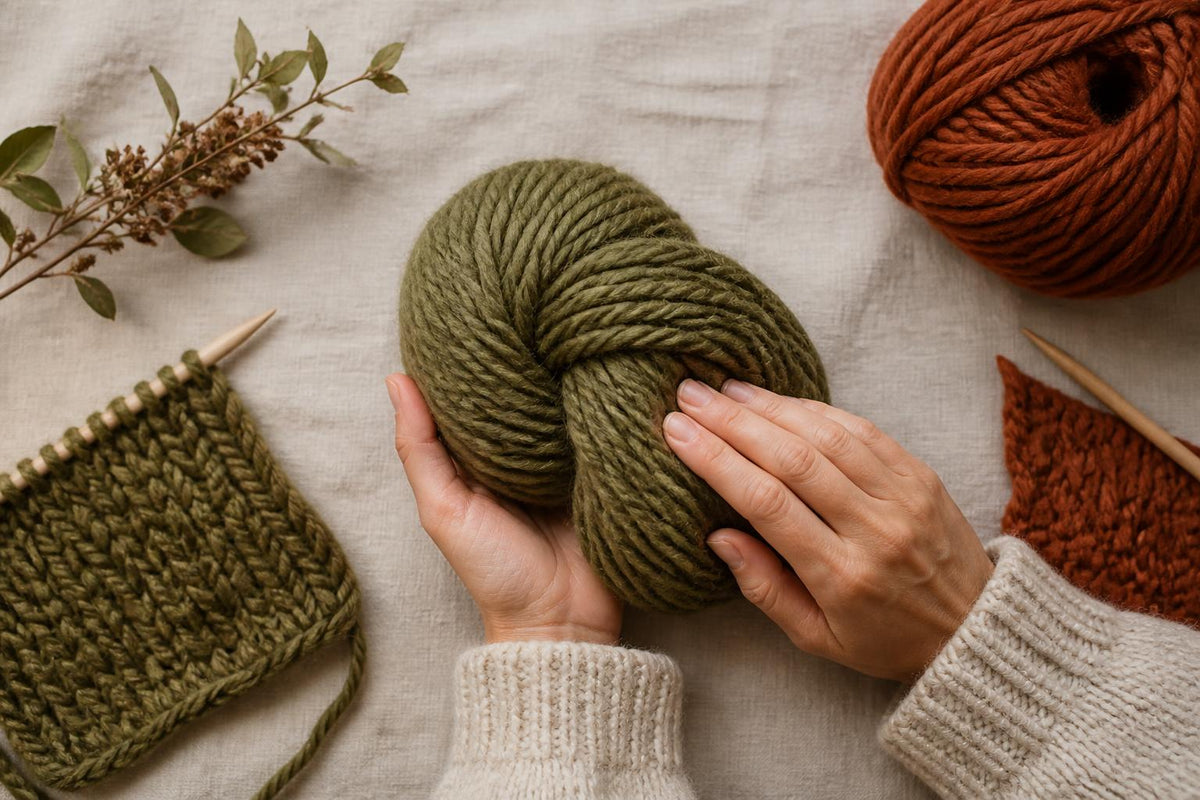
Choosing the best knitting wool for a project is less about finding one “perfect” yarn and more about matching the yarn to what you want the finished piece to do. A hat that needs warmth and bounce, a baby blanket that must wash well, and a cushion cover that needs structure will not all benefit from the same fibre, weight or finish.
When we choose yarn well, knitting becomes easier and the finished item looks better, wears better and is more likely to be used. The useful comparison points are straightforward: fibre content, yarn weight, twist, softness, durability, care requirements and whether the yarn suits the project you have in mind.
What makes one knitting wool better than another?
A better yarn is one that suits the job.
The first thing to compare is fibre. Wool, cotton, alpaca, acrylic and blends all behave differently. Wool has elasticity and memory, which helps garments keep their shape. Cotton has less stretch and often gives a cooler, crisper fabric. Alpaca is warm and soft but can grow with wear. Acrylic is often practical to wash, but it does not behave exactly like animal fibre on the needles or in the finished fabric.
Next is yarn weight. This affects how quickly you knit, how dense the fabric feels, how much drape it has and how clearly stitches show. A lace or 4 ply yarn can produce beautiful detail and a lighter fabric, while a super chunky yarn works up quickly and gives immediate warmth and impact.
Twist matters more than many knitters expect. A tightly spun yarn usually gives firmer stitch definition and better durability. A loftier, less tightly spun yarn can feel wonderfully soft and full, but may pill sooner or show abrasion more quickly in high-friction areas such as cuffs, underarms or the soles of knitted slippers.
Softness is important, but softness alone does not make the best knitting wool. A very soft yarn may be ideal for a cowl worn close to the neck, yet not the best choice for a shopping bag, pet blanket or heavily used throw. Think about where the item will be worn and how often it will be handled.
Durability sits alongside softness. If you are knitting socks, children’s clothes or sofa accessories, look closely at resilience and care instructions. A yarn that feels luxurious in the skein may not be the most practical option if the item will need frequent washing.
Care is often the deciding factor. Hand wash only may be perfectly reasonable for a special shawl or weekend jumper. It is less realistic for a household that needs easy-care baby knits or frequently used homewares. In the UK, fibre labelling and care guidance should be clear when buying from a retailer. If a yarn needs gentle hand washing, dry flat care and careful storage, it is better to know that before you cast on.
Finally, always bring the project back into the decision. The best knitting wool for a textured beanie is not automatically the best yarn for a draped cardigan or a firm crochet basket. If you are still choosing a design, our guide to choosing knitting patterns that suit your yarn can help you match the two sensibly.
Which fibre is best for warmth, softness and wear?
For many knitters, merino is the benchmark when they want softness and warmth together. It is a fine wool fibre, comfortable against the skin for many people, with natural elasticity that makes knitting and wearing pleasant. It suits hats, scarves, cowls, jumpers and many baby items, provided the care instructions fit the household.
Compared with broader wool categories, merino usually feels softer and less scratchy than more robust rustic wools. That makes it a strong choice for garments and accessories worn next to the skin. It also gives good stitch definition and a pleasing, springy fabric in many patterns.
Other wool types can be better for hard wear. A more robust non-merino wool may suit outer layers, mittens, home accessories and projects where structure matters more than buttery softness. These yarns can also be excellent for colourwork and textured stitches, where you want the fabric to hold itself well.
Alpaca is often chosen for softness and warmth. It can feel very cosy in scarves, wraps and winter garments. The trade-off is that alpaca has less elasticity than wool, so it may not snap back in the same way. For heavily ribbed garments or pieces where shape retention is important, pure alpaca can be less forgiving unless the pattern and gauge are chosen with care.
Cotton is useful when warmth is not the priority. It suits lighter garments, dishcloths, market bags, some baby items and summer accessories. It also works well for some crochet projects, especially where crisp stitch definition is wanted. In UK crochet terms, structure is often a key part of the finished look for baskets, toys and household pieces, and cotton can help with that. For knitted winterwear, though, it will not provide the same insulating warmth as wool.
Acrylic and wool blends can be practical for easy-care projects. They may suit blankets, children’s garments and items that need frequent washing. The trade-off can be reduced breathability, a different hand feel and less elasticity than pure wool, depending on the blend.
For home projects, fibre choice depends on use. Cushions, throws and decorative pieces can tolerate a wider range of fibres because fit and recovery matter less than in clothing. For garments and accessories, comfort against the skin, temperature regulation and resilience become more important.
So which fibre is “best”? If warmth, softness and a classic woolly feel are all high priorities, merino is often the strongest all-round choice. If the project needs maximum toughness, easy washing or a cooler handle, another fibre or blend may be the better answer.
How yarn weight changes the result
Yarn weight changes almost everything about a project.
A super chunky yarn is quick to knit and visually bold. It creates fabric fast, which is one reason beginners often enjoy it. You can see stitches clearly, make progress quickly and finish useful items in less time. Hats, cowls and simple scarves are particularly satisfying in this weight.
Lighter weights take longer but can give a more refined result. DK and aran are often versatile choices for garments because they balance warmth, stitch definition and wearability. Finer yarns also tend to offer more drape, especially in larger pieces such as cardigans and shawls.
Drape is one of the biggest differences. Super chunky yarns usually create a firmer, more sculptural fabric. That can be exactly what you want in a cosy cowl, a chunky hat or a statement throw. It is less suitable if you want a fabric to skim and flow softly.
Stitch definition also changes. Chunky yarns can make simple knit and purl textures look striking, but very intricate stitch patterns may become bulky or visually crowded. In lighter weights, cables, lace and detailed texture often read more cleanly.
Warmth is not only about fibre, but weight plays a part. A super chunky wool yarn traps air and creates substantial fabric, so it can feel very warm very quickly. Lighter weights can still be warm, especially in wool, but the effect is less immediate and often less bulky.
Yarn usage catches many people out. Thick yarn uses up meterage quickly. A project may need fewer balls by count, but each ball contains less length than a lighter yarn often does. This is why quantity planning must always be based on meterage and pattern gauge, not just on how many balls “sounds about right”.
If you are comparing weights for a project, it helps to look at the family of options side by side, such as our super chunky yarn range and lighter categories like DK yarn for everyday garments and accessories.
When super chunky merino is the right choice
There are projects where super chunky merino is exactly the right answer, and this is where our verified range gives a useful real example. At Native Yarns, operated by Fleeta Limited, we stock World of Wool Chubbs, a super chunky merino yarn available in multiple colourways.
Chubbs is a good fit when you want warmth, softness and speed. It suits quick accessories, beginner-friendly projects and satisfying gifts. Hats, simple cowls, scarves, chunky baby blankets, cushion fronts and straightforward outer layers are all sensible uses for this kind of yarn.
Colour choice matters more than people expect. In a very thick yarn, each stitch is prominent, so colour has a strong effect on the finished look. Solid neutrals can make texture stand out. Brighter shades can turn a simple shape into the whole statement. If you are weighing up combinations, our yarn colour palette inspiration page can help you narrow the mood before ordering.
Tension matters too. With super chunky yarn, even a small difference in gauge can noticeably change the finished size and the amount of yarn needed. This is why we always recommend knitting a tension square, even for “simple” projects. A tension square tells you whether your needles, knitting style and chosen yarn are producing the fabric the pattern expects. It also tells you whether you like that fabric. Sometimes the pattern gauge is technically correct, but the fabric feels too stiff or too loose for your taste.
Quantity planning is especially important with super chunky merino. Because the yarn is thick, a project can consume more meterage than beginners expect. Before buying, check the pattern requirement in metres, not only in balls. If you are substituting yarn, compare total meterage, the recommended gauge and the intended finished fabric. Never assume that one super chunky yarn will substitute neatly for another without checking.
Always check the dye lot before starting. If your project needs more than one ball, make sure the balls match in dye lot wherever possible. Colour variation between batches can be visible, and in a bold super chunky fabric that variation may stand out more than it would in a finer yarn. If you need to add more later and the same dye lot is no longer available, alternating rows between old and new balls can sometimes soften the transition, but it is much better to buy the full quantity at the start.
For knitters who want a fast, tactile project with a soft wool finish, our super chunky merino yarn collection is the most relevant place to start.
How to avoid the most common buying mistakes
The first common mistake is buying too little yarn. This usually happens when people estimate by eye or copy the number of balls from a different pattern without checking meterage. The fix is simple. Read the pattern carefully, note the total metres required for your size, then add a sensible margin if you are making modifications or if your gauge tends to use more yarn.
The second mistake is skipping the tension square. It can feel like a delay, but it saves time, money and disappointment. A garment that comes out too small, too wide or too short is far more frustrating than spending a little time on a swatch. Wash and dry the swatch as you will treat the finished item, especially with wool, because the fabric can change after blocking.
The third mistake is mixing dye lot numbers unknowingly. This is easy to do when ordering one ball now and another later, or when stash yarn is combined with a new purchase. Check every label before winding and keep the labels until the project is finished. If balls differ, decide deliberately how to manage them rather than discovering the shift halfway through the back panel.
Another common problem is choosing a yarn that does not suit your real life. A hand wash only yarn is not automatically a bad choice, but it must suit the item and the person using it. Be honest about care. If the blanket will live on a family sofa, or the hat will be worn in muddy weather, choose accordingly.
A further mistake is focusing only on softness in the hand. Yarns can feel lovely in the ball and behave quite differently in fabric. Some bloom, some relax, some pill sooner than expected, and some feel denser once knitted. This is another reason the tension square matters. It lets you judge the knitted fabric, not only the loose strand.
Finally, do not ignore tools. Needle size, hook size and material all affect tension. If you knit tightly, going up a needle size may help you reach gauge. If you crochet tightly, this matters just as much. Project planning is not only about the yarn.
A simple checklist for choosing your yarn online
When you cannot touch the yarn in person, a clear method helps.
Start with the project. Is it a hat, jumper, blanket, cushion or scarf? Does it need drape, structure, stretch or hard wear? Write down what the finished item must do.
Next, check the pattern requirements. Look for recommended yarn weight, fibre type, gauge and total meterage for your size. If you are still at the planning stage, it can help to choose the design first. Our article on how to choose a pullover pattern that you will finish is useful if you are deciding on a wearable project.
Then compare fibre. For warmth and softness, merino is often a strong option. For cooler weather wear or structured household items, you may prefer another fibre or a blend. Read the product description closely for fibre content and expected handle.
After that, compare meterage, not just ball count. Two yarns can both be labelled super chunky and still differ in length per ball. Make sure the quantity you order covers the full project.
Check care instructions before adding to basket. In the UK, this is especially important for gifts, children’s items and everyday garments. If the recipient will not hand wash, choose with that in mind.
Review needle or hook guidance, but treat it as a starting point, not a rule. Your own tension may differ, so be prepared to swatch. If the project is knitted, make a tension square. If it is crocheted, swatch there too, even if the pattern uses UK crochet terms and feels familiar.
Then look at colour in context. Ask whether you want stitch texture to stand out or the overall silhouette to do the work. For large projects, consider whether you will still enjoy the shade over time. For multi-ball projects, check that all balls are from the same dye lot.
Finally, order enough for the whole project in one go where possible, and keep labels until the item is finished and worn. That one habit prevents a surprising number of problems.
The best knitting wool is the yarn that fits your pattern, your hands, your lifestyle and the finished piece you actually want to use. If you begin with fibre, weight, care and gauge, you make a much better choice than if you shop by softness or colour alone. And if your project calls for warmth, speed and a soft wool finish, World of Wool Chubbs is a very practical place to start.