
Choosing 4 ply wool for lighter knitting projects
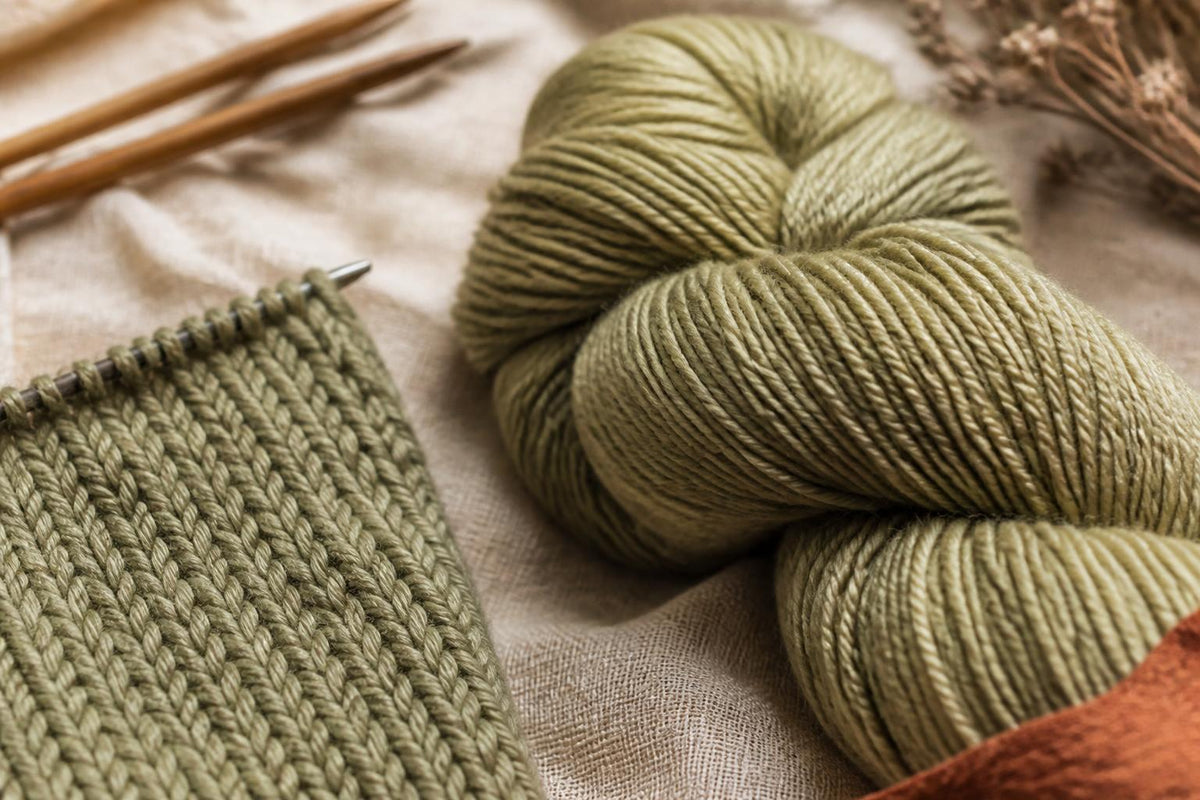
If you want a yarn for lighter garments, baby knits, socks, shawls or detailed stitch work, 4 ply knitting wool is often the right place to start. It sits in the finer end of the everyday yarn range, giving you good stitch definition and a fabric that feels less bulky than DK, aran or chunky.
The key is not to choose 4 ply simply because the ball band says so. In practice, you need to look at three things together, the actual yarn weight, the fibre, and the tension your pattern asks for. Once those line up, 4 ply can give you neat, wearable results that hold their shape and still feel light in the hand.
What 4 ply means in UK knitting
In UK knitting, 4 ply is a yarn weight category. It tells you roughly how fine the yarn is in relation to other familiar categories, not how many strands have been twisted together.
That point causes a lot of confusion. A yarn described as 4 ply does not necessarily contain four visible strands. Modern spinning and yarn construction vary widely. Some 4 ply yarns are tightly twisted, some are softly spun, some are singles, and some are made from multiple plies. The name survives as a weight term, not a reliable description of construction.
Placed alongside other common UK yarn weights, 4 ply usually sits below DK in thickness. A simple way to think about the usual progression is laceweight, 4 ply, DK, aran, chunky, then super chunky. There is overlap between brands, and one maker’s plump 4 ply may sit close to another’s light DK, which is why checking tension matters more than relying on the category alone.
In crochet, the same caution applies. If you are using UK crochet terms, the yarn category gives you a starting point, but your chosen hook, stitch pattern and personal tension will affect the finished fabric just as much as the label will.
For many knitters and crocheters, 4 ply feels like the weight where projects start to look refined rather than bulky. It is fine enough for detail, but usually substantial enough to work up at a comfortable pace. That balance is a large part of its appeal.
When 4 ply is the right choice
4 ply is a strong choice when you want a fabric with less weight and less visual bulk. It works especially well for garments worn close to the body, where a heavier yarn might feel too warm or create too much structure.
Common knitting projects that suit 4 ply include:
- socks
- baby cardigans and jumpers
- lightweight adult sweaters
- shawls and wraps
- hats with a neater profile
- fine mittens and gloves
- colourwork with crisp pattern definition
- textured stitch patterns that need clarity rather than loft
In crochet, 4 ply can be excellent for lighter scarves, garments, baby items, finer accessories and motifs where you want definition without heaviness. It is also useful when a chunkier yarn would make the fabric too stiff.
The practical benefits are straightforward. A finer yarn can give you:
- better drape, especially in garments and shawls
- clearer stitch definition for lace, cables and colourwork
- less bulk at seams, cuffs and necklines
- a lighter finished item that layers well
- more control over fit, because extra stitches and rows allow finer shaping
That said, 4 ply is not automatically the best choice for every project. If you want a thick winter cowl, a fast beginner make, or a robust blanket with strong visual impact, a heavier yarn may serve you better. That is where educational comparisons can help. For example, if you are weighing up a much thicker option for a different sort of project, our guide to choosing super chunky wool yarn for UK projects explains what changes when you move up in yarn weight.
A lighter yarn also asks for a little more patience. You will usually cast on more stitches, work more rows, and spend longer reaching the finished size. For many makers, that extra time is worth it for the finish.
How to compare fibre, meterage and feel
Once you know 4 ply is the right weight, the next decision is fibre. This is where two yarns that look similar on screen can behave very differently in use.
Wool, including merino, is often chosen for warmth, elasticity and recovery. It tends to spring back well after wear, which is useful in socks, cuffs and fitted garments. It can also help lace and textured stitches keep their shape. Merino usually feels softer than more robust wool breeds, which is why it is often chosen for baby items and next-to-skin garments.
Cotton behaves differently. It is generally cooler, less elastic and often heavier for the same yardage or meterage. It can suit summer garments, dishcloths and projects where crisp stitch definition matters, but it may not bounce back in the same way wool does. If you are comparing plant and animal fibres for a particular make, our piece on choosing cotton wool for knitting without costly mistakes is a useful companion.
Blends sit in the middle. Wool mixed with nylon is common for socks because nylon adds durability. Wool blended with silk can improve drape and sheen. Wool and alpaca blends may feel softer and warmer, but can also be less elastic. Acrylic and wool blends are often chosen for easier care and lower cost, though the handle and long term wear can vary a great deal.
Meterage matters just as much as fibre. Two 50g balls labelled 4 ply can contain noticeably different lengths of yarn. One may give you a standard amount for a classic wool 4 ply, while another may offer less because the fibre is denser, loftier or spun differently. That is why buying by ball count alone can mislead. For project planning, compare metres per ball first, then total grams.
Feel is harder to judge online, but still possible if you read the details carefully. Look for clues in the product description:
- is it softly spun or firmly twisted
- does it emphasise drape or structure
- is it described as woollen spun or worsted spun
- is it intended for socks, garments or accessories
- does it recommend hand washing or machine washing
- is the fibre smooth, fuzzy, rustic or lofty
These details affect the finished result. A tightly twisted sock yarn in 4 ply will usually behave very differently from a soft single ply shawl yarn in the same broad weight category.
Care needs should not be an afterthought. If the project will be washed frequently, such as babywear or socks, check the care instructions before buying. In the UK, a wool labelled machine washable is often the practical choice for everyday use, but always follow the specific washing guidance on the ball band. Do not assume that all wool behaves the same way.
Why tension matters more than the label
A pattern is written to produce a certain finished size and fabric. The yarn label only gives a general guide. The real test is whether your yarn, needles or hook, and personal working style can match the pattern’s gauge.
That is why we always come back to the tension square.
For knitting, make a proper swatch in the pattern stitch, not just in stocking stitch unless the pattern tells you to. Cast on enough stitches to measure the centre area accurately, then work enough rows to give a square larger than the stated measurement. Many knitters use at least 15cm by 15cm, even if the pattern tension is given over 10cm. Wash and dry the swatch as you intend to treat the finished item, because wool can relax, bloom or shift after blocking.
Then measure the centre 10cm. Count stitches and rows carefully.
If you have too many stitches in 10cm, your fabric is too tight, and you may need a larger needle. If you have too few stitches, your fabric is too loose, and you may need a smaller needle. The same logic applies in crochet with hook size, though drape is often just as important as exact numbers.
This matters because not all 4 ply yarns behave alike. One may knit beautifully at a gauge suited to socks, another at a gauge better for a light sweater, and another may produce a more open fabric ideal for a shawl. The label category cannot tell you all of that.
When judging whether a yarn will work for a chosen pattern, compare:
- the pattern gauge
- the recommended needle or hook size
- the fibre content
- the meterage
- the intended end use
If the pattern calls for a springy woollen 4 ply at a firm gauge, and your chosen yarn is a drapey cotton blend with less elasticity, matching the stitch count alone may not be enough. The fabric can still hang differently, grow in wear, or feel wrong for the design.
This is one reason our journal pieces are educational rather than a substitute for checking product specifications. A comparison article can help you understand the choices, but the pattern and the yarn details must still be read together. Our guide on how to choose knitting wool that suits your project goes into that matching process in more detail.
How much 4 ply yarn do you need
The most reliable starting point is always the pattern. If you are using a published pattern, check the total meterage required for your size, not just the number of balls listed. Ball sizes vary between brands, and older patterns may assume put ups that are no longer standard.
A practical method is:
- Find the pattern requirement in metres for your size.
- Check the meterage on your chosen yarn ball.
- Divide the required metres by the metres per ball.
- Round up to the next whole ball.
- Add an extra ball if the project is close to the limit, includes swatching, or has matching details such as long sleeves.
For example, if a pattern needs 840 metres and your yarn comes in 210 metre balls, you need four balls exactly on paper. In practice, if your tension is not yet proven or the design includes generous borders or finishing, buying a fifth ball may save trouble later.
If you are substituting yarn without a pattern written for that exact yarn, compare total meterage and fibre behaviour together. A woollen yarn and a cotton yarn with similar metres per ball may still knit up very differently.
For socks, hats and smaller accessories, one or two balls may be enough, but colourwork, cables and textured stitches can alter usage. For garments, yardage rises quickly with size, sleeve length and ease.
Where colour consistency matters, buy all the yarn you need at the same time and check the dye lot. This is especially important for garments, plain stocking stitch, large shawls and any project where a slight shade change would show. Even within the same colourway, different batches can vary.
If you do need more later and the original dye lot is no longer available, alternating balls for a few rows at a time can help blend a transition, but it is far better to avoid the issue from the start.
Keep the ball bands until the project is finished. They carry the fibre details, care guidance, shade reference and dye lot information you may need if you run short or need to wash the item properly later.
Choosing thoughtfully from an online yarn shop
Buying yarn online works best when you treat the product page as a specification sheet, not just a picture. Read beyond the colour.
Check the essentials first:
- fibre content
- ball weight
- metres per ball
- recommended needle or hook size
- care instructions
- shade name or number
- dye lot where relevant
- whether the yarn is in stock now
That last point matters. At Native Yarns, our live retail range is the verified stock we actually list for sale. Educational articles in our journal may discuss other yarn weights, fibres, tools, patterns and project types to help you make better decisions, but those comparisons are not a promise that every yarn mentioned is currently stocked by us.
That distinction is worth keeping clear. A journal article may explain how 4 ply compares with DK, aran or super chunky, or how merino differs from cotton or blended fibres. It is there to help you assess options carefully. It is not the same as a live product listing with confirmed availability.
Our business is operated by Fleeta Limited, and we keep the journal separate from verified stock information for exactly that reason. Readers should be able to learn from broader comparisons without mistaking them for a catalogue.
At present, our verified retail range includes World of Wool Chubbs, a super chunky merino yarn available in multiple colourways. That is a very different yarn category from 4 ply, and we mention it here only to be precise about what is confirmed stocked. If your current project calls for a fine yarn, use the journal to guide your decision making, then check the live shop carefully for what is actually available.
When reading online guidance, it also helps to notice whether advice is general or pattern specific. General advice can tell you that 4 ply often suits socks or shawls. It cannot tell you that any given 4 ply will suit every sock or shawl pattern without checking gauge, fibre and construction.
A careful online buying habit usually looks like this:
- start with the pattern, or with a clear project goal
- identify the weight range that suits it
- compare fibres for warmth, drape and care
- check meterage before comparing prices
- read the gauge information
- buy enough in one order where the dye lot matters
- keep notes on what worked for future projects
That approach is slower than buying by colour alone, but it usually leads to better finished pieces and fewer leftover oddments.
4 ply rewards that sort of thoughtful choice. It is one of the most versatile yarn weights in British knitting and crochet, but also one of the easiest to misread if you rely only on the name. Treat it as a useful category, then confirm the details that affect the actual fabric. When you do, 4 ply knitting wool can give you lightweight projects with clarity, comfort and lasting wear.
Is 4 ply the same as fingering weight?
Often, yes in practical terms, but labels vary by brand and market. The safest check is the stated tension, recommended needle size, fibre content and meterage rather than the name alone.
Does 4 ply mean the yarn has four strands?
Not necessarily. In modern UK yarn shopping, 4 ply usually describes yarn weight. A yarn can be called 4 ply without literally being made from four visible plies.
What needles are used for 4 ply knitting wool?
Many patterns use around 3.25mm needles for 4 ply, but there is no single rule. Always follow the pattern if you have one and check your tension square before starting.
Can you crochet with 4 ply yarn?
Yes. It works well for lighter crochet projects, detailed stitch patterns and finer fabric. If you use UK crochet terms, make sure any pattern is clearly labelled to avoid confusion with US terms.
Should I buy extra 4 ply yarn?
If colour matching matters, buying enough at the start is sensible. Check the dye lot and meterage carefully, especially for garments, larger accessories or projects where running short would be awkward.