
Choosing bamboo yarn for crochet without costly surprises
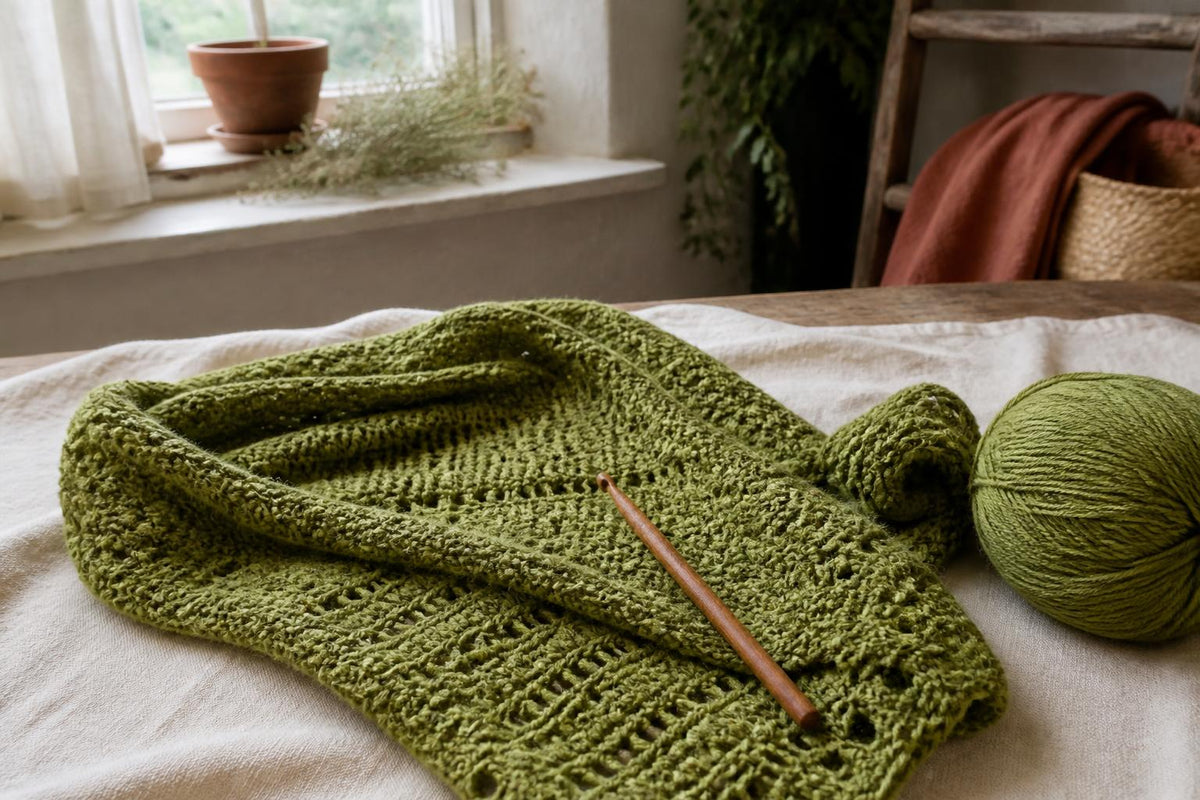
Choosing bamboo yarn for crochet well comes down to one thing, matching the fibre to the job. Bamboo can feel beautifully soft in the hand, with a smooth finish and elegant drape, but it does not behave like wool. If we expect bounce, grip and structure from it, we are likely to be disappointed. If we choose it for fluid garments, soft accessories and polished stitch work, it can be a very satisfying fibre to crochet with.
The costly surprises usually happen before the first proper row is finished, or after the item is washed for the first time. A yarn that feels lovely in the ball may split on the hook, sag under its own weight, grow after washing, or take longer to dry than expected. We can avoid most of that by checking the fibre blend, making a proper tension square, and buying by metreage and dye lot rather than by ball count alone.
What bamboo yarn is really like in crochet
Bamboo yarn has a distinct feel that sets it apart from wool, acrylic and standard cotton. In crochet, the first things most of us notice are softness, sheen and drape. The stitches often look smooth and slightly lustrous, which can make even simple patterns appear more refined.
That drape is one of bamboo’s best qualities. Fabric made from bamboo tends to fall rather than sit firmly. For shawls, lightweight cardigans, summer tops and scarves, that can be exactly what we want. The finished crochet can feel cool against the skin, which is useful for warmer weather or for people who find animal fibres too warm.
Bamboo also gives clear stitch definition, especially in straightforward stitch patterns. Double crochet, treble crochet, shells and lace motifs can look crisp because the yarn surface is usually smooth. Texture can show well too, but in a different way from wool. Wool often gives a plumper, more sculpted texture because it has natural elasticity. Bamboo shows the stitch shape cleanly, but it does not spring back in the same way.
That reduced elasticity is the key behaviour to understand. Compared with wool, and even compared with some acrylics, bamboo has much less bounce. Once the fabric is hanging under its own weight, it can lengthen. This matters in garments, bags, blankets and anything with long vertical sections. A top can grow in body length. A shoulder bag can stretch. A blanket can become heavier and more fluid than expected.
Weight is another practical point. Bamboo yarn can feel deceptively light in the skein or ball, then produce a fabric with more heft than we expected once a larger piece is made. That is not a fault, but it does affect project planning. A bamboo shawl may drape beautifully because of that weight. A bamboo jumper with a loose stitch pattern may pull itself down over time.
If you are used to working with springy fibres such as wool or with something lofty like World of Wool Chubbs, a super chunky merino yarn, bamboo will feel very different on the hook. It tends to be smoother, less grippy and less forgiving if our tension is uneven. That does not make it difficult, but it does mean we need to handle it on its own terms.
When bamboo yarn works well and when it can disappoint
Bamboo works well when the project benefits from softness, movement and a neat surface. It is often a good choice for lightweight garments, baby items where a silky hand is wanted, shawls, wraps and soft accessories that sit against the skin. It can also suit summer crochet where we want breathability and less warmth than wool would give.
It is especially pleasing in projects where drape is part of the design. Openwork tops, relaxed cardigans, lacy scarves and slouchy cowls are all good candidates. If the pattern is simple, bamboo can elevate it because the sheen gives the fabric a more finished look without extra effort.
Where bamboo can disappoint is in anything that relies on firmness, memory or stiffness. Structured baskets, hard-wearing market bags, amigurumi that need to hold a shape, and fitted garments with negative ease are all riskier choices in pure bamboo. The fabric may stretch, sag or lose the outline we wanted.
Stretching is the issue readers most often regret. Crochet fabric made with bamboo can become longer after wear, especially if it is hanging from the shoulders or carrying weight. Sleeves may lengthen. Hemlines may drop. Straps can become too long. This is why we are careful with bamboo in large garments and load-bearing accessories.
Splitting is another common frustration. Some bamboo yarns are spun in a way that makes the plies separate easily under the hook. If we crochet quickly, use a hook with a sharp point, or work intricate stitches, we may catch only part of the yarn. That slows the work and can roughen the finished fabric. A smoother, more rounded hook tip often helps.
Sagging is related to both drape and weight. A bamboo blanket, for example, can become heavy enough to feel cumbersome if worked densely. A bamboo tote may look lovely at first and then drop out of shape after use. If shape retention matters, bamboo is usually better in a blend than on its own.
Slow drying is the final practical drawback. Bamboo items can hold more moisture than we expect, especially in denser crochet. That matters after washing and for everyday use. A bamboo face cloth or baby blanket may need longer drying time than a similar item in a synthetic blend. If an item will be washed often and needed back in use quickly, we should factor that in.
For readers still comparing fibres for similar projects, our guide to choosing cotton yarn for crochet in the UK can help clarify where bamboo and cotton behave differently.
How to choose between pure bamboo and blends
Pure bamboo gives the most pronounced version of the fibre’s character. It is usually very soft, smooth and drapey, with a gentle sheen. If we want fluid fabric and a cool hand, pure bamboo may be exactly right. The trade-off is reduced resilience. It is more likely to stretch, less likely to spring back, and often needs more careful handling in washing and drying.
Bamboo and cotton blends are popular because they balance softness with a little more structure. Cotton can make the yarn feel less slippery and sometimes improve stitch stability, though the result still depends on the exact spinning and ratio. These blends can be excellent for tops, baby garments, cloths and accessories where we want a plant fibre feel without quite so much fluidity as pure bamboo.
Bamboo and wool blends are useful when we want softness and drape, but also some elasticity and recovery. Wool helps the fabric hold its shape better, and it can make crochet more comfortable if we are used to fibres with a bit of grip. This sort of blend can suit garments particularly well. Care, however, becomes more restrictive because the wool content matters. A machine washable bamboo blend is not automatically machine washable if wool is included.
Bamboo and synthetic blends, such as those with acrylic or nylon, are often chosen for durability and easier care. A synthetic content can reduce cost, improve resilience and shorten drying time. It can also make the yarn less prone to stretching than pure bamboo. For everyday garments, children’s items and practical accessories, these blends can be a sensible middle ground.
This is where the ball band matters more than the fibre name on the front. We always need to check the full fibre content, the recommended care symbols, the metreage, and whether the yarn is described as mercerised, chainette, tightly plied or loosely spun. Two yarns both sold as bamboo can behave very differently in crochet.
If we are deciding between fibres for a particular pattern, it also helps to think in terms of function rather than softness alone. A yarn that feels wonderful in the hand is not always the best one for the finished item. We would make the same distinction when comparing something airy and fluid with a more robust option such as Chubbs by World of Wool, where the behaviour of super chunky merino is about loft, insulation and structure rather than sheen and drape.
How to get the right tension and hook size
With bamboo, a proper tension square is not optional. It is the simplest way to avoid a finished item that grows, twists or hangs differently from what we expected. We recommend working a square larger than the pattern gauge area so the centre can be measured accurately. If the pattern gives a 10 cm square, make something bigger and measure the middle after the fabric has rested.
Wash and dry the tension square in the same way you plan to treat the finished item. This matters more with bamboo than many beginners realise. Some bamboo yarns relax noticeably after washing. Others bloom only slightly. Measuring before and after tells us whether the fabric is likely to lengthen, widen or soften once in use.
Hook size affects bamboo strongly. A larger hook can produce beautiful drape, but it can also exaggerate stretching and leave the fabric too open. A smaller hook can improve control and stitch definition, but if we go too small the fabric may become dense and heavy. The right answer depends on the project. For garments and shawls, we often test two nearby hook sizes and compare not just gauge but fabric behaviour.
Pay attention to stitch pattern as well. Tall stitches such as treble crochet create more vertical movement and can stretch more in bamboo than shorter stitches. Dense textures can become weighty. Ribbing and fitted edgings may not pull in as they would with wool. If a pattern relies on elasticity for shape, bamboo may need adaptation or a different yarn choice.
Pattern language also matters. If you are following a pattern written in UK crochet terms, make sure you are not interpreting the stitches in US terms by mistake. The difference changes both size and drape. If you need a quick refresher, our guide to UK and US crochet terms made simple for beginners sets out the conversions clearly.
Finally, assess the tension square hanging vertically as well as lying flat. Bamboo can look perfect on the table and behave differently once it has weight pulling downward. For garments, we sometimes peg the swatch up for a few hours to see how much it drops. That small check can save a lot of unpicking later.
How much to buy and what to check before you start
When buying bamboo yarn for crochet, metreage is more reliable than ball count. Two yarns in the same stated weight can have very different metres per ball, especially if one is denser or more fluid than the other. Always compare the pattern requirement in metres with the yarn you plan to use.
For garments, buy with extra caution. Bamboo’s drape and post-wash growth can affect how much yarn a project uses, particularly if you change hook size to get the fabric you want. If your tension square differs from the pattern designer’s fabric, your metreage needs may change too. It is usually wiser to buy a little extra than to run short near the end of a sleeve or border.
For accessories, think about function. A soft cowl or shawl may not need much contingency. A blanket or long cardigan probably does. Home projects can be especially deceptive because bamboo fabric can become heavy, and that may alter your appetite for making the piece larger than planned.
Check the yarn weight carefully. Terms such as DK, aran and chunky are useful guides, but they are not a guarantee of identical behaviour across fibres. If you need a refresher on comparing weights and what they mean in practice, our article on crochet yarn sizes made simple for better project choices is a helpful starting point.
For garments and larger visible pieces, buy all the yarn you need from the same dye lot if possible. Shade variation can be subtle in the ball and obvious in a finished panel, especially with smooth fibres that reflect light. This is as true in the UK as elsewhere. Where stock is replenished from a later production batch, the colour name may match while the actual shade differs slightly.
Also check whether the yarn comes in hanks, skeins, balls or cakes, and whether it needs winding before use. A smooth bamboo yarn can tangle badly if opened carelessly. Before starting, read the care instructions on the label and compare them with the pattern’s assumptions. A pattern written for a wool blend may include finishing steps that do not suit a pure bamboo yarn.
How to wash, dry and store bamboo crochet
Bamboo crochet usually benefits from gentle washing. Unless the label states otherwise, we treat it with the same caution we would use for a delicate handmade textile. Cool or lukewarm water, a mild detergent and minimal agitation are the safe starting points. If the yarn is a blend, the most delicate fibre in that blend should guide the routine.
In the UK, care instructions on retail textile products must be clear enough not to mislead, but they are not all identical in wording or symbols. If a yarn label says hand wash, we follow that. If it says machine washable on a wool cycle or delicate cycle, we still use a laundry bag and avoid overloading the machine. EU practice is broadly similar, but the exact presentation of care labelling can vary by manufacturer, so the label on the specific yarn remains the authority.
Do not wring bamboo crochet. Press out excess water by rolling the item in a clean towel, then dry it flat. Reshape it while damp, especially at hems, necklines, cuffs and lace edges. Hanging a wet bamboo garment can encourage stretching, and tumble drying is usually a poor choice unless the label expressly permits it.
Drying flat is important because bamboo fabric can grow when wet. A cardigan or top that looked neat after washing can become longer if lifted carelessly from the basin or draped over an airer. Support the whole item when moving it. For larger pieces, spreading the weight over a towel makes this easier.
Storage matters too. Keep bamboo crochet clean, fully dry and folded rather than hung, particularly for garments. Hanging can lengthen the fabric over time. Store in a breathable bag or drawer away from direct sunlight and damp. If the item contains wool as part of a bamboo blend, remember that moth precautions may be sensible even though pure plant fibre would not need the same approach.
The care routine changes with fibre content. A pure bamboo shawl, a bamboo and cotton baby cardigan, and a bamboo and wool jumper should not automatically be washed in the same way. The more carefully we match washing and storage to the actual blend, the longer the crochet will keep its shape, softness and finish.
At Native Yarns, operated by Fleeta Limited, we find that bamboo rewards a measured approach. It is not the right answer for every crochet project, but when we choose it for drape, softness and a smooth finish, and when we test it properly before we begin, it can produce pieces that feel every bit as good as they look.
Is bamboo yarn good for crochet?
Yes, for the right projects. Bamboo yarn is often valued for softness, drape and sheen. It is usually less springy than wool, so it suits flowing fabrics better than projects that need firm structure.
Does bamboo yarn stretch after crocheting?
It can. Bamboo-rich yarns may relax and lengthen, especially in larger or heavier pieces. Make a tension square, wash it as intended and measure again before committing to a full project.
What hook works best with bamboo yarn?
The best hook depends on the yarn weight, blend and stitch pattern. Many crocheters size down slightly if the fabric feels too loose, but the right answer comes from your tension square.
Is bamboo yarn better than cotton for summer crochet?
Not universally. Bamboo often gives more drape and sheen, while cotton can feel firmer and more structured. The better choice depends on whether you want fluid fabric or crisp stitch definition.
Should I buy extra bamboo yarn from the same dye lot?
For larger projects, yes if possible. Buying enough at the start helps reduce visible colour variation. This matters especially when the fabric is smooth and the yarn has a noticeable sheen.