
How to choose chunky chenille yarn without disappointment
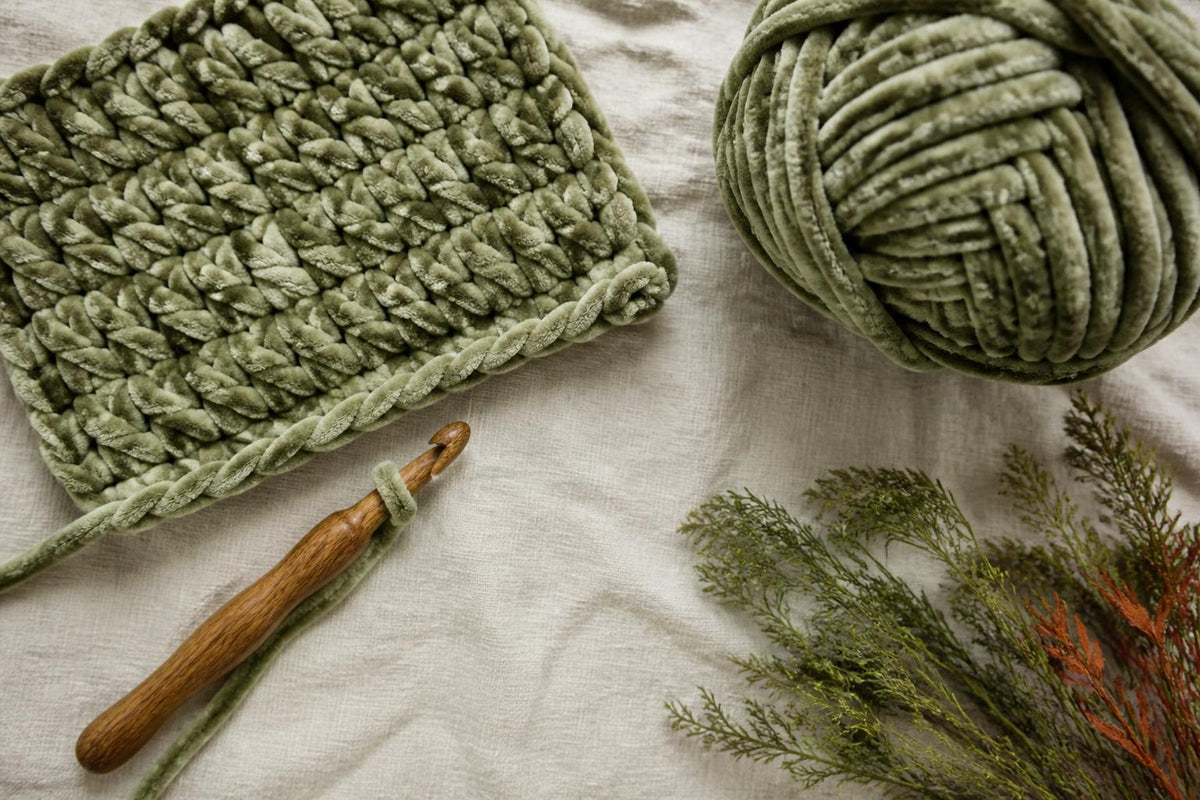
Choosing chunky chenille yarn without disappointment comes down to one thing, matching the yarn to the project you actually want to make, rather than to the photo on the label or the softness in your hand. Chenille can be wonderfully plush for cushions, some baby items and cosy accessories, but it also behaves very differently from wool, cotton and standard acrylic yarns. If you expect crisp stitch definition, easy frogging or a fabric that keeps its loft under hard wear, chenille often disappoints.
The safest way to choose is to look past the word “chunky” and check the construction, fibre content, care instructions, meterage and how the yarn performs in a proper tension square. If what you really want is warmth, visible stitches and a more reliable finish, a super chunky merino can be the better buy.
What people usually mean by chunky chenille yarn
When people say they want chunky chenille yarn, they usually mean a soft, velvety yarn that feels thick and cosy and works up quickly. In practice, that description mixes together two different things, texture and weight.
Chenille describes the yarn’s construction and surface. A chenille yarn has a fuzzy pile that stands out from a central core, giving it that plush, almost caterpillar-like feel. That is quite different from a smooth plied wool, a blown yarn, a roving-style yarn or a standard acrylic twist. With chenille, the softness comes largely from the pile on the outside, not just from the fibre itself.
Chunky, by contrast, refers to yarn weight. In UK knitting and crochet language, chunky generally sits below super chunky. The confusion starts because chenille often looks thicker than it is. The halo and pile bulk out the strand visually, so a yarn can appear very substantial in the ball but behave more like a lighter weight once worked up. Two yarns that look similar in the hand can produce very different gauges and very different finished fabrics.
That matters because shoppers often buy chenille by feel. It is easy to squeeze a skein or ball, love the softness and assume it will suit blankets, garments, toys and homewares equally well. It rarely does. The same plush surface that feels luxurious can also hide the structure of the stitches, flatten with use and make mistakes harder to spot.
Another point worth knowing is that chenille construction varies a lot. Some chenille yarns have a stronger core and a neater pile, which helps them hold together better during knitting or crochet. Others are looser, more slippery or more prone to shedding. The label might tell you the fibre content, but it will not always tell you how robust the construction feels in use. That is why we always suggest handling the yarn critically, not just admiring the softness.
If you are comparing options, it helps to separate the questions. First, do you want chenille because you want that velvet-like texture? Second, do you need chunky or super chunky because you want speed, thickness or warmth? Those are not the same decision.
When chenille works well and when it can be frustrating
Chenille works best where softness and surface plushness matter more than stitch detail. Good uses include cushions, some simple throws, soft nursery accessories, certain amigurumi and occasionally scarves or cowls where you want a velvety finish rather than visible patterning. It can also suit beginner projects with very simple shapes, provided the maker knows that counting and reading stitches may be harder.
Where it becomes frustrating is usually in one of five areas, shedding, worming, hidden stitches, flattening and difficult repairs.
Shedding is the first common complaint. Because the pile sits around a core, some chenille yarns lose fibres during working, seaming or wear. A little fluff is not always a problem, but heavy shedding can leave bald patches or a noticeably worn look.
Worming is another issue, especially in crochet or in looser fabrics. This is when loops of yarn work their way out from the surface, creating little worms or snags that spoil the finish. It can happen when the yarn has too much twist energy for the structure of the fabric, or when the fabric is too loose to hold the yarn in place.
Hidden stitches are probably the biggest practical frustration for newer knitters and crocheters. Chenille pile obscures the path of the yarn, so it is much harder to see where to insert the hook or needle, count rows accurately or spot a missed stitch before you are several rounds on. In UK crochet terms, that can make even a straightforward row of double crochet or treble crochet surprisingly fiddly. In knitting, ribbing, cables and textured stitches can lose definition because the pile fills in the grooves.
Flattening is what often disappoints people after the project is finished. Chenille can look full and luxurious at first, then compress with sitting, washing or regular use. Cushions and blankets that are handled often may lose some of that plump appearance. Garments can become shiny or matted at points of friction.
Repairs and unpicking can also be awkward. Frogging chenille is often harder than frogging wool because the pile catches on itself. If you make a mistake several rows back, the yarn may snag, strip or weaken as you pull it out.
None of that means chenille is bad. It means it is specialised. If you choose it for the right project, and with realistic expectations, it can be lovely. If you choose it because it feels soft in the shop and assume it will behave like wool, disappointment is much more likely.
What to check before you buy
Before buying any chenille, we suggest checking six things carefully, fibre, construction, care, dye lot, meterage and project quantity.
Start with fibre content. Polyester chenille is common because it is soft, widely available and often machine washable. Some chenille yarns use acrylic or blended fibres. Fibre affects warmth, breathability, static, drape and the way the pile wears over time. If you are making something for frequent skin contact, think about whether you want softness alone or softness with temperature regulation and breathability.
Then look at the construction. Twist the strand gently between your fingers. Does the pile feel firmly attached to the core? Can you see the core clearly through the pile? Does the yarn seem slippery or fragile? A stronger construction usually gives better results, especially for crochet, seaming and projects that will be handled regularly.
Next, read the care instructions properly. This is where disappointment often starts. A chenille blanket that must be washed very gently and dried flat may not suit a household that needs easy care. In the UK, the label should give fibre composition and care guidance. If you are comparing a product sold more widely across Europe, note that symbols may be familiar but practical expectations can still differ by brand, especially around tumble drying and reshaping after washing. We always advise following the specific yarn label rather than relying on general fibre rules.
Check the dye lot before you order enough for a larger project. With chenille, shade differences can be noticeable because the pile reflects light differently across the surface. If you need more than one ball, make sure they match by dye lot where possible. If an exact match is not available, it is better to know before starting than halfway through a blanket.
Meterage matters more than many people expect. A bulky-looking chenille ball may contain less yarn than you think. Do not compare balls by size alone. Compare the metres per ball and then calculate your project from that. A yarn that looks generous can work out surprisingly short on yardage, especially in plush constructions.
Finally, estimate quantities realistically. Chenille can eat yarn in crochet and in dense stitch patterns. If you are making a blanket, a large cushion cover or a wearable, do not guess from appearance. Work from meterage and from your own swatch. If you are still deciding between fibres, it can help to compare with our super chunky merino yarn range and read our guide to choosing super chunky wool yarn for UK projects, because wool and chenille often suit quite different outcomes even when the ball looks similarly substantial.
Why your tension square matters more with chenille
A tension square is important with every yarn, but with chenille it is essential. The reason is simple. Chenille’s appearance in the ball tells you less than usual about how it will behave once knitted or crocheted.
Gauge can shift because the pile compresses. You may think you are making a dense fabric, only to find that the finished piece relaxes and grows. Or you may work too tightly because the yarn feels slippery or hard to read, and end up with a stiff, board-like fabric instead of a soft one.
Drape is affected too. Some chenille fabrics collapse into a heavy, fluid shape. Others stand up more than expected because the stitches are packed close together. The same hook or needle size can produce very different results depending on stitch choice, tension and the firmness of the yarn’s core.
Finished size is where mistakes become expensive. If you skip the tension square on a chenille garment, baby blanket or cushion cover, you are relying on guesswork. Because the stitches are hard to see, it is easier to miscount rows or rounds, and because the yarn can flatten after handling, your measured gauge may change slightly once the swatch has settled.
For knitting, we recommend making a generous swatch, not the smallest possible square. Cast on enough stitches to measure the centre accurately after edge distortion is ignored. Wash or steam it only if the care label allows, then let it dry fully before measuring. If the project will be washed in use, test the swatch in the same way.
For crochet, and especially in UK crochet terms, use the exact stitch pattern you plan to use. A square in treble crochet will not tell you enough about a project worked mainly in half treble or double crochet. Chenille can behave very differently across stitch types. If you are making amigurumi, swatch in the round if possible, because round tension is often different from flat tension.
We also suggest a wear test. Rub the swatch lightly, fold it, and if appropriate wash it once. Does the pile stay even? Does the fabric worm? Can you still see enough structure to like the result? That little test often tells you more than the label.
If you want a yarn where stitch definition is easier to judge from the swatch, our advice on chunky yarn for crochet that holds its shape is a useful comparison.
When a super chunky merino is the better choice
Sometimes the question is not which chenille to buy. It is whether chenille is the right material at all. If your priority is clear stitches, warmth, natural fibre character and a fabric that looks handmade rather than velvety, a super chunky merino is often the better choice.
This is exactly where World of Wool Chubbs comes into its own. Chubbs is a super chunky merino yarn, and its strengths are quite different from chenille’s. You can see the full super chunky merino collection here.
First, stitch definition. With merino, the structure of the yarn is visible, so knit and crochet stitches read much more clearly. That matters for ribs, cables, textured panels, simple stocking stitch, granny-style crochet and modern, clean accessories. If you want to enjoy the process of making as much as the finished softness, visible stitches are a real advantage.
Second, warmth. Chenille can feel cosy because it is plush, but plushness is not the same as thermal performance. A wool yarn such as merino generally gives a more naturally insulating fabric, with better breathability as well. For winter accessories, throws and snug home projects, that often makes a noticeable difference.
Third, colour choice and surface character. Chenille reflects light with a sheen that can slightly blur colour depth. Merino tends to show colour in a richer, more fibrous way, and the stitches themselves add interest to the surface. If you are choosing shades for interiors or gifts, it is worth considering whether you want velvet-like smoothness or the more natural texture of wool. Our yarn colour palette inspiration can help when you are planning combinations.
Fourth, care and ageing. Chenille can be easy-care on paper, depending on fibre, but the surface may still flatten or wear in a way some makers dislike. Merino needs appropriate care, but many knitters and crocheters prefer the way wool ages, because it tends to keep the project looking handmade rather than worn out. As always, the label comes first, and project use matters. A heavily handled pet blanket has different demands from a decorative throw.
Fifth, project suitability. If you are making cushions with a plush, toy-like finish, chenille may still be the right call. But for hats, scarves, cowls, simple jumpers, bold blankets and statement accessories, super chunky merino is often more satisfying to work with and more rewarding to finish. It is also easier to seam, easier to unpick if needed and easier to assess as you go.
At Native Yarns, operated by Fleeta Limited, we think the best yarn choice is the one that matches the project honestly. Chenille has a place, but it is not the answer to every soft and chunky idea. If you want reliable stitch definition, natural warmth and the character of wool, World of Wool Chubbs is often the stronger option.
The simplest rule is this. Choose chenille for plush texture. Choose merino for structure, warmth and clarity. If you make that distinction before you buy, you are far less likely to end up disappointed.
Is chunky chenille yarn good for beginners?
It can be, but only for the right project. It feels forgiving and soft, yet the pile can hide stitches and make mistakes harder to spot. A simple shape with a careful tension square is usually the safest start.
Does chenille yarn shed?
Some chenille yarns do shed, especially at cut ends or after repeated friction. The amount depends on construction and fibre. Check care guidance and handle the yarn gently when joining or unpicking.
How much chunky chenille yarn do I need?
It depends on the exact meterage, the stitch pattern and your tension. Compare balls by metres rather than weight alone, then make a tension square before estimating quantities.
Why does chenille crochet or knitting look smaller than expected?
Chenille can compress and its pile can disguise the true structure of the fabric. If your stitches are tight, the finished piece may come out smaller or denser than planned. Check size from a washed tension square.
Is chenille warmer than merino?
Not always. Chenille may feel plush, but warmth depends on fibre and fabric structure. A super chunky merino such as World of Wool Chubbs can provide clearer stitch definition and substantial warmth.