
How to choose yarn that suits your knitting project
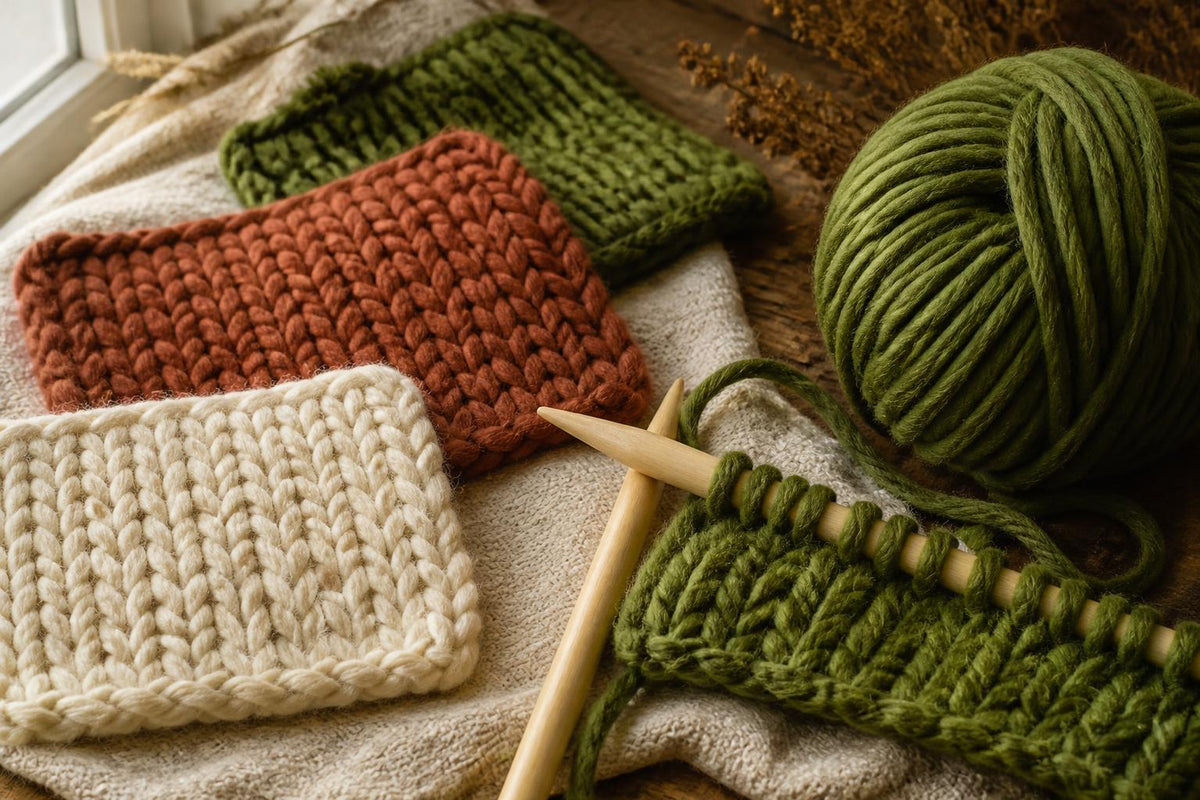
Choosing the right yarn starts with one practical question: what does the finished piece need to do? A baby blanket, a winter hat, a textured cushion cover and a lightweight cardigan all ask different things from the yarn. The best yarn for knitting is not the one with the softest handle on the shelf or the brightest colour online. It is the one whose fibre, weight, structure and care needs suit the project you actually want to make.
In practice, that means checking more than the label name. We look at fibre content, yarn weight, twist, stitch definition, washability, warmth, and how much wear the item will get. Once those points are clear, choosing becomes much easier, and you are far less likely to end up with a garment that sags, a blanket that pills too quickly, or a scarf that feels lovely but is awkward to care for.
What makes one yarn better than another
One yarn is not simply “better” than another in isolation. It is better for a specific use.
Fibre is usually the first thing to assess. Wool, cotton, acrylic and blends all behave differently on the needles and in daily use. Wool tends to offer warmth, elasticity and memory, which helps knitted fabric spring back into shape. Cotton is cooler and often smoother, but it has less bounce and can feel heavier in larger pieces. Acrylic is widely chosen for ease of care and colour range, though the feel and long term wear can vary significantly between ranges. Blends are often designed to combine strengths, such as warmth with easier washing, or softness with better durability.
Weight matters just as much. A super chunky yarn produces a very different fabric from DK, even in the same fibre. Heavier yarns knit up quickly and can create dramatic texture, but they also add bulk and weight. Finer yarns take longer, yet they often give better drape and more refined shaping.
Twist is easy to overlook, but it affects both appearance and durability. A tightly twisted yarn can make stitches look crisp and can stand up better to abrasion. A looser, airier yarn may feel wonderfully soft and lofty, but it can fuzz or pill sooner, especially on cuffs, underarms and bag straps. If your pattern relies on cables, ribbing or moss stitch, yarn structure becomes especially important because those details need definition.
Durability should be judged against real use. Socks, children’s knits and frequently used blankets need resilience. A decorative throw or occasional shawl can prioritise softness and appearance. There is no point choosing a delicate yarn for an item that will be sat on, washed often or stuffed into a school bag.
Care is another deciding factor. Hand wash only may be perfectly realistic for a special accessory. It may be completely impractical for a baby item, pet blanket or everyday jumper. In the UK, care labels should be read closely, and if you are making for someone else, it is worth being honest about what they will actually do on laundry day.
Intended use brings all of this together. Before buying, ask: Will this be worn next to skin? Does it need warmth or breathability? Will it be used every day? Does the pattern need crisp stitch definition? Those answers tell you far more than marketing language ever will.
Which fibre suits the project best?
Merino is popular for good reason. It is soft, springy and comfortable against the skin, which makes it a strong choice for scarves, hats, cowls, blankets and garments where softness matters. The elasticity also helps with ribbing and fitted shapes. For many knitters, merino comes closest to what they picture when they want warmth without scratchiness.
Other wool types can be excellent choices too, particularly when you want more structure, more rustic character or greater hard wear. Some non merino wools have a firmer handle and stronger stitch definition, which can suit outerwear, textured jumpers and practical accessories. They may be less suitable for very sensitive skin, but often reward the knitter with durability and a more traditional woolly finish.
Cotton is useful where breathability, smoothness and lower warmth are more important than bounce. Dishcloths, summer tops, lightweight baby items and homewares often suit cotton well. The main compromise is elasticity. Cotton can split more easily while knitting, and larger garments may stretch under their own weight. If a pattern depends on spring and recovery, cotton may not be the easiest route.
Acrylic is often chosen for easy washing, colour variety and accessibility. For blankets, children’s makes and projects where frequent laundering matters, it can be practical. The trade off is that acrylic does not behave exactly like wool. It usually has less memory, and the finished fabric may feel flatter or less breathable depending on the yarn construction. Some knitters also find that textured stitches look different in acrylic than they do in wool.
Blends sit in the middle and can solve specific problems. A wool and acrylic blend may offer warmth with simpler care. A cotton blend can soften the heaviness and improve handling. When a pattern gives a recommended fibre, it is worth noticing why. The designer is often relying on a particular balance of drape, memory or warmth.
If you are comparing knitting with crochet as part of your project planning, our guide to choosing between knitting and crochet for your next project is a useful starting point. Fibre choice matters in both crafts, but fabric density and yarn consumption can differ, especially if you work in UK crochet terms.
How yarn weight changes the finished result
Yarn weight changes almost everything, including speed, warmth, drape, stitch visibility and how much yarn you need.
Super chunky is the quickest to knit and the boldest in appearance. It creates thick, cosy fabric fast, which is why it is so often chosen for beginner scarves, winter accessories, lap blankets and statement homeware. Stitches are easy to see, texture stands out clearly, and progress is satisfying. The trade off is bulk. A super chunky garment can become heavy, and fine shaping details may be lost in the thickness of the fabric.
Aran sits in a very useful middle ground. It gives warmth and visible texture without the same level of bulk. Cables, ribbing and seed stitch often show well in aran, and it can work for jumpers, cardigans, hats and throws. It is slower than super chunky, but still fairly quick compared with lighter yarns.
DK is one of the most versatile weights for UK knitters. It suits a wide range of garments and accessories, gives a more balanced drape, and often works well when you want definition without heaviness. DK is slower to knit than aran or super chunky, but it can produce a neater, more wearable fabric for everyday clothing.
Weight also affects yarn quantity planning. A bulky yarn may require fewer metres in a simple scarf than a finer yarn, but each ball or skein can disappear surprisingly quickly because the stitches are so large. Always check whether a pattern lists metreage, grams, or number of balls, and never assume that one super chunky ball equals one aran ball in useful coverage.
Warmth is not just about fibre. Weight and fabric density matter too. A loose DK fabric may be cooler than a dense super chunky one, even if both are wool. Drape changes in the opposite direction. The lighter the yarn, the easier it is to achieve movement and fluidity. This is one reason shawls, lighter jumpers and baby garments are often designed in finer weights.
If you are weighing up thick yarns specifically, our article on choosing jumbo knitting yarn for cosy projects goes into the practical differences between very bulky options.
When super chunky merino is the right choice
Super chunky merino is a sensible choice when you want warmth, speed and visible texture, all in one project. It is especially good for accessories and home pieces where softness and impact matter more than fine detail.
This is exactly where World of Wool Chubbs comes into its own. Chubbs is a super chunky merino yarn that suits quick, cosy knitting, particularly scarves, cowls, hats, simple blankets, cushion covers and beginner friendly projects where seeing each stitch clearly helps. Because the yarn is thick and the fibre is soft, it can make the knitting process feel more approachable for newer knitters while still giving experienced makers the bold finish they may want.
It is also a strong option when texture is part of the design. Ribbing, garter stitch, seed stitch and large cables can all read clearly in a yarn like this. If you want a project to look and feel substantial without spending weeks on it, super chunky merino is often the right answer.
There are limits, and they are worth stating plainly. Super chunky merino is not usually the best choice for intricate lightweight garments, fine lace, or items that need a lot of drape. It can also be too warm for indoor clothing or transitional weather pieces. For a heavily worn item such as slippers or elbows on a fitted jumper, you should think carefully about friction and long term wear.
Where it excels is comfort and immediacy. If your aim is a winter accessory finished over a weekend, a soft statement blanket, or a first knitting project that does not require squinting at tiny stitches, this is the sort of yarn we would choose ourselves. For readers planning a simple scarf, our guide to beginner scarf patterns that are realistic to finish can help match project shape to yarn choice.
How to compare colour, dye lot and quantity before you buy
Colour is not just a matter of taste. It affects how texture shows, how practical the item is, and whether the finished piece suits its setting. Pale shades often highlight cables and textured stitches beautifully. Very dark shades can soften stitch definition, which may be ideal for a plain, elegant accessory but less useful if the pattern relies on intricate detail. Variegated colourways can be striking, though they may compete with heavily textured stitch patterns.
Before you buy enough for a full project, check the dye lot. A dye lot identifies yarn produced in the same dyeing batch. Even when the shade name is identical, yarn from different batches can vary slightly. In a single hat this may not matter, but in a blanket, jumper or wide scarf the shift can be visible. If your project needs more than one unit, it is best to buy the full amount together and check that the dye lot matches across all of it.
Quantity planning is where many projects go wrong. Start with the pattern requirement in metres if possible, not just grams or number of balls. Then compare that figure against the yarn label. Two yarns can both weigh 100g and give very different lengths because fibre and construction differ. If you are substituting one yarn for another, metreage is the safer comparison.
A tension square is the best way to avoid expensive mistakes. Knit a sample large enough to measure properly, then wash and dry it as you intend to treat the finished item. This tells you whether your needle size gives the right gauge, whether the fabric is too stiff or too loose, and whether the yarn blooms, relaxes or changes after washing. A tension square also helps estimate how much yarn a stitch pattern really uses. Seed stitch, cables and heavily textured patterns often consume more yarn than plain stocking stitch.
It is sensible to allow a little extra if you are making changes to length, adding sleeves, enlarging borders or matching stripes carefully. Running short near the end of a project is frustrating enough. Running short and discovering the original dye lot has gone is worse.
What to check before committing to a yarn
Before you place an order or cast on, run through a short checklist.
First, read the pattern properly. Check the recommended yarn weight, fibre type, gauge and finished measurements. If the pattern was written for wool and you swap to cotton, expect the fabric to behave differently. If the gauge is given over 10cm, match that with a washed tension square, not an unwashed swatch.
Second, confirm needle size, but do not treat the label recommendation as a rule. It is a starting point. The right needle for your project depends on the fabric you want. A looser scarf can tolerate more openness. A hat or cushion usually needs a firmer fabric.
Third, think about care. Will the item be hand washed, wool washed, or expected to survive ordinary family life? In the UK, wool wash settings vary by machine, and not all fibres labelled gently washable behave the same way in practice. If you are making for a baby, a busy household or someone who does not hand wash knitwear, choose with that reality in mind.
Fourth, consider the recipient. Some people love the warmth of wool and do not mind careful laundering. Others need easy care, avoid animal fibres, or are sensitive even to soft wool. The best yarn for knitting a gift is the one the recipient will actually use and feel comfortable looking after.
Fifth, match the yarn to the real use of the object. A decorative throw can be lofty and delicate. A dog blanket probably should not be. A winter cowl can be soft and thick. A school cardigan needs more resilience and easier maintenance. If the project will get friction, stretching or frequent washing, prioritise structure and practicality over first touch alone.
Finally, be honest about how you like to knit. Some knitters enjoy the speed and visibility of super chunky yarns. Others prefer the control and finish of lighter weights. Neither is more correct. The right choice is the one that gives you a fabric you like making and will be pleased to use.
At Native Yarns, operated by Fleeta Limited, we think good yarn choice is less about chasing a perfect universal answer and more about matching material to purpose. If you keep fibre, weight, care, colour, dye lot and gauge in view from the start, you will make better decisions, waste less yarn and enjoy the finished piece for longer.
What is the best yarn for knitting beginners?
A smooth yarn in a clear colour is often easiest for beginners because stitches are easier to see. super chunky merino can be helpful for learning quickly, but the best choice still depends on the project and the pattern.
Is merino always the best yarn for knitting?
No. merino is soft, warm and comfortable to handle, but it is not automatically best for every project. Some items need more structure, easier washing or a lighter fabric than merino gives.
Why does dye lot matter when buying yarn?
A dye lot helps identify yarn dyed together in the same batch. Using the same dye lot across a project reduces the risk of visible colour variation between balls or skeins.
Should I knit a tension square even for simple projects?
Usually yes. A tension square helps you check whether the fabric, size and drape suit the project before you commit to the full quantity of yarn.
Is super chunky yarn good for every knitting project?
No. super chunky yarn is excellent for fast, warm and textured makes, but it can be too bulky for fine detail, lightweight garments or projects that need a lot of drape.