
How to find the right yarn shop online in the UK
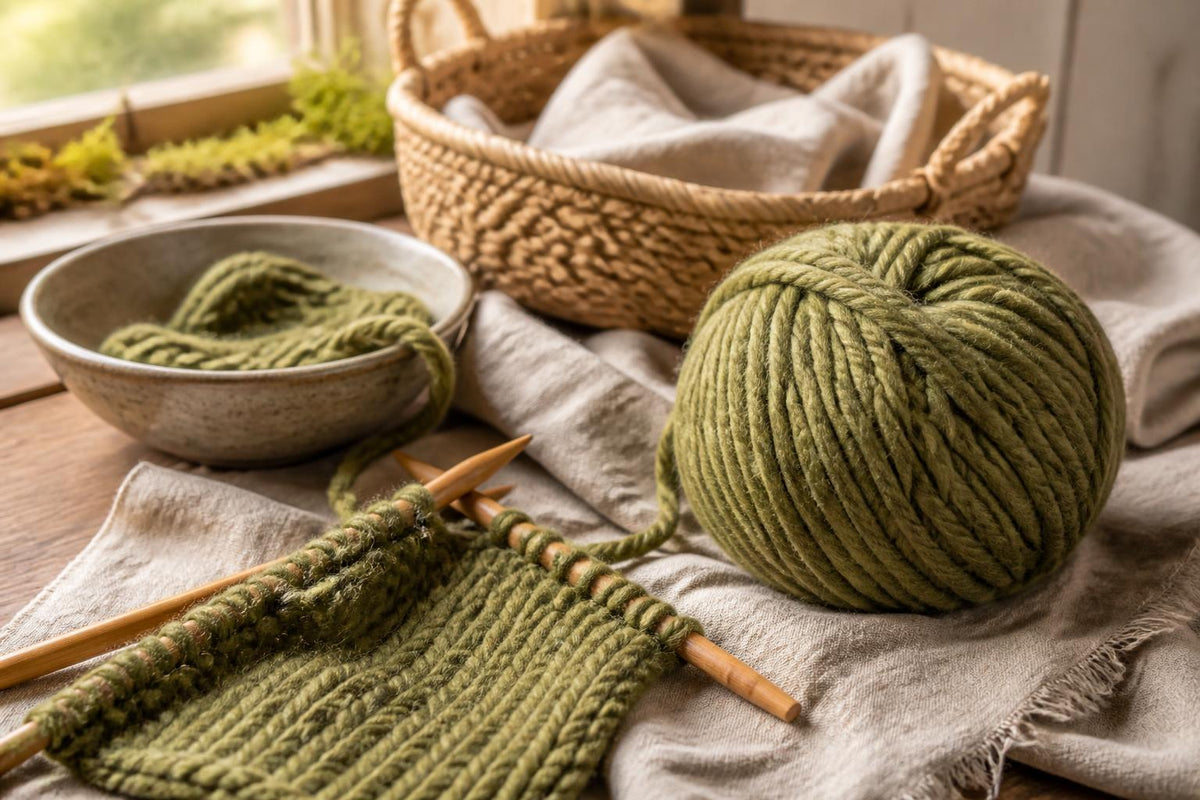
If you search for a wool yarn shop near me in the UK, you may well start by looking for somewhere local, but many knitters and crocheters end up buying online once they compare fibre details, colour options, quantities and delivery. That is especially true when you want a specific yarn weight, a consistent dye lot, or enough balls for a larger project without having to ring round several shops.
At Native Yarns, we are a live UK online yarn shop operated by Fleeta Limited. We are not a walk in retail premises. That matters because an online shop can still be the right answer to a nearby search, provided the product information is clear, the yarn range is properly described, and you can make a confident choice without guessing.
What people usually mean when they search for a yarn shop nearby
Most people do not literally mean the closest till and shelf. They usually mean, “Where can I reliably buy the right yarn for my project without wasting time or money?” In practice, that often leads to an online order.
A local intent search in the UK tends to come from one of a few situations:
- you have started a pattern and realised you are short
- you want to compare fibres before committing
- you need a particular weight such as DK, aran or super chunky
- you want colours that work together, not just one ball that looks nice on its own
- you need enough matching yarn for a jumper, blanket or gift set
For many projects, convenience is only part of the decision. Accuracy matters more. If the nearest physical shop does not stock the right weight, the right fibre, or enough of the same dye lot, “nearby” stops being useful quite quickly.
That is why a search for a wool yarn shop near me often ends in an online basket. The better question is not simply where the shop is, but whether the shop helps you buy well.
At Native Yarns, we run as an online store under Fleeta Limited. We also publish practical guidance through our journal, including advice on how to choose knitting wool that suits your project. For many readers, that combination matters. You are not only looking for yarn, you are trying to avoid the common mistakes that lead to frogging, colour mismatch, poor drape, or disappointing wear.
How to judge whether a yarn shop suits your project
A yarn shop suits your project if it gives you enough reliable information to match the yarn to the job. That means looking beyond attractive product photos.
Start with fibre. Ask what the finished item needs to do.
- For softness and warmth, merino is often a strong choice.
- For structure or durability, you may compare wool blends or different constructions.
- For items that will need frequent washing, care instructions matter as much as feel.
Then look at yarn weight. A pattern written for DK will not behave like one made in super chunky, even if you like the colour better. Weight affects gauge, drape, warmth, stitch definition and how quickly the project grows. If you are substituting, do so deliberately, not casually.
Colour range is the next practical test. A good yarn shop should let you compare shades clearly enough to decide whether you need a solid, a contrast, or a palette. This matters for stripes, colour blocking and multi ball projects. It also matters for garments, where a flattering colour in the skein may be overwhelming across a whole jumper. If you are still deciding, our yarn colour palette inspiration page can help you think in combinations rather than impulse singles.
Quantities are where many online orders go wrong. Before choosing where to buy, check whether the shop gives enough information to estimate total yardage or ball count properly. A hat, scarf, baby cardigan and throw can all use the same fibre and still need very different quantities.
Care needs should be checked before you fall in love with a yarn. If the item is for a new baby, a busy household or daily wear, hand wash only may be perfectly acceptable, or it may be unrealistic. There is no point making a beautiful item that the recipient will be afraid to use.
Finally, compare the yarn against the pattern itself. Look for:
- recommended yarn weight
- metreage or yardage required
- needle or hook size
- finished measurements
- whether the pattern assumes drape, bounce or firmness
- whether the stitch pattern needs strong definition
If you are still deciding between weights, it can help to compare categories such as super chunky yarn with finer options in principle, even if your final choice depends on the exact project.
Why tension, dye lot and quantity matter more than impulse colour picks
Colour is usually what catches the eye first, but it should not be the first thing that decides the purchase.
The most important check is the tension square. If a pattern tells you to work a 10 cm square over a stated number of stitches and rows, that is not optional decoration. It is the test that tells you whether your fabric will come out at the intended size.
A tension square helps you answer three practical questions:
- does this yarn produce the right measurements with the recommended needle or hook
- do you like the resulting fabric
- if not, can you adjust tools and still get a fabric suitable for the pattern
For garments, tension affects fit directly. For blankets and accessories, it affects size, weight and yarn usage. If your stitches are looser than the pattern designer’s, you may need more yarn than the pattern states. If they are tighter, the fabric may become stiff, especially in thicker yarns.
The next point is dye lot. When a project uses more than one ball, buying enough from one dye lot is one of the simplest ways to avoid visible variation. Even very similar shades can show a shift when worked side by side, particularly in larger plain areas.
Check the published product details and, where the yarn is sold by individual balls, think ahead. If your project probably needs six, do not order four and hope to match the rest later. If the store offers yarn multipacks, that can be a practical way to keep quantity planning tidier for larger makes.
Quantity planning also needs realism. New knitters and crocheters often underestimate how much yarn a project uses, especially with textured stitches, cables, bobbles and crochet fabrics, which can be yarn hungry. A ribbed hat in super chunky may use less than expected, while a densely stitched cowl or oversized cardigan can use more.
As a rough decision making principle, buy according to the pattern’s stated metreage first, then convert that into the number of balls using the exact product details. Do not rely on another yarn being “about the same size”. Ball weight alone does not tell you enough. Two 100 g balls can have very different lengths depending on fibre and construction.
When super chunky merino is the right choice
Our verified retail range is World of Wool Chubbs super chunky merino yarn, available in multiple colourways. This is the clearest example we can give because it is the range we actively sell, rather than a general comparison.
There are projects where Chubbs is an excellent fit. Super chunky merino comes into its own when you want warmth, softness, speed and visual impact. It suits projects such as:
- quick hats
- cowls and scarves
- statement accessories
- beginner friendly projects where larger stitches are easier to see
- cosy home accessories where plush texture is part of the appeal
It is also useful when you want a project to grow quickly. That can be encouraging for beginners and practical for time sensitive gift making.
Where might it be less suitable? Not every pattern benefits from super chunky yarn, and not every use suits merino.
For example:
- fine lace or lightweight garments need a much lighter yarn
- heavily structured pieces may become bulky
- detailed stitch patterns can lose definition if the yarn is too thick for the design
- some hard wearing household uses may call for a different fibre choice, depending on the finish you want and the care routine you can manage
This is where comparison matters. If you are considering World of Wool Chubbs, ask:
- does the pattern call for super chunky, or am I substituting
- will the finished item be too warm or too heavy in this weight
- do I want rounded, bold stitch definition, or something finer
- is the care routine realistic for the person who will use it
- do I have enough quantity from the same dye lot
If your project genuinely suits this category, our super chunky merino yarn collection is the right place to compare colourways and product details. The key is to choose it because the project calls for it, not because thicker yarn feels like the easiest route.
How to read patterns and tools without getting caught by UK and US terms
Pattern language catches people out more often than fibre choice. The most common issue in crochet is the difference between UK crochet terms and US terms.
A double crochet in UK crochet terms is not the same stitch as a double crochet in US terminology. If you miss that distinction, your fabric, size and yarn use can all go wrong from the first few rows.
Before buying yarn for a crochet pattern, check:
- whether the pattern is written in UK crochet terms or US terms
- whether the abbreviations match the written instructions
- whether the designer gives a stitch glossary
- whether the hook size is given in mm, not only by a regional label
Knitting patterns can create similar confusion with needle sizing. In the UK, modern patterns commonly use metric sizes in mm, but older patterns may refer to the old UK numbering system. US needle numbers add another layer if you are using an imported pattern. Always convert to the exact mm size rather than assuming an approximate equivalent.
The same applies to hooks. A 6 mm hook is unambiguous. A letter or regional size on its own is less helpful if the pattern crosses markets.
Pattern wording also matters. Look for clues such as:
- “work to tension” rather than simply using the stated needle size
- “approximately” in finished measurements
- “to fit” versus actual garment dimensions
- whether metreage is given for each size
- whether the pattern assumes blocking
If a pattern only names a brand and not the yarn weight, fibre or metreage, pause before buying. You need enough information to make a proper substitution. The safest route is to compare the original yarn’s fibre content, length per ball, recommended gauge and intended fabric.
This is especially important across UK and EU contexts. In the UK, yarn labelling and online retail practice are similar in many practical respects to the EU market, but patterns and consumer expectations often follow UK naming habits. Terms like 4 ply, DK, aran and chunky remain common here, while some EU sources may emphasise metreage and needle range over those familiar UK category names. When in doubt, use the measurable facts first: fibre content, length, gauge and care instructions.
A practical checklist before you place an online yarn order
Before you click through to checkout, run through a short buying checklist. It prevents most avoidable mistakes.
First, define the project clearly. Is it a hat, cardigan, blanket, toy, scarf or cushion? The answer affects fibre, weight and durability.
Second, read the pattern all the way through before buying. Do not stop at the materials list. Check the finished measurements, shaping, stitch pattern and whether the project is meant to drape, stretch or hold structure.
Third, confirm the yarn weight. If the pattern calls for DK, aran or super chunky, match that intentionally. If you are substituting, compare gauge and metreage, not just the name of the category.
Fourth, calculate quantity from the exact published product details on the store. Use the pattern requirement in metres or yards where possible. Add a margin if your tension tends to be loose, if you are making a larger size, or if the stitch pattern is dense.
Fifth, buy enough from one dye lot for the whole project if the item uses multiple balls. This is particularly important for garments, blankets and broad blocks of colour.
Sixth, check care requirements honestly. Hand wash only may be ideal for a treasured shawl and less ideal for an everyday baby item. Make the choice that suits real life.
Seventh, think about colour in context. Ask whether you want the yarn to highlight texture, blend quietly with the room, suit the wearer, or coordinate with other shades. A beautiful skein is not always the right project colour.
Eighth, review tools and terminology. Check needle or hook sizes in mm. Confirm whether the crochet pattern uses UK crochet terms. Make sure you are not buying for the wrong system.
Ninth, check whether the project needs swatching, blocking, seaming or finishing tools. Even if the yarn choice is right, the result can disappoint if you skip the steps the pattern assumes.
Tenth, read the product page one last time. Look at the exact fibre, weight, colourway, quantity and any care notes published on the store. This final check is where many mistakes are caught.
A nearby search can be a useful starting point, but the right yarn shop is the one that helps you choose well. At Native Yarns, operated by Fleeta Limited, we focus on clear online buying for knitters and crocheters who want to match yarn to project properly. If you begin with fibre, weight, tension, dye lot and quantity, you are far more likely to end up with a project you enjoy making and using.
Is Native Yarns a physical yarn shop I can visit?
Native Yarns is a live UK online yarn shop operated by Fleeta Limited. Do not assume there is a walk-in retail shop just because a search suggests something nearby.
Why should I buy all my yarn from one dye lot?
Yarn from different dye lot batches can vary slightly in shade, even when the colour name is the same. Buying enough at once helps keep a project looking consistent.
What is a tension square and why does it matter?
A tension square is a measured sample used to check whether your stitches match a pattern's stated gauge. It helps you judge size, drape and yarn suitability before starting.
Is super chunky merino suitable for every project?
No. super chunky merino is useful for fast, warm, textured makes, but it is not ideal for every pattern. Always compare the pattern's yarn weight, gauge and care needs first.
Do UK and US crochet terms mean the same stitches?
No. UK crochet terms and US crochet terms differ, so a stitch name may mean a different stitch entirely. Check the pattern's terminology before choosing yarn and hook size.