
How to save money on DK wool without buying badly
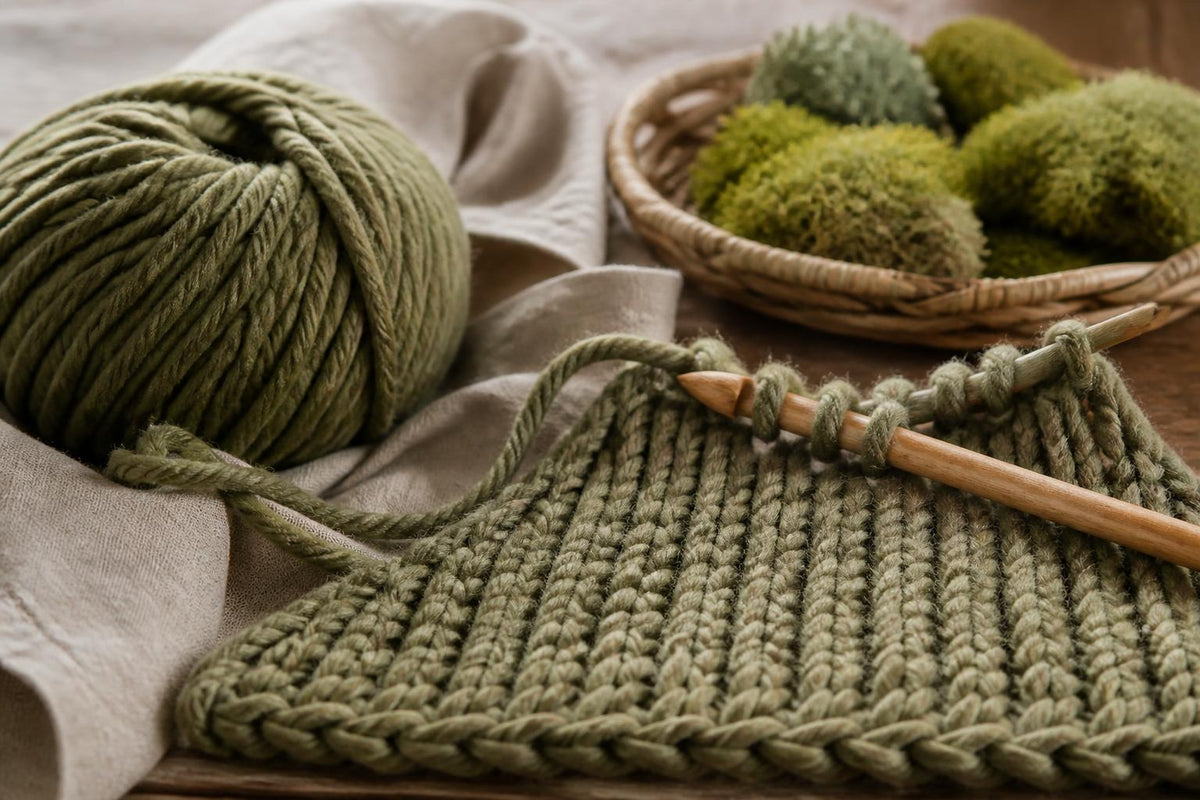
If you want to save money on double knitting yarn, the best approach is not to chase the lowest shelf price. Good buying comes from looking at what you actually get for the money: usable metreage, fibre content, how the yarn behaves in knitting or crochet, how it washes, and whether it suits the project you have in mind. That is how we avoid buying yarn twice, once because it was cheap, and again because it was wrong.
For many UK makers, the aim is not simply to find cheap double knitting wool. It is to find a lower-cost DK yarn that still gives a finish we are happy to wear, gift, wash and keep. A bargain ball that pills immediately, sheds fibres, twists awkwardly on the hook, or grows after one wash is not good value. A modestly priced yarn that works cleanly and lasts well often is.
What counts as good-value double knitting wool
Good value in DK yarn means balancing five things: price, metreage, fibre, durability and care.
Price matters, of course, but a 100g ball is not automatically better value than a 50g ball, and a cheaper ball is not automatically the cheaper project. The figure that helps most is cost in relation to metres, because patterns are written by yardage or metreage, not by how full a ball looks in the hand.
Fibre content matters just as much. A 100 percent acrylic DK may cost less and be easy to machine wash, which can make it a sensible choice for children’s clothes, blankets or items used every day. A wool blend may cost more, but if it holds its shape better, feels nicer against the skin and resists flattening, it may be better value for cardigans, hats or accessories you expect to use for years. Pure wool, including merino, can be excellent value when warmth, elasticity and longevity matter, though care requirements may be stricter. If you are weighing fibre options, our guide to choosing pure wool yarn for warm, durable makes goes into that trade-off in more detail.
Durability is often overlooked when people shop by price alone. Some budget DK yarns wear surprisingly well. Others pill quickly under the arms, at cuffs, or where a bag rubs against a jumper. For crochet, especially in UK crochet terms where stitch structure can be dense and textured, a yarn with poor resilience can look tired sooner because the fabric takes more abrasion.
Care is part of value too. If a yarn must be hand washed and dried flat, that may be perfectly reasonable for a shawl or special baby set. It may be less practical for school cardigans, pet blankets or heavily used throws. In the UK, care labels generally follow familiar textile wording, but details can vary by brand. If a yarn is sold more broadly in Europe, always read the actual ball band rather than assuming all wool or all acrylic behaves the same way.
So when we talk about good-value DK, we mean a yarn that suits the project, gives enough metreage for the money, behaves predictably while making, and stands up to the sort of use and washing the finished piece will get.
How to compare cheap options fairly
The fairest way to compare lower-cost DK yarns is to put them on the same basis.
Start with weight and metreage. Two balls may both be labelled 100g, but one might contain much more yarn than the other. That usually reflects fibre type, spin, loft and structure. A woollen-spun yarn can feel airy and go further than a denser yarn of the same weight. If you compare by grams only, you can easily assume two products are equivalent when they are not.
Next, check the fibre content carefully. “Wool” in a product name does not always mean pure wool. It may be a wool-acrylic mix, and that is not a problem in itself. Blends can be excellent. The point is to know what you are comparing. A blended DK designed for easy care has a different job from a softer pure wool or a cotton-rich summer yarn.
Then look at the recommended needle or hook size. Most DK yarns sit around the same general range, but not all produce the same fabric. A looser, drapier DK may suit garments with movement. A firmer, rounder yarn may define texture better and suit toys, bags or neat crochet stitches. If you use the same pattern with two different DK yarns, the result can still vary noticeably.
It also helps to think about likely project outcomes. Ask practical questions:
- Will this yarn show stitch definition clearly?
- Will it bloom after washing?
- Is it likely to split under the hook?
- Does it feel smooth enough for garments worn next to skin?
- Will the fabric become heavy in a large blanket?
Those questions matter more than marketing language.
When comparing options online, read the ball band details as if you were checking a recipe. For any DK yarn, note:
- grams per ball or skein
- metres per ball or skein
- fibre percentage
- recommended needle size or crochet hook size
- washing instructions
- tension information, if given
For beginners especially, this avoids false comparisons. A lower-priced yarn with less metreage may end up costing more once you buy enough for the whole project. Equally, a yarn with attractive metreage but awkward handling may slow you down and spoil the result.
If you want a more detailed framework for judging whether a DK purchase really makes sense, we have also written about choosing 100g DK wool without wasting money.
When lower-cost yarn works well and when it does not
Budget-friendly DK yarn can work extremely well in the right project.
It is often a sensible choice for practice garments, first jumpers, children’s layers, blankets, charity makes, home accessories and projects where easy washing matters more than luxury handle. If you are learning garment construction, trying colourwork for the first time, or making something likely to see hard wear, there is no need to feel that only premium yarn will do.
Lower-cost DK can also be ideal when colour choice matters more than fibre pedigree. For bunting, toys, decorative cushions or striped accessories, a practical acrylic or acrylic blend may be exactly right. It can be stable, forgiving and affordable enough to buy the range of shades you need.
Where cheaper yarn is less successful is usually where touch, drape, or long-term wear are central to the project. A fitted cardigan, a shawl worn close to the neck, or a baby garment for repeated washing and soft handling may justify spending more. Not because expensive always means better, but because fibre quality and yarn construction become more noticeable in those uses.
Pilling is a common point of disappointment. Softer yarns, especially those made for a gentle hand feel, can pill whether they are cheap or costly. But some lower-cost yarns pill sooner because the fibre blend and twist are not especially robust. Areas of friction tell the truth quickly. Underarms, side seams and cuffs will show whether a yarn can stand up to daily use.
Care can be another dividing line. A hand wash only wool may be worth every penny for a special hat or scarf. For a family blanket or a child’s jumper, machine-washable yarn may be the wiser buy even if it is not the softest option. In the UK, many knitters and crocheters are realistic about this. A project that is difficult to wash often gets used less.
There is also a difference between yarns that are inexpensive because they are straightforward, and yarns that are inexpensive because corners have been cut. A simple, well-made DK acrylic can be excellent value. A poorly spun yarn with knots, inconsistent thickness or weak colour fastness is merely cheap.
We see the same principle across yarn weights. With a product like World of Wool Chubbs, a super chunky merino yarn, the buying criteria shift because loft, warmth, fibre character and project scale are different. But the rule stays the same: match the yarn to the job. If you are interested in how that changes at heavier weights, our piece on how to choose knitting wool that suits your project is a useful next step.
How much to buy and why dye lot matters
Buying the right quantity is one of the simplest ways to save money, because underbuying and overbuying both cost us.
Patterns usually state a required metreage or a number of balls based on a named yarn. Work from the metreage first. If a pattern says 900 metres and your chosen DK yarn has 250 metres per 100g ball, you need four balls, not three, because 750 metres will not be enough and 1,000 metres gives you a sensible margin.
Always allow for a swatch, or a tension square. This is not wasted yarn. It is the cheapest insurance in the whole project. A proper tension square tells you whether your fabric matches the pattern gauge and whether you like the fabric at all. If your tension is off, you may use more or less yarn than the pattern expects. Finding that out after knitting a front and back is far more expensive than using a little yarn up front.
For common projects, quantity varies with size, stitch pattern and personal tension, but the following habits help:
- Socks and small baby items often need less than one might expect, but check carefully if using textured stitches.
- Hats usually take fewer metres than a cowl or scarf, even when the yarn weight is the same.
- Adult garments can vary dramatically by size and sleeve length, so do not guess from a photo.
- Crochet usually uses more yarn than knitting for the same item because the fabric is denser.
If you are substituting yarn, compare the total metreage required to the total metreage available, then add a margin if your stitch pattern is textured, cabled or crocheted.
Now to dye lot, which matters more than many beginners realise. Yarn is dyed in batches, and even when the colour name is the same, one dye lot can differ slightly from another. Sometimes the difference is tiny. Sometimes it is obvious once the finished piece is spread out in daylight. For a garment front or a large blanket, that can be very disappointing.
When buying enough for one project, try to get all balls from the same dye lot. If that is not possible, alternate balls every couple of rows or rounds in the transition area to soften the shift. This is especially useful for larger pieces and hand-dyed yarns, but it can help with commercially dyed yarn too.
In the UK, retailers commonly show or supply dye lot information where relevant, but online stock can move quickly. If matching matters, it is worth checking before you start the project, not after you have used two balls and need more.
Ways to keep costs down without compromising the result
The best savings usually come from planning, not from buying the absolute cheapest yarn available.
First, plan from metreage. This single habit prevents a great deal of waste. If two DK yarns are both suitable, compare how many metres you need for the whole project and what care standard you need afterwards. The lower unit price may not produce the lower finished cost.
Second, substitute carefully. Stay close not only in yarn weight, but also in fibre behaviour. A cotton-rich DK and a wool-rich DK may both be labelled double knitting, but they do not drape, stretch or recover in the same way. The closer the substitute in structure and fibre character, the less likely you are to waste time and money.
Third, read care labels before buying, not after. A yarn that needs hand washing can still be good value, but only if that suits the person who will use the item. There is little economy in making a beautiful baby cardigan that nobody wants to launder properly.
Fourth, knit or crochet a proper tension square and wash it as you will wash the finished item. This tells us not only whether the size will be right, but whether the yarn softens, grows, tightens, sheds or changes texture. A swatch can stop us spending hours on a fabric we would never enjoy wearing.
Fifth, buy with the project in mind, not with the basket in mind. Multi-buy offers, clearance shades and impulse colour choices can all be useful, but only if they fit a real plan. Otherwise they become stash that still does not cover the metreage or fibre needs of the project we actually want to make.
Sixth, keep records. If a particular brand of DK worked well for a child’s jumper, note the fibre, metreage, needle size and wash result. If another pilled badly or split under the hook, note that too. Over time, this personal record is more valuable than any quick bargain.
Finally, remember that “cheap” and “bad” are not the same thing, just as “expensive” and “good” are not the same thing. Thoughtful buying is what makes the difference. At Native Yarns, operated by Fleeta Limited, we encourage choosing yarn the same way we choose patterns and tools, with a clear idea of the result we want and the use the finished piece will get.
That is the practical route to spending less on DK yarn without settling for a disappointing finish. Look past the sticker price, compare fairly, buy enough from the same dye lot, and let the project decide where economy makes sense.
Is cheap double knitting wool always poor quality?
No. Some lower-cost DK yarn is perfectly serviceable for everyday projects. The key is to compare meterage, fibre, twist, care requirements and finish, not just the ticket price.
How do I compare two balls of DK yarn properly?
Check fibre content, total metres, ball weight, care symbols, recommended needle or hook size and whether the yarn feels suitable for the project. Price per 100g alone can be misleading.
Should I buy extra balls of the same dye lot?
Yes, if you can. Buying enough from one dye lot reduces the risk of visible colour variation, especially in larger garments, blankets and simple stitch patterns.
Can I swap a pattern's yarn for a cheaper DK option?
Usually, but compare meterage and make a tension square first. Even if both yarns are labelled DK, thickness, drape and finished size can differ.
Does Native Yarns sell double knitting wool?
Use the current published catalogue to confirm exact stock. Native Yarns is a live UK online shop operated by Fleeta Limited, and educational comparisons should not be taken as proof of current DK availability.