
Where to find chunky wool patterns that actually work
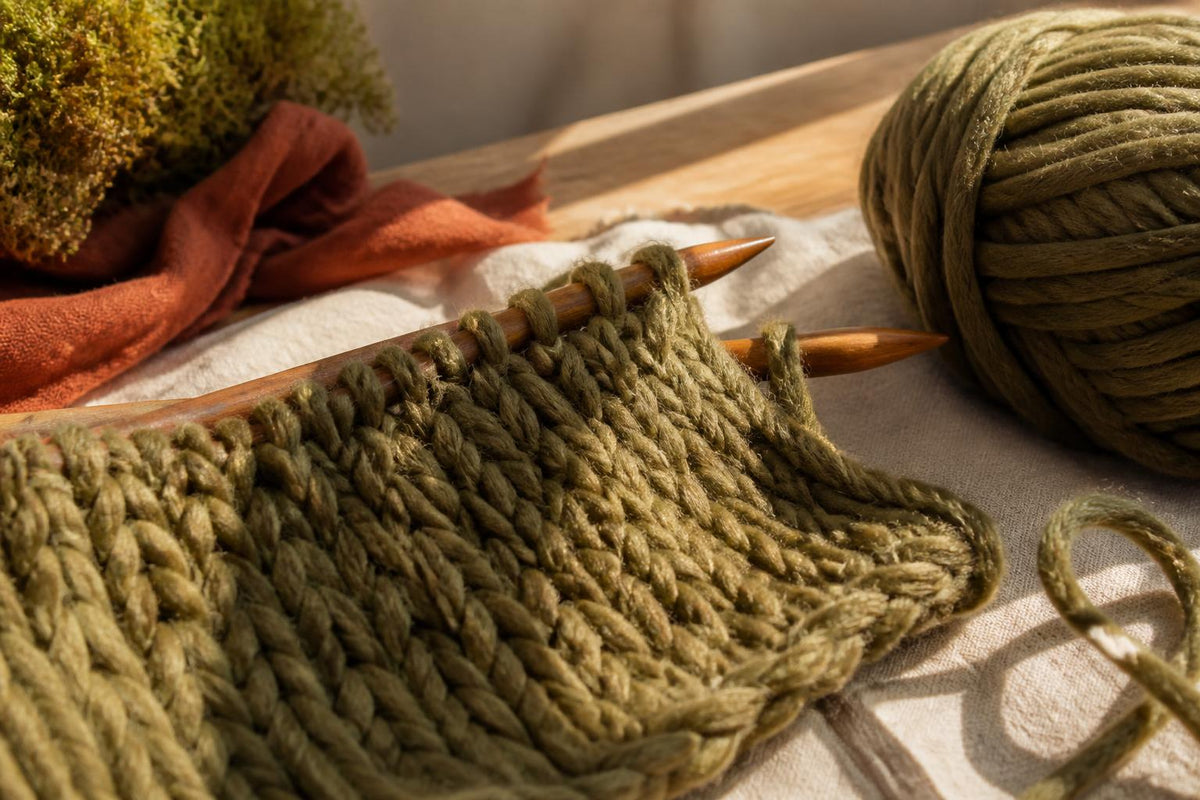
If you want free knitting patterns for chunky wool that genuinely work, start with sources that tell you exactly which yarn weight they mean, give a full materials list, show a readable tension square, and use standard abbreviations. The best free patterns are usually published by yarn brands, established designers, magazines, guilds, and educational organisations, not copied onto random blogs without permission.
For UK knitters, the key is matching the pattern to the yarn in your hands before you cast on. A pattern can be beautifully written and still go wrong if it expects a tightly spun chunky wool and you use a lofty super chunky merino instead. We always suggest checking yarn weight, metreage, needle size, fibre, and the stated gauge first, then knitting your own swatch. If you are still weighing up yarn and pattern together, our guide on how to choose knitting patterns that suit your yarn is a useful place to start.
What counts as a good free pattern for chunky wool?
A good free pattern for chunky wool is clear, complete, authorised, and realistic about the yarn it was written for.
Clear means the instructions are easy to follow without guesswork. You should be able to find, at minimum:
- finished measurements
- yarn requirements in grams and metres
- needle sizes
- a tension square, usually given over 10 cm
- abbreviations and any special stitches
- step by step construction notes
- finishing instructions
If any of those are missing, pause before you commit your yarn. Free does not have to mean vague. In fact, many of the best free knitting patterns for chunky wool are as carefully edited as paid ones.
Complete means the pattern gives you the whole project, not half a recipe. Watch for pages that show only a photograph and a short paragraph such as “cast on until it looks wide enough”. That may be fine for an experienced knitter improvising a scarf, but it is not a reliable pattern. For garments, hats, and shaped accessories, you need stitch counts, shaping instructions, and a clear sequence.
Authorised means the pattern has been published by the person or company who owns it, or by a legitimate distributor. A copied PDF uploaded to a file-sharing site is not just risky, it is often outdated, incomplete, or reformatted badly. If a pattern appears on a designer’s own website, a yarn brand’s website, a recognised craft platform, or an educational resource, that is a much safer sign.
Suitable for UK readers means checking a few practical details. First, whether the terminology matches knitting rather than crochet. If a site publishes both crafts, make sure you are not accidentally reading in UK crochet terms. Second, look at measurements. UK knitters will usually expect centimetres and metres, even if inches and yards are also included. Third, check the yarn naming. “Chunky” and “super chunky” are common UK terms, but international patterns may use “bulky”, “super bulky”, or numbered weight systems instead. Those labels are only a starting point. The real test is the gauge.
It also helps if the pattern states the fibre type used in the sample. A chunky cotton, a chunky acrylic, and a chunky merino can all behave very differently. Loft, drape, elasticity, warmth, stitch definition, and final weight all change the result.
How to match a free pattern to the yarn you have?
Start with the pattern’s yarn information and compare it line by line with your ball band.
The first check is yarn weight. If the pattern asks for chunky and your yarn is labelled super chunky, that is a warning sign, not an automatic no. Likewise, if the pattern uses a yarn described as bulky in the US, look at the recommended needle size and gauge to see where it really sits.
Next, compare metreage, not just ball count. Two yarns can both come in 100 g balls and produce very different lengths. If a pattern needs 300 metres and you buy three 100 g balls of a yarn that gives only 65 metres each, you will run short. This matters particularly with lofty yarns, roving-style yarns, and very thick single-ply yarns.
Needle size comes after that. If the pattern was written for 6 mm needles and your yarn band suggests 10 mm to 12 mm, the yarn is probably much thicker. You may still be able to use it, but not without expecting a different fabric and a fresh swatch.
Then check fibre. Wool and merino have elasticity and bounce that help many knitted items hold shape. Cotton is heavier and less elastic. Alpaca can drape beautifully but may grow with wear. Acrylic can vary widely depending on how it is spun. If a free pattern relies on ribbing pulling in neatly, fibre content matters.
A tension square is the point where theory becomes reality. Knit the swatch in the stitch pattern the designer specifies, not just in stocking stitch if the pattern says moss stitch or rib. Measure the central 10 cm after washing or steaming the swatch in the same way you will treat the finished item. If your stitch count is off, change needle size and swatch again. If your row count is off but stitch count is correct, you can often still proceed for scarves and blankets, but shaped garments need more care.
Check the dye lot before you cast on. If your project uses more than one ball, make sure they match. Small shade differences can show clearly in plain stocking stitch, especially with solid or lightly heathered shades. If you must combine different lots, alternate balls every two rows in a less noticeable section to blend the transition.
It is also worth checking the yarn’s construction. A smooth plied yarn will show cables and stitch definition more crisply than a fluffy blown yarn. If the free pattern is all about texture, use that as part of your decision.
For a more methodical way to compare options, our article on how to choose knitting wool that suits your project walks through the same process from the yarn side.
When can you swap chunky for super chunky?
You can swap chunky for super chunky when the project is forgiving, the pattern is simple, and you are willing to accept changes in size, weight, and drape. You should not assume the substitution will work unchanged.
The easiest projects for substitution are straight items with flexible dimensions, such as scarves, simple cowls, and some blankets. If a scarf ends up a bit wider and shorter because you used thicker yarn, that may be perfectly acceptable. The hardest projects are fitted garments, hats with precise sizing, and pieces with detailed stitch patterns or shaping.
What changes should you expect?
First, size. Super chunky yarn usually creates larger stitches. If you follow the same stitch counts as a chunky pattern, the finished item will often come out bigger in width and sometimes shorter in length if the row gauge also shifts.
Second, drape. A fabric knitted in super chunky yarn is often denser and heavier, especially in wool-rich fibres. That can be cosy for a cowl and cumbersome for a cardigan.
Third, stitch definition. Cables may look bolder, but finer textures can disappear. Lace and eyelets can become clumsy. Ribbing can become very pronounced.
Fourth, yarn usage. Thicker yarn often uses up metreage faster. Even if the project dimensions stay similar, you may need more grams than the original pattern states.
This is why a new tension square is essential. Not optional, essential. You need to know what fabric your substituted yarn makes on the needles you plan to use. Sometimes you can bring super chunky closer to a chunky gauge by using smaller needles, but that can create a stiff fabric. Sometimes the swatch tells you the opposite, that the substitution is possible only if you rewrite stitch counts.
If you are using a very lofty yarn such as World of Wool Chubbs, which is a super chunky merino, treat it as its own material rather than assuming it will behave like every other thick wool. Lofty merino can produce a warm, cushioned fabric quickly, but the result depends on the pattern structure and your gauge. If you are browsing yarns for this type of project, our super chunky merino yarn collection shows the kind of yarn profile we mean.
Which free projects suit beginners best?
The best beginner-friendly free patterns in chunky wool are usually scarves, cowls, hats, and blankets. They work well because chunky yarn shows progress quickly and makes stitch structure easier to see.
Scarves are the simplest place to start. They are usually flat, rectangular, and forgiving about exact size. A good beginner scarf pattern will use one or two basic stitches, clear edge instructions, and no shaping. This gives you space to practise cast on, knit, purl, and cast off without worrying about fit.
Cowls are also excellent because they are short compared with scarves and often worked as a simple tube or rectangle seamed at the end. They teach repetition and finishing without requiring much yarn. If the pattern includes ribbing or seed stitch, that is a manageable next step.
Hats are a good first shaped project once you are comfortable with knit and purl. A simple beanie in chunky wool often introduces working in the round, decreasing, and reading stitch counts. The reason chunky hats work well is that they are fast enough to finish before motivation drops. Just make sure the pattern includes several sizes and a clear finished circumference.
Blankets can be beginner-friendly if the construction is straightforward. A blanket made from one repeated stitch pattern or knitted in strips is easier than one with many colour changes or complex motifs. The main caution is weight. A large blanket in chunky or super chunky yarn can become heavy in your lap and expensive in yarn, so a baby blanket or lap blanket is often a more practical first choice.
What makes these categories manageable is not just simplicity of shape. It is also error recovery. If you miss a stitch in a scarf, it is easier to spot and fix than in a fitted jumper. If your tension drifts slightly, a blanket may still look lovely, whereas a hat may no longer fit.
For newer knitters, we also suggest patterns with these features:
- one main stitch pattern
- no complicated charts
- no sewing in many pieces
- clear photos of the finished item
- standard abbreviations
- a note on skill level
- straightforward finishing
Where should you look for free patterns safely and legally?
The safest places to look are the original publishers.
Yarn brand websites are often the best starting point. They usually provide free patterns written specifically for their yarn ranges, which means the gauge, fibre behaviour, and recommended needle sizes are more likely to line up. Even if you are substituting yarn, these patterns are often technically reliable.
Independent designers can also be excellent, provided you are on their own website, newsletter, or a recognised pattern platform where they have chosen to publish. Many designers offer one or two free patterns as an introduction to their style.
Craft magazines and established publishers sometimes make selected patterns free online. These are worth checking because they are often edited and test knitted.
Guilds, charities, museums, and educational organisations can also be useful, especially for classic accessories, community knitting projects, and technique-led resources. Public educational resources are particularly helpful if you want a simple project with trustworthy instructions.
What should you avoid?
Avoid copied patterns pasted into blogs without credit. Avoid scanned PDFs uploaded to random document sites. Avoid social posts where the instructions are incomplete in the caption and the original source is unclear. These are the places where errors, missing pages, and copyright problems are most common.
Also be careful with video-only tutorials if you are still learning to read patterns. Videos can be brilliant for technique support, but you still need the written details for sizing, yarn quantity, and finishing. The best setup is a written pattern supported by photos or video, not replaced by them.
If you are looking broadly rather than for one exact design, it can help to search by project type and gauge rather than by headline alone. “Chunky cowl 10 mm needles” will usually narrow things down more effectively than a vague search for free patterns.
What should you check before you cast on?
Before you cast on, run through a short checklist. It saves far more time than it takes.
Check the finished measurements. Do they match what you actually want? A cowl that looks generous in the photo may be much shorter than expected when you read the numbers.
Check the abbreviations. UK knitting abbreviations are often familiar, but some patterns mix UK and US conventions in awkward ways, especially on international sites. If the same publisher also offers crochet content, confirm that you are not reading in UK crochet terms by mistake.
Check the tools list. Needle size, cable length for circular needles, stitch markers, cable needle, tapestry needle, pom pom maker, and blocking equipment can all matter. If the pattern assumes a 40 cm circular for a hat and you only have long straight needles, you may need to adapt the method.
Check yarn quantity in both grams and metres. If only one is given, work out the other from your yarn band before buying or winding anything. For yarns with a pronounced halo, hand-dyed variation, or limited stock, it is wise to secure enough at the start.
Check the dye lot across all balls. Even when shades look close in the bag, daylight can show differences later.
Check the care instructions. This matters especially with wool and merino. Will the item need hand washing? Can it be soaked and laid flat to dry? Is the recipient likely to follow that care routine? A baby blanket for frequent washing may need different planning from a special winter cowl.
Check the likely finishing steps. Seaming, mattress stitch, grafting, blocking, adding a pom pom, weaving in ends securely, or picking up stitches for a neckband all affect whether a project feels manageable. A pattern that looks simple at first glance may hide a finishing stage you do not enjoy.
Finally, check whether the pattern has notes or corrections. Many legitimate free patterns include an update date, a printer-friendly version, or a comments section where a typo has been clarified. That is another sign you are using an authorised source.
If you enjoy knitting with thick, soft yarns, it is worth taking this preparation seriously. A few minutes spent checking the pattern against the yarn can make the difference between a quick, satisfying finish and a project that stalls after the first evening. When we help customers choose yarn for free patterns in chunky wool, this is exactly the process we use ourselves at Native Yarns, operated by Fleeta Limited. It keeps expectations realistic, protects your time, and gives your yarn the best chance of becoming something you will actually wear or use.
Are free knitting patterns for chunky wool reliable?
Some are excellent, but quality varies. Check whether the pattern includes finished sizes, metreage, a tension square, clear abbreviations and finishing notes before you begin.
Can I use World of Wool Chubbs for any chunky pattern?
Not automatically. Compare the pattern's stated weight, metreage and tension with World of Wool Chubbs, then knit a fresh tension square to see whether the fabric and size will work.
How much yarn do I need for a super chunky project?
It depends on the item, size and stitch pattern. Always work from metreage rather than ball count, and buy enough from the same dye lot where colour consistency matters.
Do I need exact needles from the pattern?
Usually no. The stated needle size is a starting point. Your real target is the pattern's tension square, because that determines the finished size and fabric.
Are US and UK crochet terms the same?
No. UK crochet terms and US terms differ, so readers should check which system a pattern uses before starting, especially for basic stitches with similar names.