
Yarn fibres and weights: a practical guide to choosing well
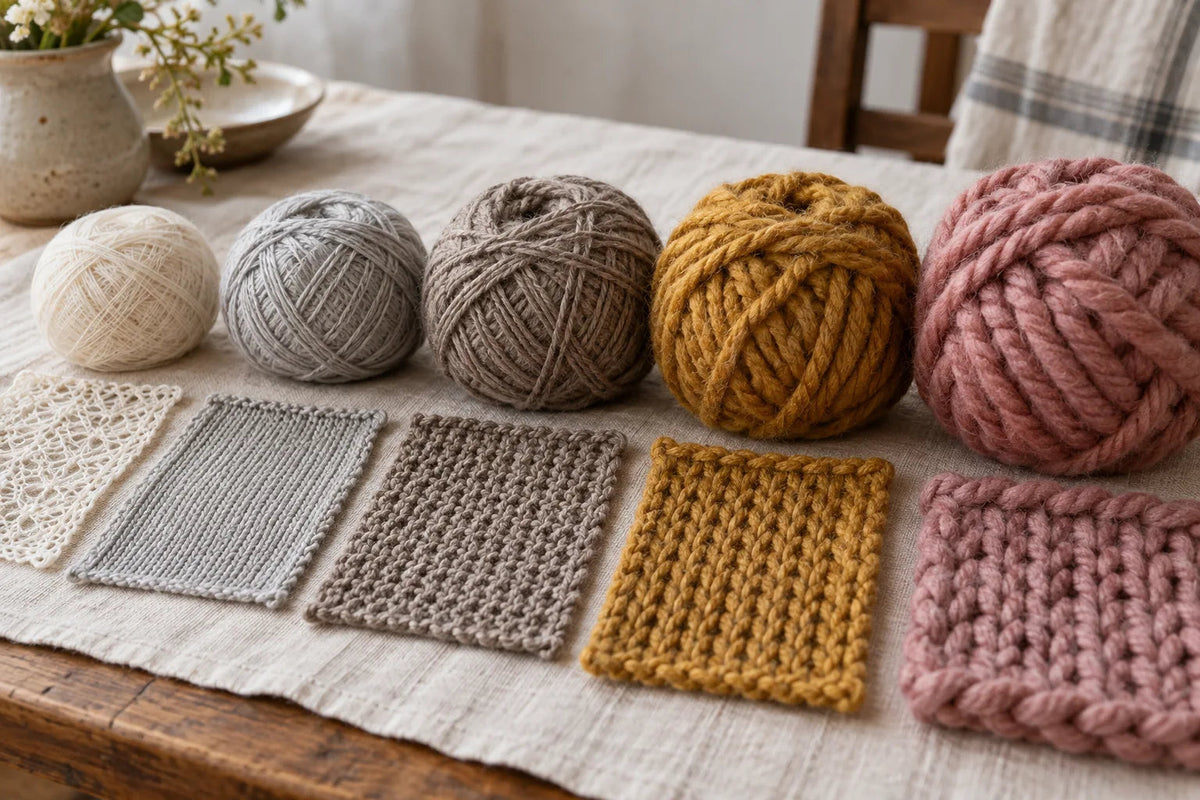
Choosing yarn is easier when you separate three questions: what is it made from, how thick is it, and how much do you need? A ball's colour may draw you in, but these details determine whether it suits the project and how the finished piece will behave.
If you are following a pattern, begin with its recommended yarn information. When substituting, compare several characteristics rather than searching for one matching word on the label. Make a swatch before buying all the yarn for a large project where possible.
Fibre is only part of the story
Wool, alpaca, cotton and acrylic describe fibres, not complete performance specifications. A wool blend can feel quite different from another blend with the same percentages because the fibres, spinning and construction differ. A smooth, tightly twisted yarn will not produce the same surface as a loosely spun or brushed one.
Think about the object you want to make. Does it need structure, softness against the skin, a fluid drape or frequent washing? Compare the manufacturer's description with those needs. For a next-to-skin item, personal feel matters more than a universal promise that a fibre is soft or non-irritating.
Blends combine materials for different effects. Do not assume a blend's care method from its largest ingredient: read the complete instructions. The DROPS manufacturer care table, for example, shows different washing requirements across wool and alpaca-containing products. It is evidence of product variation, not a care rule for every brand.
Wool yarn
Read beyond the word wool. A named breed, a blend percentage and a description of the yarn's construction add useful detail, but your swatch still decides whether it suits the pattern. Compare the fabric after washing, particularly when choosing yarn for a fitted garment. Keep the care method practical for the person who will wear it.
Alpaca yarn
Check whether the yarn is pure alpaca or a blend, then compare its length and suggested tension with your pattern. If you are making a scarf or shawl, examine the sample's drape; for a garment, also check whether its shape behaves as expected. Do not assume a similarly coloured alpaca yarn is an exact replacement for another.
Mohair, silk and mixed fibres
A blend's description should identify its ingredients and proportions. Consider both the intended effect and the practicalities: can you see the stitches easily, undo a mistake comfortably and follow the care instructions? A brushed texture may be exactly what a project needs, but it is a different experience from working with a smooth yarn.
Yarn weight means thickness
In this context, “weight” describes a yarn category rather than the grams in a ball. Lace is generally fine; DK, aran and chunky indicate progressively thicker broad categories. The Craft Yarn Council's weight system provides reference categories and suggested tool and tension ranges, but explicitly treats these as guidance.
UK naming does not create an exact universal conversion. “4-ply” is commonly used as a thickness label; it does not reliably tell you how many strands every modern yarn contains. Likewise, two DK yarns need not knit or crochet to precisely the same tension. Use a manufacturer's specifications and your pattern's requirements together.
Fine yarn can make a light fabric or a detailed pattern. Thicker yarn creates larger stitches, but “larger” is not automatically easier for every hand or every project. Texture, colour and stitch visibility matter too.
Read metres as well as grams
Two 100g balls can contain very different lengths. To estimate a substitute, compare the total metreage required by the pattern with the metres supplied in each ball. Dividing the required metres by metres per ball gives a starting quantity; round up to whole balls.
For example, a pattern requiring 600m and a proposed yarn containing 150m per ball gives four balls before allowing for swatching or a changed result. This arithmetic does not prove the yarn is suitable. A different fibre, tension, size or pattern alteration can change how much you use. Keep the calculation with your project notes.
Let the swatch answer the difficult questions
Work a sample in the stitch specified by your pattern. Follow its measurement instructions and count stitches and rows over the stated area. Wash and dry the sample according to the yarn's care instructions before judging the finished fabric.
Check more than the numbers. Does the sample hang as you hoped? Are the stitches clearly defined? Does it feel comfortable? Does the fabric hold its shape? Change one thing at a time if you need to adjust it. A correct stitch count is useful, but it cannot turn an unsuitable fabric into the right choice for a particular garment.
Keep the useful label details
Save the fibre composition, shade, dye lot where given, metreage and care instructions with your pattern. The Craft Yarn Council's label guide explains the details commonly found on a ball band. If you need more yarn later, a photograph of the label is much more useful than remembering only the colour.
For washing and storage, continue with our wool and alpaca care guide.