
Where to find knitting patterns you can trust
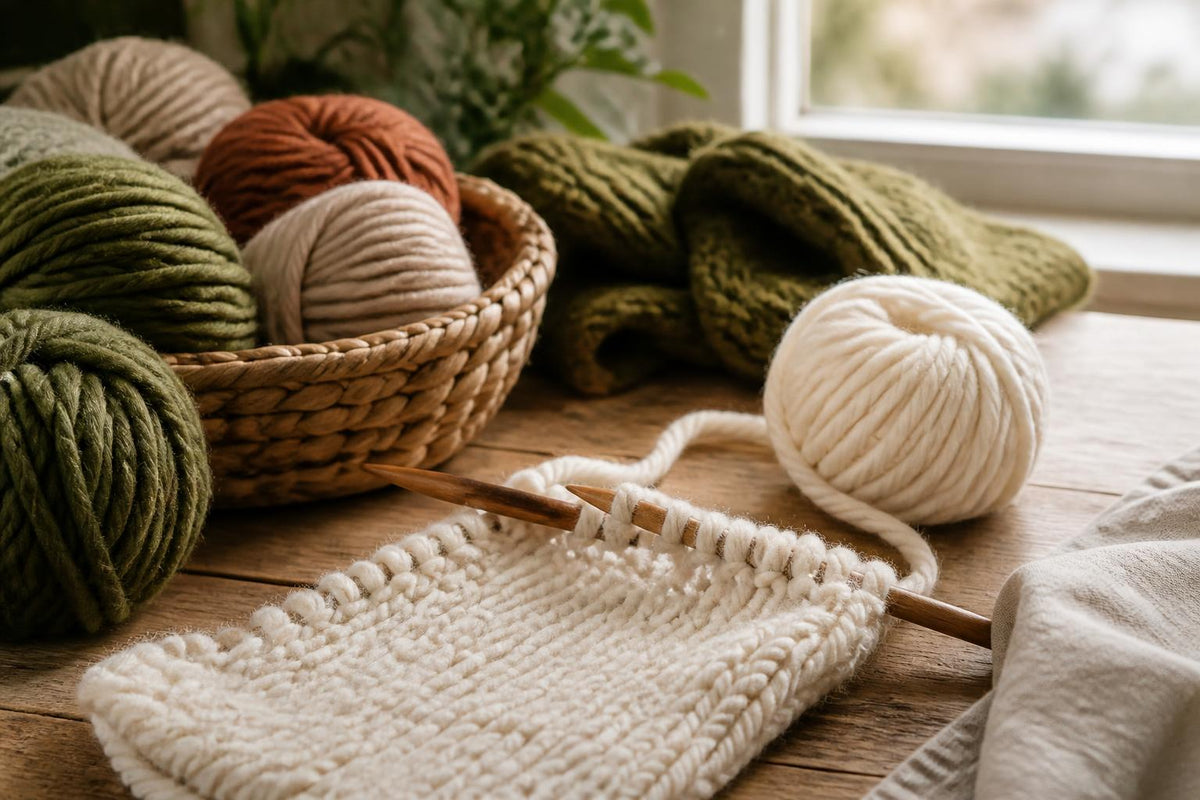
If you want knitting patterns you can trust, start with sources that show their working. A good free pattern tells you the finished measurements, yarn weight, meterage, needle size, tension, abbreviations, and finishing steps before you cast on. It should also be clearly attributed to the designer or publisher, and it should read as though somebody has actually knitted it.
For UK knitters, that matters more than people sometimes expect. Pattern language, yarn naming, and even crochet terminology can vary between countries. A pattern can be beautifully photographed and still be awkward to use if the sizing is vague, the yarn information is incomplete, or the instructions have been copied from somewhere else. We find that a little checking at the start saves a great deal of wasted time, yarn, and disappointment later.
What makes a free knitting pattern worth using
A free pattern is worth using when it is complete, consistent, and realistic about what the project involves. Free does not have to mean second rate, but it does need the same scrutiny you would give a paid pattern.
Start with the basics. We look for these points before trusting a pattern:
- finished size or measurements
- yarn weight and total meterage
- recommended needle size
- a stated tension square
- clear abbreviations and stitch explanations
- row by row or round by round instructions
- finishing details, such as seaming, blocking, and weaving in ends
- a named designer, publisher, or brand source
If any of those are missing, stop and assess whether you can fill the gaps yourself. Experienced knitters sometimes can. Beginners usually should not need to.
For a UK reader, terminology matters. Knitting terms are often manageable across UK and US patterns once you know the common abbreviations, but crochet is more confusing because UK crochet terms and US crochet terms name stitches differently. If a website offers both crafts and does not label the terminology clearly, treat that as a warning sign. We always advise checking the pattern notes before assuming a dc or tr means what you think it means.
Legality matters too. Many copied patterns circulate on blogs, image sharing sites, and file download pages without permission from the original designer. A proper source will either host the pattern itself, with clear branding and authorship, or link back to the original publication. If you see a PDF with no author name, no publisher details, and no publication date, it may have been lifted from somewhere else. In the UK, copyright applies automatically to original written patterns. The fact that a file is easy to download does not make it free to reproduce or republish. That position is broadly similar across the EU, but when rights and licensing differ, it is safer to rely on the terms stated by the original publisher rather than assumptions based on general EU practice.
A trustworthy pattern also shows signs of testing or editing. That might mean multiple sizes laid out neatly, a schematic, notes on ease, or corrections added after publication. Even simple projects benefit from careful editing. If the stitch count does not add up after an increase row, or the pattern tells you to cast off before shaping is complete, move on.
Where to find free knitting patterns safely
The safest places to find free knitting patterns are the original publishers. That usually means yarn brands, established magazines, recognised designers, and specialist craft websites with a clear editorial identity. We would trust a pattern page more readily if it sits within a wider knitting or crochet resource that is maintained and updated, rather than on a random download site.
Reliable sources usually include:
- yarn manufacturers publishing patterns designed for their own yarns
- craft publishers and magazines with named contributors
- independent designers sharing patterns on their own websites
- reputable yarn shops with educational journals and project guides
The advantage of the original source is simple. If there is an error, correction, or yarn substitution note, that is where it will appear first.
Be cautious with pattern aggregators and file sharing sites. They can be useful for discovery, but they are also where incomplete PDFs, reformatted instructions, and unattributed copies often appear. If you find a pattern there, try to trace it back to the first publisher before downloading or printing it.
A few practical checks help:
- Look for a publication date or last updated date.
- Check whether the pattern names a designer.
- Read the comments, if there are any, for reports of missing sections or errors.
- Compare the yarn requirement with the finished size. If a large jumper supposedly uses one ball, something is wrong.
- Search for the pattern title with the designer name to see whether the same text appears elsewhere.
Outdated patterns are not automatically bad, but they do need context. Yarn lines are discontinued, ball weights change, and recommended needle ranges can differ from older standards. A vintage leaflet can still be excellent, but you may need to translate the yarn into a modern equivalent with care.
When we write about choosing patterns, we always come back to the same point, the best pattern is not necessarily the prettiest one on the screen, but the one that gives you enough information to make good decisions. Our guide on how to choose patterns that suit your yarn and skills goes into that process in more detail.
How to match a pattern to the yarn you actually have
Many knitters do not start with a pattern. They start with yarn they already own. That is perfectly sensible, but it means the matching process has to be more disciplined.
First, identify the yarn properly. Ignore marketing descriptions for a moment and look at the practical details on the ball band or product listing:
- yarn weight, such as 4 ply, DK, aran, chunky, or super chunky
- fibre content, such as wool, cotton, acrylic, alpaca, or merino
- total meterage per ball or skein
- recommended needle size
- care instructions
- dye lot
Yarn weight is the first filter, not the only one. A pattern written for a lofty super chunky wool may not behave well in a dense cotton yarn of similar thickness. Fibre changes drape, warmth, elasticity, stitch definition, and finished weight. That is why we compare both thickness and fibre before saying a substitute is likely to work.
Meterage matters more than ball count. One brand’s 100g ball can contain very different yardage from another’s. Always total the metres you have, then compare that with the pattern requirement. Allow extra if you plan to lengthen sleeves, add a deeper rib, or swatch generously.
The dye lot is easy to overlook and annoying to regret. If your project needs several balls, check that they match before you cast on. Small differences between batches can show clearly in plain stocking stitch, especially with solid shades. If the yarn came from mixed lots and you cannot replace it, alternating balls every couple of rows can help blend the transition.
The tension square is where the decision becomes real. Knit the swatch in the pattern stitch if possible, wash and dry it as the finished item will be treated, then measure over 10cm. Do not rely on the label alone. Needles, fibre, and personal tension all affect the result. If your stitch and row gauge are far off, the pattern may not be a good match even if the yarn category looks right.
This is especially important with very thick yarns. World of Wool Chubbs is a super chunky merino yarn, and projects in this weight can grow quickly, which is part of the appeal. They also magnify tension issues quickly. A difference of even one stitch over 10cm can change the size and fabric noticeably. If you are choosing a quick project for Chubbs, keep the pattern simple and the swatching honest.
We have covered this in more depth in our guide on choosing knitting patterns to suit the yarn you already have. If you are still deciding on fibre and weight before you choose a project, our piece on how to choose yarn that suits your knitting project is a useful starting point.
How to tell whether a pattern suits your skill level
A pattern can be free, attractive, and technically sound, and still be the wrong project for where you are now. That is not a failure. It is just a matter of timing.
We assess skill level by looking at four areas, shaping, stitch techniques, finishing, and language.
Shaping tells you how much attention the project needs. A scarf knitted as a rectangle is straightforward. A raglan jumper, sock heel, or fitted hat asks more of you because increases and decreases affect the final shape. If the pattern includes short rows, set in sleeves, neckline shaping, or picking up stitches around curves, expect a steeper learning curve.
Stitch techniques matter too. Beginners can absolutely learn cables, lace, or brioche, but it helps if those techniques are the only new challenge in the project. If a pattern combines intricate stitch work with shaping and seaming, it may be more frustrating than enjoyable as a first attempt.
Finishing is often underestimated. Mattress stitch, grafting, blocking, sewing on bands, and neat weaving in can determine whether the finished piece looks polished. A “simple” garment made in basic stitches may still be advanced if the finishing is exacting.
Pattern language gives away a lot. Before committing, read a full paragraph from the middle, not just the materials list. Ask yourself:
- Are the abbreviations explained?
- Do the stitch counts make sense?
- Are instructions written out clearly, or heavily compressed?
- Is there a chart, and if so, are you comfortable reading one?
- Does the pattern assume knowledge you do not yet have?
If you have to stop every line to decode the wording, choose something simpler for now. Confidence grows faster when the challenge is manageable.
For complete beginners, the best patterns usually have repetitive structure, little or no shaping, and forgiving finishing. That is why scarves, cowls, blankets, and simple hats are so often recommended. They teach rhythm, tension, and fabric handling without asking you to solve too many problems at once.
Good first projects if you want a free pattern
If you want a free pattern and a good chance of success, choose a project where fit is not critical. That immediately rules in scarves, cowls, wraps, simple blankets, and some hats.
A scarf is often the best first project because it lets you practise casting on, keeping edges tidy, spotting mistakes, and casting off without worrying about size. If you want a quick result, super chunky yarn is helpful because the fabric grows fast and the stitch structure is easy to see. We have rounded up some easy scarf knitting patterns that beginners can finish if that is where you want to start.
Cowls are another strong choice. They use many of the same skills as scarves but often need less yarn. A simple cowl in merino can be soft, warm, and satisfying to wear straight away. If the pattern is worked flat and seamed, it is beginner friendly. If it is worked in the round, it adds one useful new skill without becoming overwhelming.
Hats can work well too, especially in super chunky yarn, but choose carefully. A basic beanie with ribbing and crown decreases is manageable. A hat with complex sizing, colourwork, or a folded brim that depends on exact gauge is less forgiving. Thick yarn can make hat fitting easier to judge as you go, but only if you swatch first.
For home projects, cushion covers and small lap blankets are sensible beginner options. They are practical, mostly rectangular, and less dependent on exact body measurements. They also suit bold textures that show off chunky yarn.
If you are using World of Wool Chubbs, look for projects with simple stitch patterns, low shaping, and clear meterage. Because Chubbs is a super chunky merino yarn, it suits cosy accessories particularly well. Merino has softness and elasticity, which helps with comfort and stitch definition, but it also deserves a pattern that respects the fabric. Very dense stitches on oversized needles can become heavy or loose if the design is not balanced.
Common mistakes that waste time or yarn
The most common mistake is choosing by appearance alone. A photo can hide weak instructions, awkward shaping, or unsuitable yarn substitution. Read the pattern before you fall in love with the sample.
The second is ignoring the tension square. We understand the temptation, especially with accessories, but gauge affects drape, size, and yarn usage. A hat knitted too loosely may stretch out. A cowl knitted too tightly may feel stiff and use more yarn than expected.
Another frequent problem is misunderstanding quantity. Knitters often buy by ball count when they should compare total meterage. If the pattern calls for 320m and your chosen yarn has 80m per ball, you need four balls at minimum, and usually a margin for swatching or personal adjustments.
Substituting fibre without thinking through care is another expensive error. A washable acrylic baby blanket pattern may not behave the same in untreated wool. A garment designed for wool’s elasticity may sag in cotton. Always read the care instructions before committing. This matters even more if you are making gifts, because the recipient may not hand wash and dry flat unless you tell them.
Sizing mistakes are common in garments and hats. Check whether measurements are finished garment size or body size, and whether the designer expects positive ease, negative ease, or a close fit. “Medium” is not a standard size across knitting patterns.
Finally, watch for copied or reformatted patterns with missing pages, cropped charts, or broken line spacing. These are surprisingly common with free downloads. If the pattern jumps from row 12 to row 19, or the sleeve instructions vanish halfway down the page, go back to the original source.
At Native Yarns, operated by Fleeta Limited, we think the safest approach is simple. Choose patterns from reliable publishers, compare them carefully with the yarn in your hands, and give yourself permission to start with projects that teach one skill at a time. Free knitting patterns can be excellent, but the trustworthy ones are the ones that make the work clear before you begin.
Are free knitting patterns any good?
Some are excellent, but quality varies. Look for clear materials lists, finished measurements, tension information, step-by-step instructions and a named original publisher.
Can I use any yarn for a free pattern?
Not automatically. Compare yarn weight, fibre, meterage and the stated tension square. A substitute can work, but only if those basics are close enough for the project.
Why does dye lot matter for knitting?
Yarn from different dye lot batches can vary slightly in shade. For visible projects, buying enough of one dye lot helps keep colour more consistent across the finished piece.
What is the best free knitting project for a beginner?
Simple scarves, wraps, basic hats and straightforward blankets are often the easiest starting points, especially in super chunky yarn where stitches are easier to see.
Should I always knit a tension square?
For fitted or size-sensitive projects, yes. A tension square helps you check whether your needles, yarn and knitting style match the pattern's intended size.